In the rapidly evolving landscape of environmental monitoring, laser sensor technology has emerged as a cornerstone for precise and reliable air quality assessment. Unlike traditional detection methods, laser-based sensors utilize the principles of light absorption, scattering, and spectroscopy to identify and quantify airborne pollutants with unprecedented accuracy. These systems operate by emitting a focused laser beam through a sample of air. As the light interacts with various particulate matter (PM) and gaseous molecules, such as nitrogen dioxide (NO2), sulfur dioxide (SO2), ozone (O3), volatile organic compounds (VOCs), and carbon monoxide (CO), specific wavelengths are absorbed or scattered. By analyzing the alterations in the laser light's properties—intensity, wavelength, or phase shift—the sensor can determine the concentration and composition of contaminants in real-time.
The core advantage of laser sensors lies in their high sensitivity and selectivity. Tunable Diode Laser Absorption Spectroscopy (TDLAS) is a prevalent technique, where a laser's wavelength is finely tuned to match the unique absorption line of a target gas molecule. This minimizes cross-sensitivity to other gases, ensuring measurements are not skewed by interfering substances. For particulate monitoring, light scattering methods, including laser diffraction and photon correlation spectroscopy, are employed to measure particle size distribution and density, critical for assessing PM2.5 and PM10 levels. These sensors provide continuous, in-situ monitoring without the need for frequent manual calibration or sample collection, offering a significant operational advantage over older, discontinuous methods.
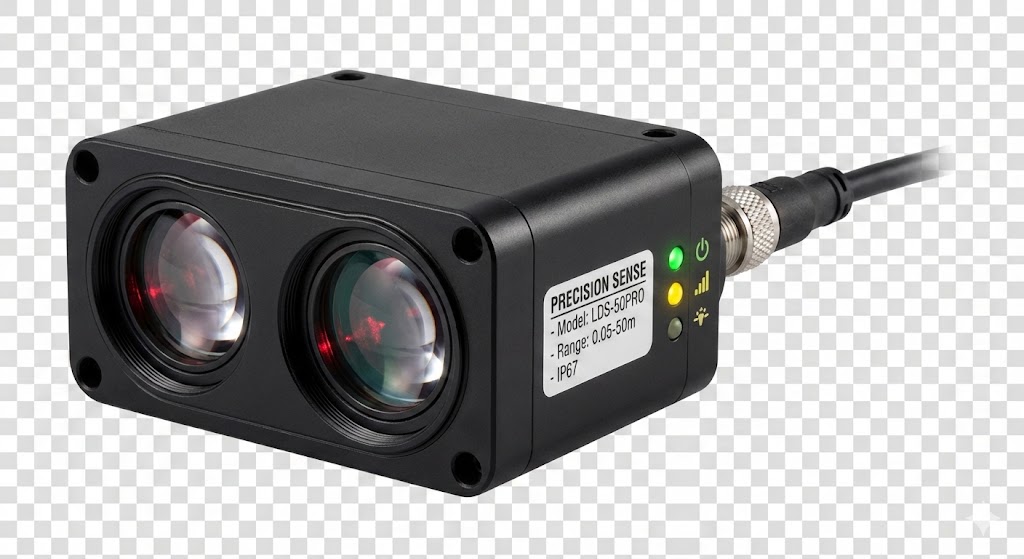
Modern laser sensor systems are increasingly integrated with Internet of Things (IoT) platforms and data analytics software. This integration enables the creation of extensive, networked monitoring stations across urban, industrial, and residential areas. Real-time data streams are transmitted to central servers, where advanced algorithms process the information to generate detailed pollution maps, trend analyses, and early warning alerts. This capability is vital for regulatory compliance, public health advisories, and industrial process control. For instance, in manufacturing facilities, laser sensors can detect trace leaks of hazardous gases, preventing potential accidents and ensuring workplace safety.
Furthermore, the miniaturization of laser components, such as vertical-cavity surface-emitting lasers (VCSELs), has led to the development of portable and even wearable air quality monitors. These devices empower individuals and community scientists to collect hyper-local data, complementing official monitoring networks. Despite their higher initial cost compared to electrochemical or metal-oxide semiconductor sensors, laser sensors offer superior long-term stability, lower maintenance, and reduced drift, leading to a lower total cost of ownership for critical applications.
Challenges remain, including the need for robust performance in extreme environmental conditions (e.g., high humidity, temperature fluctuations) and the ongoing reduction of power consumption for battery-operated units. However, ongoing research in photonics and materials science continues to address these hurdles. The future of air quality monitoring is inextricably linked to the advancement of laser sensor technology, promising ever more granular, accurate, and accessible data to safeguard public health and the environment. As regulations tighten and public awareness grows, the deployment of these sophisticated detection systems will become standard practice for achieving cleaner, healthier air.
