In the world of automation and smart technology, proximity sensors are the silent, unseen workhorses. These devices detect the presence or absence of an object within a specific range without any physical contact. Their ability to perform this task reliably, quickly, and without wear and tear makes them indispensable across countless industries, from manufacturing and automotive to consumer electronics and security systems.
At its core, a proximity sensor operates by emitting a field or a beam of electromagnetic radiation or by looking for changes in a local field. The sensor then monitors for any changes or signals returned from that field. When an object enters this predefined area, it disturbs the field. The sensor detects this disturbance and converts it into an electrical signal that can be interpreted by a connected control system, such as a programmable logic controller (PLC) or a microcontroller. This entire process happens in milliseconds, enabling real-time response in automated processes.
There are several primary types of proximity sensors, each suited to different materials, environments, and detection needs. The most common categories include inductive, capacitive, ultrasonic, and photoelectric sensors.
Inductive proximity sensors are widely used in industrial settings. They generate an electromagnetic field and are specifically designed to detect metallic objects, such as steel, aluminum, or copper. When a metal target enters the oscillating electromagnetic field, it induces eddy currents within the target, which causes a change in the field's amplitude. The sensor's circuitry detects this change and triggers a switch. Because they only react to metals, they are highly reliable in dirty or wet environments where other sensors might be fooled by non-metallic debris.
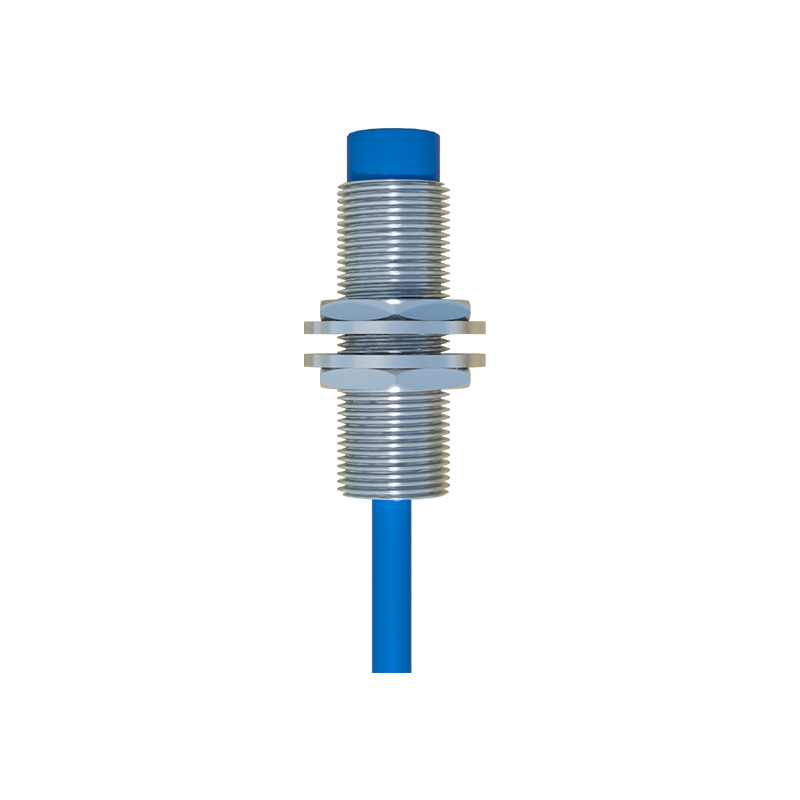
Capacitive proximity sensors, on the other hand, can detect both metallic and non-metallic materials. This includes liquids, plastics, glass, wood, and granular substances. They work by generating an electrostatic field. Any object with a dielectric constant different from air (which is nearly all materials) will change the capacitance of the sensing field when it approaches. This change is measured, and the sensor outputs a signal. This makes them perfect for applications like liquid level detection in tanks, material handling of powders, or detecting the presence of a plastic bottle on a conveyor line.
Ultrasonic sensors use sound waves beyond the range of human hearing. They emit high-frequency sound pulses and measure the time it takes for the echo to return after bouncing off an object. By calculating this time-of-flight, the sensor can determine both the presence and the distance of the object. They are excellent for detecting objects of virtually any material, shape, or color, and they perform well in challenging environments with dust, smoke, or fog. Common uses include parking assistance systems, tank level monitoring, and robotic obstacle avoidance.
Photoelectric sensors operate using light, typically infrared, visible red, or laser light. They consist of an emitter (light source) and a receiver. There are three main configurations: through-beam, retro-reflective, and diffuse reflective. Through-beam sensors have separate emitter and receiver units; an object is detected when it breaks the beam. Retro-reflective sensors use a single unit and a reflector, detecting an object when it interrupts the reflected beam. Diffuse sensors detect light reflected directly off the target itself. Photoelectric sensors are versatile for detecting small objects and can work over long distances, making them common in packaging, material handling, and assembly line counting.
The applications for proximity sensors are vast and growing. In automotive manufacturing, they ensure robotic arms position components accurately. In smartphones, a small proximity sensor turns off the touchscreen during a call to prevent accidental touches. In aviation, they monitor landing gear position. In consumer appliances, they enable touchless faucets and automatic soap dispensers, promoting hygiene. In security, they form the basis of intrusion detection systems.
When selecting a proximity sensor, engineers must consider several key factors: the material of the target object, the required sensing distance (range), the operating environment (temperature, humidity, potential contaminants), the required output type (digital ON/OFF or analog signal), and the response speed needed for the application. Proper selection ensures reliability, longevity, and cost-effectiveness.
In conclusion, proximity sensors are fundamental components that bridge the physical and digital worlds. By providing a reliable, non-contact method of detection, they enable higher levels of automation, efficiency, and safety. As technology advances, these sensors continue to become smaller, smarter, more energy-efficient, and integrated with IoT capabilities, promising even broader applications in the future of intelligent systems and Industry 4.0.