In the rapidly evolving landscape of industrial automation and precision measurement, laser sensors have emerged as indispensable tools. For many companies, developing these sophisticated devices from scratch is neither time-efficient nor cost-effective. This is where the concept of Original Equipment Manufacturer (OEM) partnerships becomes pivotal. OEM laser sensors refer to products manufactured by one company and rebranded or integrated into the systems of another. This model allows technology integrators, machinery builders, and solution providers to offer cutting-edge sensing capabilities under their own brand, without the immense R&D overhead.
The core appeal of OEM laser sensors lies in their versatility and performance. Modern units offer capabilities such as sub-micron resolution, high-speed sampling rates, and robust operation in harsh environments—features critical for applications in semiconductor fabrication, automotive assembly, precision metrology, and logistics automation. By partnering with a specialized sensor manufacturer, an OEM client gains access to this advanced technology. The partnership typically involves collaborative design to tailor parameters like measurement range, output interface (e.g., analog, digital IO, Ethernet/IP, PROFINET), form factor, and software integration. This ensures the final product seamlessly fits into the client's specific application and ecosystem.

Selecting the right manufacturing partner is the most critical step in the OEM journey. Key evaluation criteria should extend beyond basic specifications. First, assess the partner's technical expertise and proven track record in laser triangulation, time-of-flight, or confocal measurement principles, depending on your needs. Second, scrutinize their quality management systems; certifications like ISO 9001 are fundamental. Third, evaluate their production scalability and supply chain resilience to ensure consistent, long-term supply. Fourth, consider their support structure for firmware updates, technical documentation, and joint problem-solving. A partner with strong application engineering support can be invaluable during integration phases.
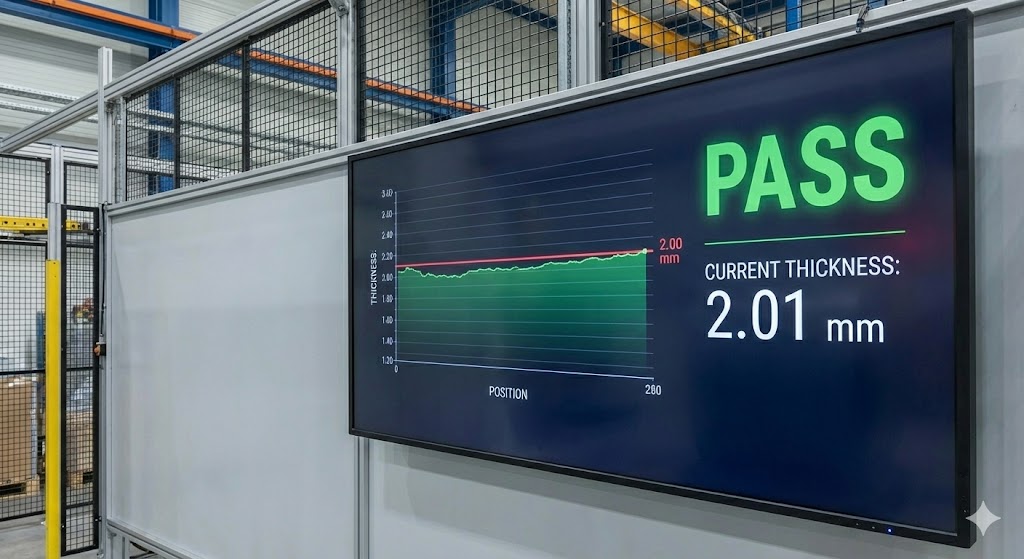
The business advantages are substantial. OEM arrangements drastically reduce time-to-market, enabling companies to respond swiftly to industry demands. They convert high fixed capital expenditure into variable costs, improving financial flexibility. By leveraging the manufacturer's economies of scale, companies can achieve better cost control. Furthermore, it allows firms to focus their internal resources on core competencies—such as developing unique application software or building customer relationships—while relying on a specialist for the complex sensor hardware.
However, the path is not without considerations. Intellectual property (IP) agreements must be clearly defined to protect the proprietary designs of both parties. Technical dependencies arise; a disruption at the manufacturer can impact the OEM client's production. Therefore, a well-structured contract outlining performance benchmarks, exclusivity terms, lifecycle management (including end-of-life notifications for components), and contingency plans is essential. It's also prudent to conduct audits and maintain open lines of communication for strategic alignment.
Looking forward, trends in Industry 4.0 and smart manufacturing are shaping the next generation of OEM laser sensors. Integration of Industrial Internet of Things (IIoT) features, such as embedded diagnostics, predictive maintenance data, and direct cloud connectivity, is becoming a standard request. Manufacturers who offer modular platforms, allowing OEM clients to select or disable features, provide greater flexibility. Sustainability considerations, including energy efficiency and the use of recyclable materials, are also gaining prominence in partnership discussions.
In conclusion, the OEM model for laser sensors represents a strategic and efficient pathway for companies to deliver high-precision, reliable sensing solutions. Success hinges on choosing a technologically adept and reliable manufacturing partner, fostering a collaborative relationship, and navigating the commercial and technical agreements with diligence. For industry professionals aiming to enhance their product portfolio with state-of-the-art measurement technology, a well-executed OEM strategy is not just an option—it's a competitive imperative in today's automated world.