In the world of industrial automation and machine design, proximity sensors are indispensable components. They provide non-contact detection of objects, enabling precise control, safety, and efficiency in countless applications. For electrical engineers, project managers, and procurement specialists, a common and critical question arises: "How much do proximity sensors cost?" The answer is not a simple figure, as pricing is influenced by a complex matrix of technical specifications, brand value, order volume, and market dynamics. This guide delves into the key factors that determine the cost of these essential devices.
Core Technology and Sensing Principle
The fundamental technology is the primary cost driver. Inductive sensors, used for detecting metallic objects, are generally the most economical, with prices starting as low as $15-$30 for basic, shielded tubular models in standard sensing ranges (e.g., 2mm to 8mm). Capacitive sensors, capable of detecting both metallic and non-metallic materials, tend to be slightly more expensive, often ranging from $25-$50 for comparable sizes. Ultrasonic sensors, offering longer ranges and material-independent detection, command a higher price point, typically beginning around $50-$100 for basic models. The most sophisticated and costly are laser distance sensors (a type of optical proximity sensor), where prices can start from $150 and escalate rapidly into the thousands for high-precision, long-range, or specialized variants.
Performance Specifications
Within a given technology, specifications dramatically affect price.
Sensing Range: A sensor with a 20mm range will cost less than an identical model with a 40mm range.
Accuracy and Repeatability: High-precision sensors with tight tolerances require superior components and calibration, increasing cost.
Output Type: Basic 2-wire DC or 3-wire NPN/PNP outputs are standard. Sensors with analog outputs (0-10V, 4-20mA), IO-Link communication, or relay outputs add complexity and cost.
Switching Frequency: A sensor rated for 5kHz switching will be more expensive than one rated for 500Hz.
Environmental Ratings: A standard IP67-rated sensor is common. Models with higher ingress protection (IP68, IP69K), extreme temperature tolerance (-40°C to 85°C), or certified for use in hazardous areas (ATEX, IECEx) carry significant price premiums due to specialized housing and construction.
Form Factor and Housing Material
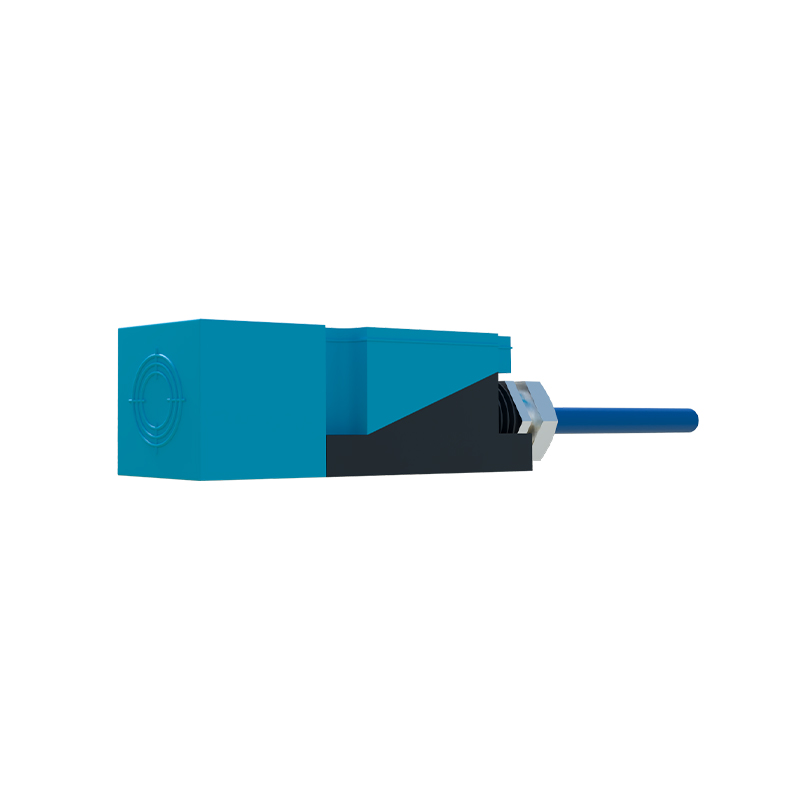
The physical design impacts cost. Miniature sensors (e.g., M5, M8, M12 threaded barrels) often have a higher cost-per-unit due to manufacturing complexity compared to larger rectangular or cubic housings. Stainless steel housings, required for washdown or corrosive environments, are more expensive than nickel-plated brass or PBT plastic housings.
Brand and Supply Chain
Established global brands like Siemens, Omron, Schneider Electric, Pepperl+Fuchs, and Balluff command a price premium, justified by extensive R&D, proven reliability, global technical support, and robust warranty. Their list prices for a standard inductive sensor might range from $40-$80. Conversely, competitive brands or generic suppliers may offer similar-spec sensors for 20-40% less. However, this often involves trade-offs in long-term availability, consistency, and support. Distributor markups, regional tariffs, and supply chain logistics also finalize the end-user price.
Order Quantity and Packaging
Unit pricing is highly sensitive to quantity. A single sensor purchased from a distributor may carry full list price. Volume purchases (e.g., 100+ units) often qualify for substantial discounts, sometimes 30-50% off list. Purchasing in bulk reel packaging for automated assembly is more cost-effective than individual retail boxes.
Total Cost of Ownership (TCO)
A savvy engineer looks beyond the initial purchase price (CAPEX). The TCO includes installation time, wiring complexity, maintenance, mean time between failures (MTBF), and potential production downtime. A more expensive, highly reliable sensor from a reputable brand may offer a lower TCO than a cheaper alternative that fails prematurely, causing costly line stoppages.
Current Market Considerations
As of 2024, global supply chains have stabilized post-pandemic, but geopolitical factors and material costs (e.g., semiconductors, metals) continue to cause volatility. Lead times, which directly affect project costing, have normalized for most standard sensors but can be extended for specialized models. Incorporating buffer costs and longer procurement timelines into project budgets is prudent.
In conclusion, while a basic inductive proximity sensor might be purchased for under $30, a fully-featured, long-range, IO-Link enabled laser sensor for a demanding application can easily exceed $500. The most effective procurement strategy involves precisely defining the application requirements (range, target material, environment