Panasonic laser sensors represent a cornerstone of modern industrial automation, offering unparalleled precision, reliability, and versatility. These advanced sensing devices utilize laser technology to perform critical tasks such as precise distance measurement, object detection, positioning, and quality inspection across a vast array of manufacturing and logistics environments. Their ability to deliver high-accuracy, non-contact measurements makes them indispensable in applications where traditional mechanical or photoelectric sensors fall short.
The core technology behind Panasonic's laser sensors often involves time-of-flight (ToF) or triangulation principles. ToF sensors calculate distance by measuring the time it takes for a laser pulse to reflect off a target and return to the receiver. This method is excellent for longer ranges and robust environmental conditions. Triangulation-based sensors, on the other hand, use the angle of the reflected beam to determine distance with exceptional micrometer-level accuracy at shorter ranges. Panasonic engineers these technologies into compact, rugged housings designed to withstand harsh industrial settings, including exposure to dust, vibration, and variable temperatures.
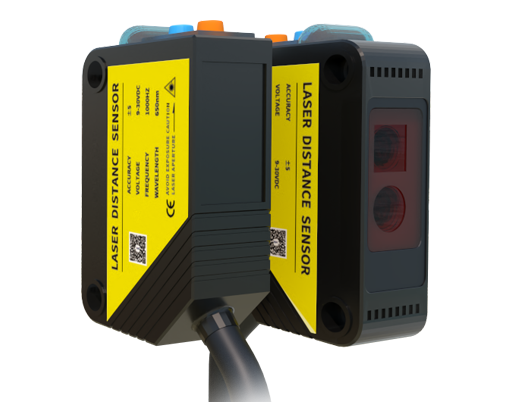
One of the key strengths of Panasonic laser sensors is their exceptional performance in challenging detection scenarios. They can reliably sense low-reflectivity objects, such as black rubber or matte-finished surfaces, which often pose problems for standard sensors. Furthermore, models with background suppression functionality can ignore objects beyond a set distance, eliminating false triggers from conveyor belts or machine parts in the background. This capability is crucial for precise pick-and-place operations, robotic guidance, and assembly verification.
In automated production lines, these sensors ensure meticulous quality control. They can detect minute height differences, measure precise gaps or thicknesses, and identify presence/absence of tiny components on printed circuit boards. In packaging and material handling, laser sensors accurately count items, control filling levels, and position materials for cutting or palletizing. Their fast response times and high sampling rates are vital for maintaining high throughput without compromising accuracy.
Integration is streamlined through various output options (NPN/PNP transistors, analog voltage/current) and communication protocols like IO-Link. IO-Link connectivity enables advanced features such as parameter setting via controller, real-time monitoring of sensor health, and predictive maintenance alerts, reducing downtime. Panasonic provides a comprehensive portfolio, from basic laser photoelectric sensors to sophisticated confocal displacement sensors, ensuring a solution for virtually every precision sensing need.

Choosing the right laser sensor requires careful consideration of factors like sensing distance, target size and material, required resolution, environmental conditions, and mounting constraints. Panasonic's technical support and extensive documentation aid engineers in selecting and configuring the optimal model. Regular maintenance, primarily keeping the lens clean from obstructions, ensures long-term stability and accuracy.
As Industry 4.0 evolves, Panasonic continues to innovate, integrating smarter features and enhanced connectivity. Their laser sensors are pivotal in building more adaptive, efficient, and intelligent automated systems. By delivering consistent, high-fidelity data, they form the sensory foundation for advanced robotics, automated guided vehicles (AGVs), and comprehensive digital twin models, driving productivity and quality to new heights in the smart factory era.
For any engineer designing or maintaining automated systems, understanding and leveraging the capabilities of Panasonic laser sensors is a significant step toward optimizing performance, ensuring quality, and achieving operational excellence in a competitive industrial landscape.