In the world of industrial automation and machine design, a common and crucial question arises: "How many watts does a proximity sensor use?" Understanding the power consumption of these ubiquitous devices is essential for proper system design, power supply sizing, and energy efficiency calculations. Unlike high-power actuators or motors, proximity sensors are typically low-power components, but their specifications warrant a detailed look.
First, it's important to clarify what we mean by "watts" in this context. Power consumption (in watts) is calculated as Voltage (V) x Current (I). For most standard proximity sensors, the critical specification provided on the datasheet is the nominal operating current, typically measured in milliamperes (mA). The voltage is defined by the sensor's type, commonly 10-30V DC or 90-250V AC.
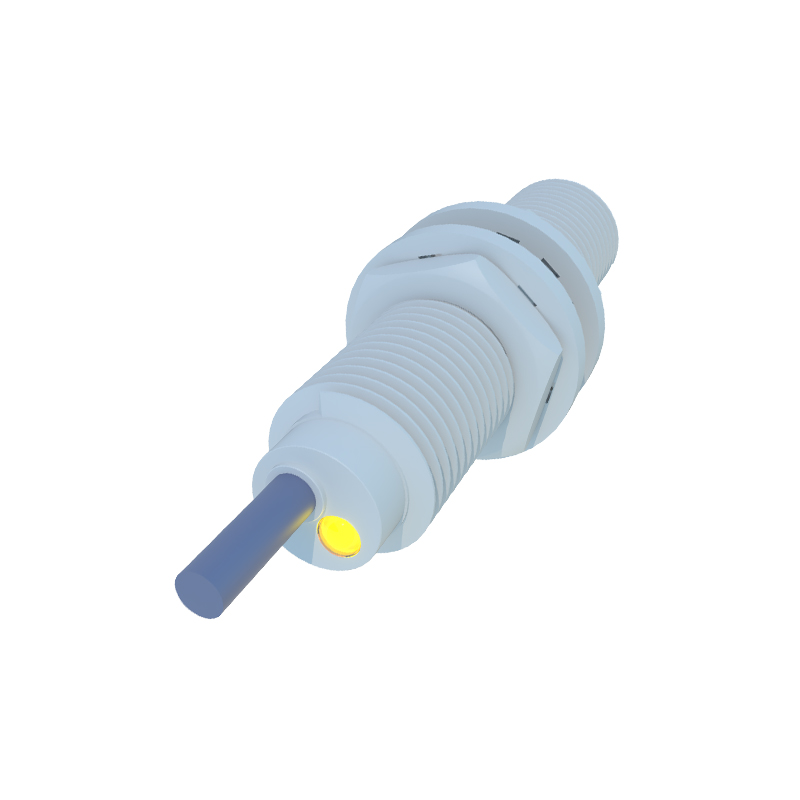
Let's break down the power consumption by sensor type:
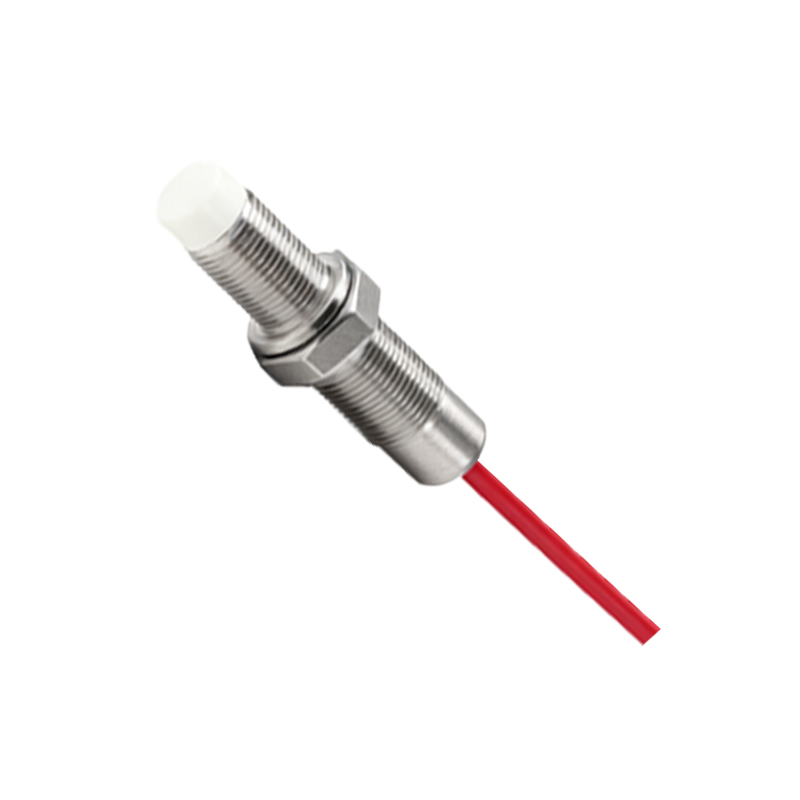
Inductive Proximity Sensors: These are used for non-contact detection of metallic objects. A standard 2-wire or 3-wire DC inductive sensor operating at 24V DC typically has a current consumption in the range of 5 mA to 20 mA. Using the formula P=VI, this translates to a power consumption of approximately 0.12 watts to 0.48 watts (24V 0.005A = 0.12W; 24V 0.02A = 0.48W). Some miniature sensors or those with special functions may fall at the lower end, while heavy-duty models with longer sensing ranges or built-in diagnostics might consume slightly more.
Capacitive Proximity Sensors: Used for detecting non-metallic materials like wood, plastic, or liquids, these sensors have similar electrical characteristics. Their current draw is also generally in the 5-20 mA range for DC models, resulting in a comparable wattage of under 0.5 watts for standard 24V DC units.
Photoelectric Sensors: This category includes through-beam, retro-reflective, and diffuse sensors. Their power needs can be slightly more variable. A standard diffuse photoelectric sensor might draw 10-50 mA at 24V DC. This equates to 0.24 to 1.2 watts. Sensors with powerful LEDs for long-range detection or advanced background suppression technology may consume current at the higher end of this spectrum.
Ultrasonic Sensors: Known for distance measuring and level detection, ultrasonic sensors often incorporate more complex electronics. Their current consumption can be higher, sometimes ranging from 15 mA up to 100 mA or more for high-performance models. At 24V DC, this means a power consumption from 0.36 watts up to 2.4 watts.
Key Factors Influencing Power Draw:
Output Configuration: A sensor with a relay output may have a slightly different quiescent current than a solid-state (transistor) output.
Features: Sensors with built-in indicators (LEDs), short-circuit protection, or IO-Link communication will have a higher base current consumption. An IO-Link sensor, for instance, has a "sensor mode" current (e.g., 20 mA) and a "communication mode" current (e.g., 50 mA or more) when data is being exchanged.
Load Current vs. Supply Current: Datasheets list the sensor's own supply current (what it uses to operate) and the max load current it can switch (e.g., 200 mA for the connected device). Power supply calculations must use the sensor's supply current.
AC vs. DC: AC-powered sensors (e.g., 120V AC) will have much lower current ratings (e.g., 1-5 mA) but similar low wattage due to the higher voltage.
Practical Implications for System Design:
When sizing a power supply for a control cabinet, you must sum the current draw of all sensors and other electronic devices. For example, a panel with 50 inductive sensors each drawing 15 mA represents a total current of 750 mA or 18 watts at 24V DC. This is a relatively small but non-negligible load. More importantly, understanding the low power nature confirms that heat dissipation from the sensors themselves is minimal, and voltage drop over long wire runs is often a more critical design consideration than the raw wattage.
In conclusion, the answer to "how many watts does a proximity sensor use?" is almost always: less than 2 watts, and frequently under 0.5 watts for standard DC models. The precise value must be taken from the manufacturer's datasheet for the specific model, considering its type, voltage, and feature set. This remarkably low power consumption is one of the