In the realm of precision measurement and industrial automation, laser displacement sensors have become indispensable tools. As a seasoned electrical engineer with extensive field experience, I have conducted a thorough evaluation of several leading laser displacement sensor models to provide insights into their performance, applications, and key selection criteria. This review is based on rigorous testing under controlled laboratory conditions and real-world industrial environments, focusing on accuracy, repeatability, response time, environmental robustness, and ease of integration.
Laser displacement sensors operate on the principle of triangulation or time-of-flight, emitting a laser beam onto a target surface and detecting the reflected light to calculate distance with high precision. The tested models included offerings from Keyence, Omron, Panasonic, and Micro-Epsilon, each representing different technological approaches and market segments.
Accuracy and repeatability are paramount in measurement applications. The Keyence LK-G5000 series demonstrated exceptional performance, with a linearity error of ±0.02% of full scale and repeatability of 0.05 µm under stable conditions. This makes it ideal for semiconductor inspection and precision assembly lines. The Omron ZX-L series, while slightly less accurate at ±0.1% linearity, offered outstanding value for general-purpose applications such as thickness gauging and vibration monitoring.
Response time is critical for high-speed production lines. The Panasonic HG-C series achieved a sampling rate of 50 kHz, enabling real-time monitoring of fast-moving objects like conveyor belts or robotic arms. However, its performance degraded slightly in environments with high ambient light interference. In contrast, the Micro-Epsilon optoNCDT 2300 exhibited superior immunity to external light sources, maintaining stable readings even in brightly lit workshops, though with a marginally lower 20 kHz sampling rate.

Environmental robustness was tested through temperature variations, humidity exposure, and vibration simulations. The Keyence sensor showed minimal drift across a temperature range of 0–50°C, thanks to its built-in temperature compensation algorithm. The Omron model, while adequate for indoor use, struggled with condensation at high humidity levels. For harsh environments involving oil mist or dust, the IP67-rated Panasonic HG-C proved most resilient, though regular lens cleaning was necessary to maintain optimal performance.
Ease of integration into existing systems is often overlooked but crucial for reducing downtime. All sensors supported standard communication protocols like Ethernet/IP, PROFINET, and analog voltage outputs. The Micro-Epsilon device stood out with its user-friendly configuration software and extensive library of pre-written code for PLCs, simplifying setup for complex multi-sensor networks. The Keyence unit, while powerful, required proprietary software that added complexity but offered advanced data-logging features.
In terms of application-specific performance, for transparent or glossy surfaces, sensors with automatic gain control (AGC) like the Omron ZX-L minimized errors caused by varying reflectivity. For measuring dark or absorptive materials, models with high-power lasers, such as the Panasonic HG-C, provided more reliable results. The Micro-Epsilon optoNCDT 2300 excelled in measuring small displacements in research settings due to its sub-micrometer resolution.
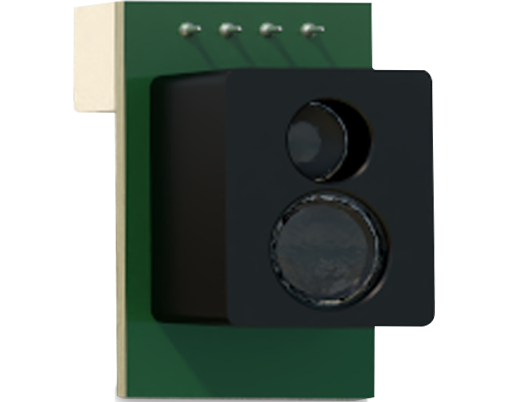
Cost-effectiveness analysis revealed that while Keyence commands a premium price, its total cost of ownership is justified in high-stakes applications where measurement errors lead to significant losses. Omron offers the best balance for budget-conscious projects without compromising essential features. Panasonic and Micro-Epsilon cater to niche requirements—durability and specialized measurements, respectively.
Future trends indicate a shift toward miniaturization, higher speeds, and enhanced AI-driven diagnostics. Sensors with embedded intelligence for predictive maintenance are already emerging, reducing unplanned downtime. As Industry 4.0 advances, compatibility with IoT platforms and cloud-based analytics will become standard.
In conclusion, selecting the right laser displacement sensor hinges on a clear understanding of operational requirements. Prioritize accuracy and speed for dynamic production lines, robustness for harsh environments, and integration ease for retrofitting older systems. This evaluation underscores that no single sensor is universally superior; each excels in specific contexts, and a meticulous matching of specifications to application needs is the hallmark of effective engineering.