In industrial automation and precision measurement systems, laser sensors play a critical role due to their high accuracy, non-contact operation, and rapid response times. However, the effectiveness of these sensors heavily depends on their proper placement within the operational environment. Determining the optimal placement range involves a multifaceted analysis of technical specifications, environmental factors, and application-specific requirements. This article delves into the key considerations for positioning laser sensors to ensure reliable performance and longevity.
The fundamental principle governing laser sensor placement is the specified operating range provided by the manufacturer. This range, typically defined as a minimum and maximum sensing distance, is determined by the sensor's optical design, laser power, and detector sensitivity. Operating a sensor too close to the target (within the dead zone or minimum range) can result in signal saturation or damage to the detector, while placing it beyond the maximum range leads to insufficient signal return, causing measurement errors or failure to detect the object. It is imperative to consult the datasheet and select a sensor whose nominal range comfortably encompasses the expected working distances in the application, with an added safety margin of 10-20% to account for unforeseen variations.
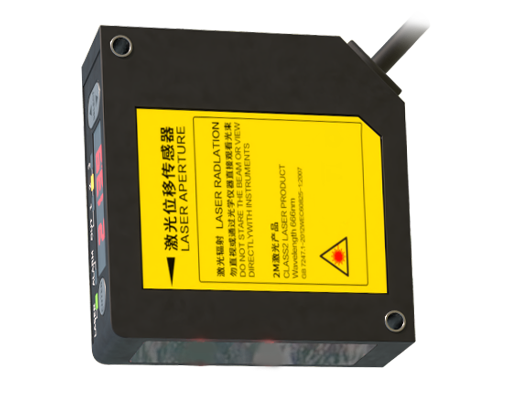
Environmental conditions profoundly influence the effective placement range. Ambient light, particularly strong direct sunlight or other high-intensity light sources, can interfere with the laser's signal, creating noise and reducing the signal-to-noise ratio. For outdoor or brightly lit indoor applications, sensors with modulated laser light or specialized filters are recommended. Furthermore, the presence of dust, fog, steam, or other airborne particulates can scatter or attenuate the laser beam, effectively reducing the maximum reliable sensing distance. In such environments, placing the sensor closer to the target within its permissible range or using sensors with higher output power may be necessary. Temperature fluctuations can also affect the sensor's electronic components and the wavelength of the laser diode, potentially shifting its calibration. Ensuring the sensor is placed in an area with stable temperature, away from heat sources like motors or ovens, is crucial for consistent performance.
The physical and surface properties of the target object are equally decisive. The laser sensor's effective range can vary significantly based on the target's color, reflectivity, surface texture, and material. A highly reflective, smooth surface (e.g., polished metal) may cause specular reflection, potentially directing the beam away from the detector if the angle of incidence is not optimal. Conversely, a dark, matte, or absorptive surface (e.g., black rubber) reflects less light, requiring a stronger return signal and thus a shorter effective range. For consistent detection of varied surfaces, it is often advisable to conduct tests with actual sample materials to determine a practical placement distance that works for all expected targets. The angle of incidence is another critical factor; the sensor should ideally be positioned perpendicular to the target surface to ensure the strongest signal return. Deviations from this perpendicular alignment can reduce the effective range and accuracy.
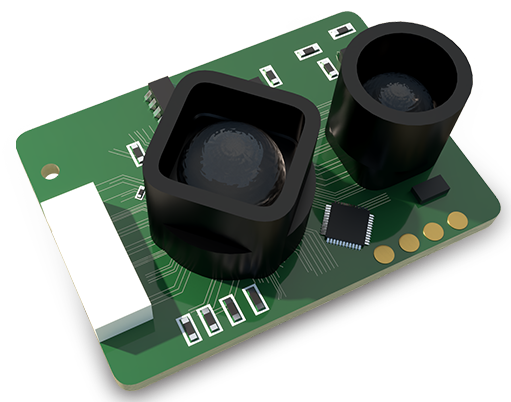
Beyond the immediate sensing parameters, mechanical and integration considerations dictate placement. Vibration and shock in industrial settings can misalign the sensor over time. Therefore, the mounting structure must be rigid and stable. The placement should also facilitate easy access for maintenance, calibration, and cleaning of the lens without requiring lengthy system downtime. Cable routing must be planned to avoid areas with high electromagnetic interference (EMI) from motors, welders, or power lines, which can disrupt signal integrity. For safety, especially with Class 2 or higher lasers, the placement must ensure that the beam path is contained and does not pose an eye hazard to personnel. Using beam guards or placing the sensor at a height or orientation where accidental exposure is minimized is a standard safety practice.
In complex applications like robotic guidance, level monitoring in bins, or web edge detection, the placement is often a compromise between multiple constraints. For instance, in bin level sensing, the sensor must be placed far enough to cover the entire depth of the bin but close enough to penetrate dust or material buildup on the lens. Using multiple sensors with overlapping ranges or a single sensor with a wider field-of-view may be a solution. Ultimately, the optimal placement range is not a single fixed number but a "sweet spot" derived from balancing all these factors—technical specs, environment, target properties, and physical installation—through careful planning, simulation, and on-site validation. Documenting the final placement parameters, including distance, angle, and environmental shields used, is essential for future troubleshooting and system replication.