In the heart of Shifang's advanced manufacturing sector, LiDAR (Light Detection and Ranging) distance sensors have emerged as a cornerstone technology, driving unprecedented levels of automation, quality control, and operational efficiency. These sophisticated devices, which utilize laser pulses to measure distance with exceptional accuracy, are no longer confined to specialized labs but are integral components in diverse industrial landscapes, from heavy machinery and robotics to logistics and smart infrastructure.
The fundamental principle of a LiDAR distance sensor is elegantly precise. It emits a focused laser beam towards a target. The sensor then precisely measures the time it takes for the reflected light to return—a method known as Time-of-Flight (ToF). Given the constant speed of light, this time interval is directly and accurately converted into a distance measurement. Modern industrial-grade LiDAR sensors in Shifang's applications often employ advanced pulsed ToF technology, which allows for long-range measurement (often exceeding 100 meters) with centimeter-level or even millimeter-level precision, all while being largely immune to ambient light interference.
The industrial advantages are profound. In automated guided vehicle (AGV) systems within sprawling warehouses, LiDAR sensors provide real-time, 360-degree environmental mapping and obstacle detection, enabling safe and efficient navigation without physical guides. On production lines, they perform non-contact dimensional gauging of components—verifying the thickness of metal sheets, the fill level of containers, or the precise positioning of robotic arms with speed and reliability that mechanical probes cannot match. In construction and material handling, they monitor stockpile volumes in yards and ensure safe crane operation by calculating load positions and clearances.
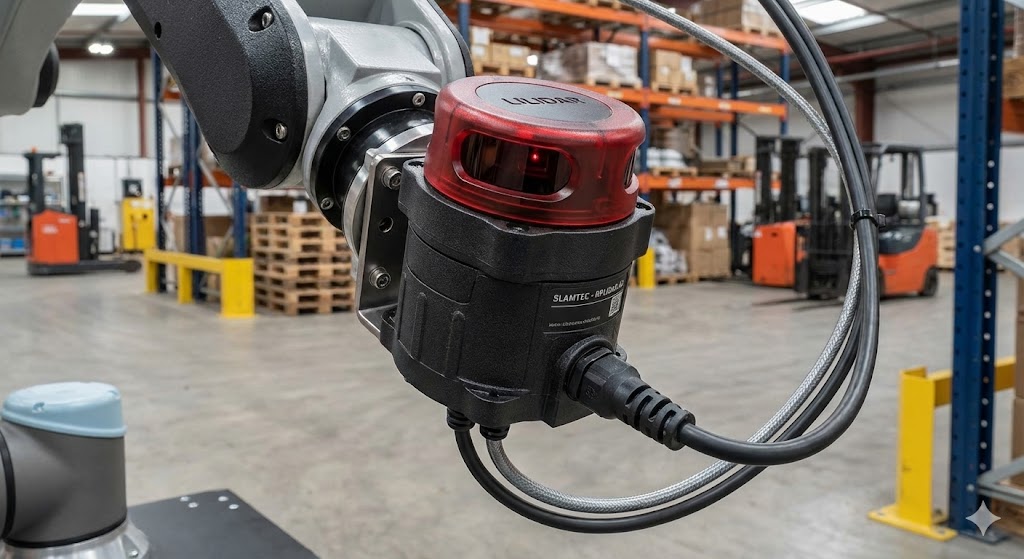
Shifang's integration of these sensors highlights key selection criteria for engineers. Measurement Range and Accuracy are paramount; selecting a sensor with a range that comfortably exceeds the operational requirement ensures a safety margin. Scanning Frequency and Resolution determine how quickly and in how much detail a sensor can capture its environment, critical for dynamic applications like collision avoidance. Environmental Robustness is non-negotiable. Sensors deployed in Shifang's industrial settings must possess high Ingress Protection (IP) ratings (e.g., IP67) to withstand dust, moisture, and vibration. Furthermore, Output Interfaces like Ethernet/IP, PROFINET, or analog outputs must seamlessly integrate with existing Programmable Logic Controller (PLC) systems.
Beyond basic measurement, the data from LiDAR sensors fuels the Industrial Internet of Things (IIoT). By feeding precise, continuous distance data into central monitoring systems, they enable predictive maintenance—detecting minute misalignments in machinery before they cause downtime—and generate actionable analytics for process optimization. This transforms raw distance data into strategic business intelligence.
However, implementation requires careful consideration. While LiDAR excels in most conditions, extremely reflective surfaces (like polished metal) or highly absorbent materials (like black rubber) can sometimes challenge the return signal strength. Modern sensors combat this with adjustable laser power and advanced signal processing algorithms. The initial investment, though higher than simpler ultrasonic or infrared sensors, is justified by the superior accuracy, speed, and long-term reliability, leading to a compelling return on investment through reduced waste, lower downtime, and enhanced product quality.

Looking forward, the evolution of LiDAR technology in Shifang's industry points towards miniaturization, reduced cost, and enhanced software capabilities. The integration of artificial intelligence for real-time object classification and the development of solid-state LiDAR (with no moving parts) promise even greater durability and application scope. As Shifang continues to advance its manufacturing prowess, the role of the LiDAR distance sensor will only deepen, solidifying its status as an indispensable eye for precision in the automated industrial world, enabling smarter, safer, and more efficient operations across the board.