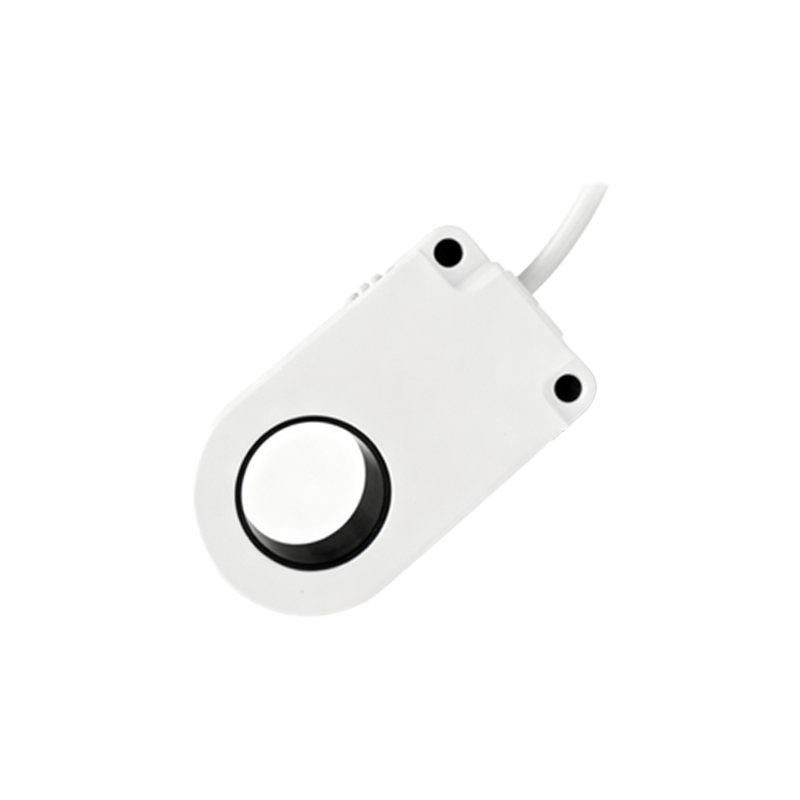
In industrial automation and control systems, sensors play a pivotal role in detecting objects, measuring distances, and ensuring precise operations. Among the most commonly used non-contact sensors are photoelectric sensors and proximity sensors. While both serve the purpose of object detection without physical contact, they operate on fundamentally different principles and are suited to distinct applications. Understanding their differences is crucial for selecting the right sensor for a specific task, optimizing performance, and enhancing system reliability.
Photoelectric sensors function by emitting a beam of light, typically infrared, visible red, or laser light, and detecting changes in the received light signal. They consist of a transmitter (light source) and a receiver. When an object interrupts or reflects the light beam, the sensor triggers an output signal. Photoelectric sensors are categorized into three main types: through-beam, retro-reflective, and diffuse reflective. Through-beam sensors have separate transmitter and receiver units, offering long detection ranges and high accuracy. Retro-reflective sensors use a reflector to bounce light back to the receiver, making them suitable for medium-range applications. Diffuse reflective sensors rely on light reflecting directly off the target object, ideal for short-range detection where the object's surface properties matter. These sensors excel in detecting objects regardless of material composition—whether metallic, plastic, glass, or liquid—as long as the object affects the light beam. They are widely used in packaging, material handling, and assembly lines for counting, positioning, and inspection tasks.
In contrast, proximity sensors detect the presence of nearby objects without any physical contact by generating an electromagnetic field or using capacitive effects. The most common type is the inductive proximity sensor, which operates on the principle of electromagnetic induction. It generates a high-frequency oscillating magnetic field from its sensing face. When a metallic object enters this field, eddy currents are induced in the object, causing a change in the sensor's oscillation amplitude. This change is detected and converted into an output signal. Inductive proximity sensors are highly effective for detecting ferrous and non-ferrous metals but cannot detect non-metallic materials like plastic, wood, or ceramics. Another variant is the capacitive proximity sensor, which can detect both metallic and non-metallic objects by sensing changes in capacitance when an object enters its electrostatic field. Proximity sensors are known for their robustness, resistance to environmental factors like dust, dirt, and moisture, and fast response times. They are commonly employed in metal detection applications, such as in machining centers, automotive manufacturing, and conveyor systems for monitoring metal parts.
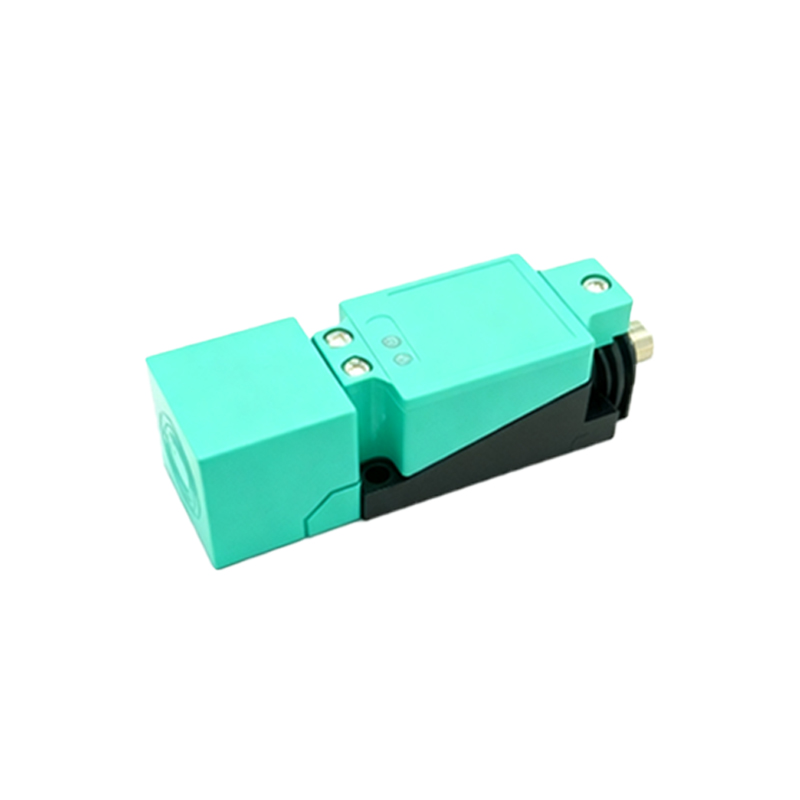
The key differences between photoelectric and proximity sensors lie in their operating principles, detection capabilities, and environmental suitability. Photoelectric sensors rely on light beams, making them versatile for diverse materials but potentially susceptible to interference from ambient light, fog, or dirty lenses. They offer longer sensing ranges, from a few centimeters up to several meters, depending on the type. Proximity sensors, particularly inductive ones, are limited to metallic targets and have shorter ranges, typically from a few millimeters to about 60 millimeters. However, they are less affected by environmental conditions like dust or vibrations, providing stable performance in harsh industrial settings. In terms of speed, photoelectric sensors generally have faster response times, suitable for high-speed applications, while proximity sensors offer consistent detection in close-range scenarios.
When choosing between photoelectric and proximity sensors, consider factors such as the target material, required sensing distance, environmental conditions, and application specifics. For instance, in a food processing plant where non-metallic containers need detection, a photoelectric sensor would be appropriate. Conversely, in a metal stamping machine where only steel parts are involved, an inductive proximity sensor ensures reliable operation. Cost is another consideration; photoelectric sensors may be more expensive due to their complex optics, while proximity sensors are often cost-effective for metal-sensing tasks.
In summary, photoelectric and proximity sensors each have unique advantages tailored to different industrial needs. Photoelectric sensors provide flexibility and long-range detection for various materials, whereas proximity sensors offer durability and precision for metallic objects in challenging environments. By understanding these distinctions, engineers and technicians can make informed decisions to enhance automation efficiency and system performance. As technology advances, hybrid sensors and smart features are emerging, but the core principles remain essential for effective sensor selection.