In industrial automation and control systems, sensors play a critical role in detecting the presence, absence, or position of objects without physical contact. Two of the most prevalent non-contact sensors are proximity sensors and photoelectric sensors. While they share the common goal of object detection, their underlying operating principles, capabilities, and ideal applications differ significantly. Understanding these distinctions is essential for selecting the right sensor for a specific task, ensuring reliability, efficiency, and cost-effectiveness.
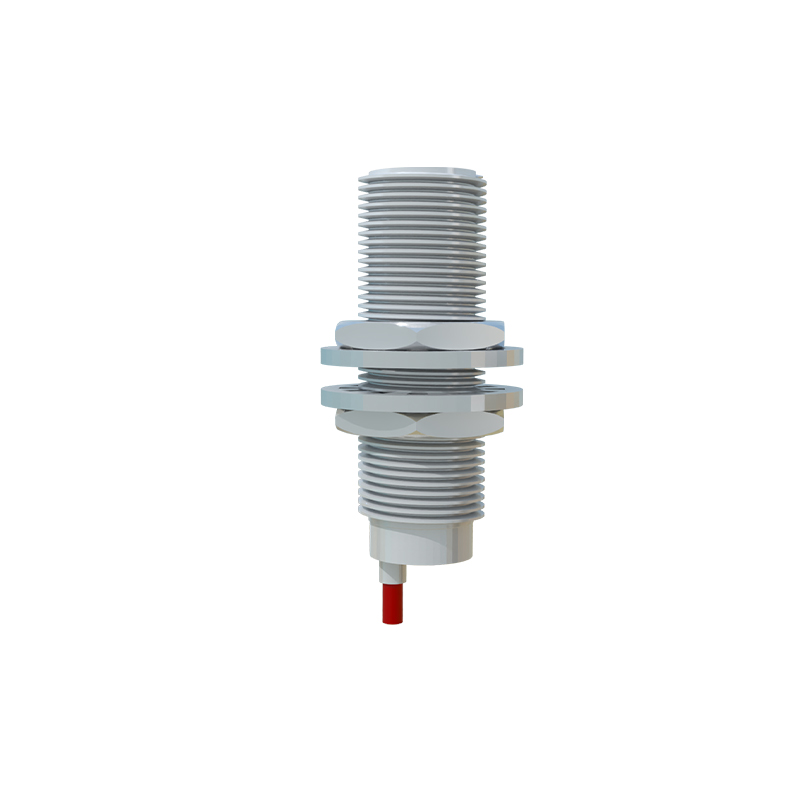
A proximity sensor, often referred to simply as a "prox" sensor, detects the presence of nearby objects through changes in an electromagnetic field. The most common type is the inductive proximity sensor. It generates an oscillating electromagnetic field from its sensing face. When a metallic object enters this field, it induces eddy currents within the object, which dampens the oscillation of the sensor's internal circuit. This damping effect is detected, triggering the sensor's output switch. Another type is the capacitive proximity sensor, which can detect both metallic and non-metallic materials (like plastics, wood, or liquids) by sensing changes in capacitance caused by the object's dielectric properties.
The key characteristics of proximity sensors are their reliance on the electromagnetic properties of the target and their typically very short sensing ranges. Inductive sensors, for instance, are limited to detecting metals and have ranges from a few millimeters up to about 60 millimeters for larger models. They are exceptionally robust, immune to environmental factors like dust, fog, or light interference, and are ideal for harsh industrial environments. Common applications include counting metal parts on a conveyor, detecting the position of a machine tool, or confirming the closure of a metal door.
In contrast, a photoelectric sensor operates on the principle of light. It consists of a light emitter (usually an LED producing visible red, infrared, or laser light) and a receiver. The sensor detects an object by interpreting changes in the light signal received. There are three primary operating modes: Through-beam, Retro-reflective, and Diffuse (proximity) mode. Through-beam sensors have separate emitter and receiver units; an object is detected when it breaks the light beam. This mode offers the longest sensing range and highest reliability. Retro-reflective sensors house both emitter and receiver in one unit, using a reflector to bounce the light back; detection occurs when the beam is blocked. Diffuse sensors rely on the reflection of light directly off the target object itself back to the receiver.
Photoelectric sensors boast much longer sensing ranges than proximity sensors, from a few centimeters up to several hundred meters for specialized through-beam models. They can detect virtually any material—metal, plastic, paper, glass, or liquid—as long as it affects the light beam. However, this strength is also a potential weakness. Their performance can be adversely affected by environmental conditions such as dust, steam, heavy contamination, or ambient light interference. Transparent or highly reflective objects can also pose detection challenges. Typical applications include bottle detection on filling lines, box presence in packaging, level detection in silos, and object counting on transparent conveyors.
The core difference lies in the detection method: magnetism/electrostatics versus light. This fundamental distinction drives all subsequent comparisons. Proximity sensors (inductive) are material-specific and short-range but are incredibly stable and environment-proof. Photoelectric sensors are material-versatile and long-range but are more susceptible to environmental optical noise.
When choosing between them, consider the following factors:
Target Material: For exclusive metal detection in dirty conditions, an inductive proximity sensor is often the best choice. For non-metallic or varied materials, a photoelectric sensor is necessary.
Sensing Distance: For ranges beyond 100mm, photoelectric sensors are typically required. For very short-range, embedded detection, proximity sensors excel.
Environmental Conditions: Oily, dusty, or vibratory environments favor rugged proximity sensors. Clean environments are suitable for photoelectric sensors. For dusty or foggy conditions that could block light, a through-beam photoelectric with sufficient power or a proximity sensor might be evaluated.
Speed and Precision: Both sensor types offer high-speed operation. For detecting very small objects or precise positioning, laser-based photoelectric sensors provide the highest accuracy.
Installation and Alignment: Proximity sensors are generally easier to install as they have a single unit and a wide sensing field. Through-beam photoelectric sensors require careful alignment of two separate components, which can be time-consuming.
In summary, proximity sensors are the specialists—robust, reliable masters of short-range metallic detection in tough settings. Photoelectric sensors are the generalists—flexible, long-range solutions capable of detecting a vast array of materials, provided the environment is compatible with optical sensing. By carefully evaluating the target, range, and operating environment, engineers can make an informed decision that optimizes system performance and longevity