In the world of industrial automation and electronic device design, sensors act as the critical sensory organs, providing essential data for control systems. Among the myriad of sensor types, proximity sensors and photoelectric sensors are two fundamental and widely used categories. While they sometimes serve similar functions—detecting the presence or absence of an object without physical contact—their underlying principles, capabilities, and ideal applications differ significantly. Understanding these differences is crucial for engineers, technicians, and designers to select the optimal sensor for a given task, ensuring reliability, efficiency, and cost-effectiveness.
Understanding Proximity Sensors
Proximity sensors are devices that detect the presence or absence of a nearby object within a specified range without any physical contact. They achieve this by emitting an electromagnetic field or a beam of electromagnetic radiation and then looking for changes in the field or return signal. The most common types are inductive, capacitive, and magnetic (Reed switch or Hall effect) proximity sensors.
Inductive Proximity Sensors: These are the workhorses for detecting metallic objects, primarily ferrous metals like steel and iron. They generate an oscillating electromagnetic field from a coil. When a conductive metal enters this field, it induces eddy currents within the metal, which dampens the oscillation of the sensor's coil. The sensor's circuit detects this damping and triggers an output switch. They are robust, resistant to environmental factors like dust, oil, and water (often rated IP67 or higher), and offer high switching frequencies. Typical applications include counting metal parts on a conveyor, detecting the position of a machine tool, or as end-position sensors in cylinders.
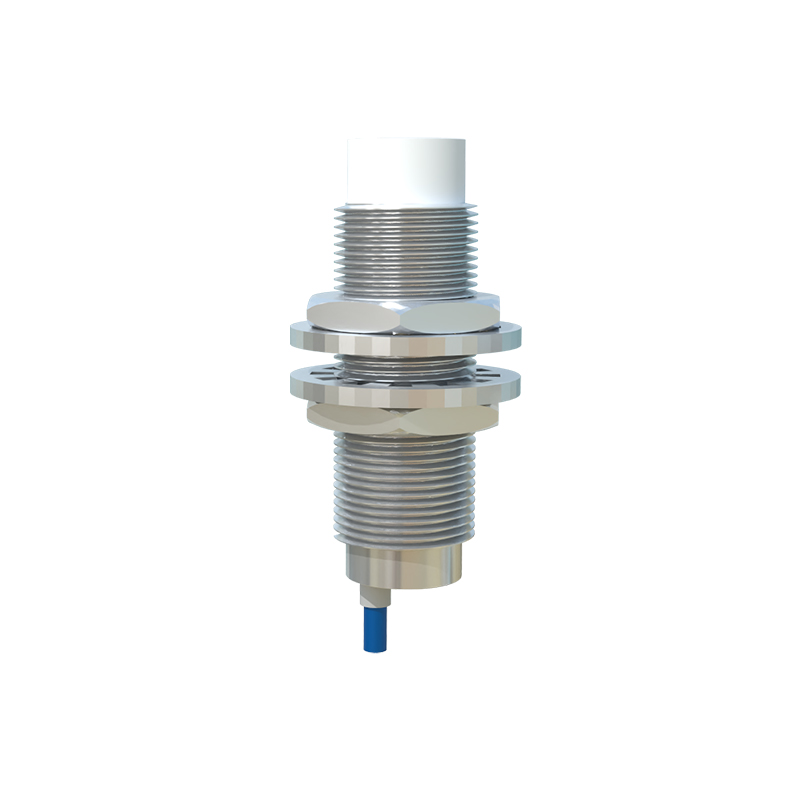
Capacitive Proximity Sensors: These sensors can detect both metallic and non-metallic objects—including liquids, plastics, glass, and wood. They operate by generating an electrostatic field. Any object that enters this field alters the capacitance of the sensor's circuit, triggering detection. This makes them versatile for tasks like detecting fill levels in tanks (liquid or granular materials), sensing wood or plastic panels, or even detecting a person's hand. They are generally more sensitive to environmental changes and require careful calibration.
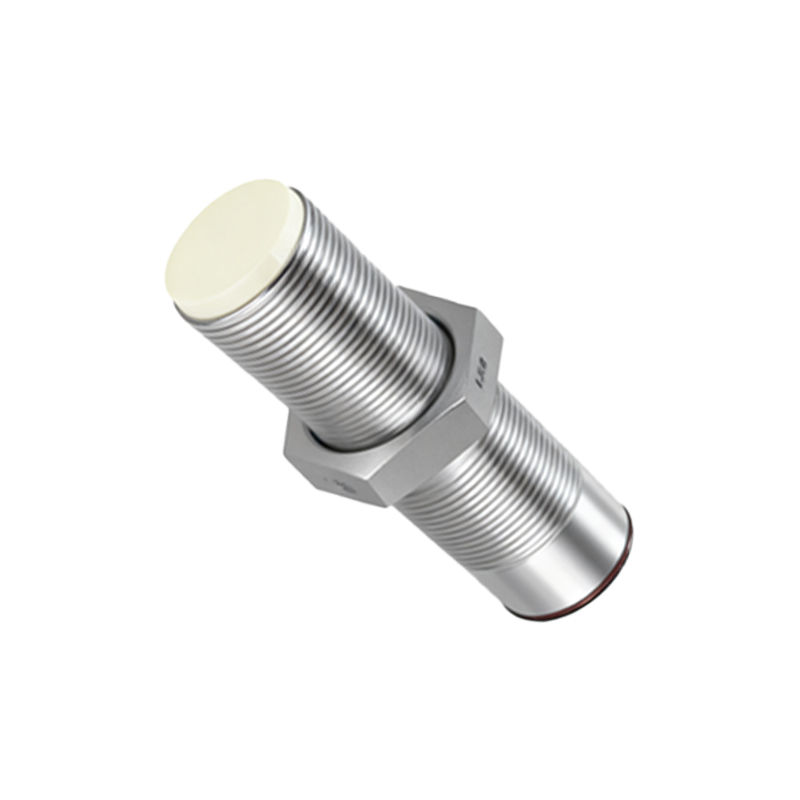
Magnetic Proximity Sensors: These detect the presence of a permanent magnet. Common types include Reed switches (glass-enclosed contacts that close in a magnetic field) and Hall effect sensors (semiconductor devices that output a voltage in response to a magnetic field). They are frequently used for detecting the position of pneumatic cylinder pistons (where a magnet is embedded in the piston) or in safety door interlocks.
Understanding Photoelectric Sensors
Photoelectric sensors, in contrast, use light to detect objects. The core components are an emitter (light source) and a receiver. The sensor detects an object by either the interruption or the reflection of a light beam. They are categorized primarily by their sensing mode: through-beam, retro-reflective, and diffuse (proximity-mode).
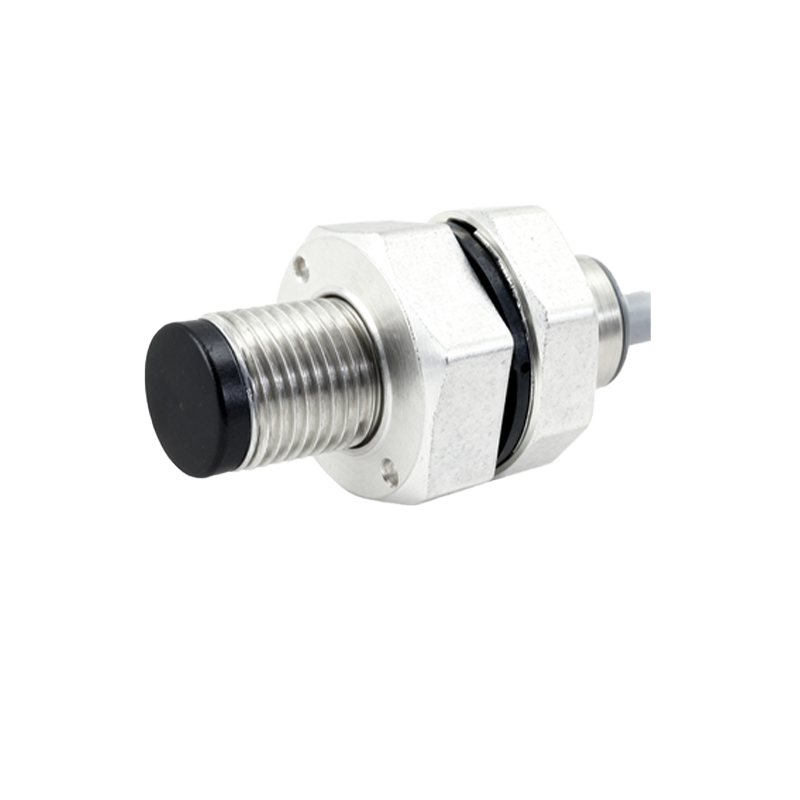
Through-Beam Sensors: These consist of separate, opposing units—an emitter and a receiver. The emitter projects a continuous beam of light to the receiver. An object is detected when it breaks this beam. This mode offers the longest sensing ranges (often up to tens of meters) and is highly reliable because it is less affected by the object's color, reflectivity, or surface angle. It is ideal for precise detection on high-speed conveyors or for counting objects of varying shapes.
Retro-Reflective Sensors: Here, the emitter and receiver are housed in the same unit. The sensor projects a beam towards a dedicated reflector (like a prismatic tape or a special mirror), which bounces the light directly back to the receiver. Detection occurs when an object interrupts this reflected beam. Sensing range is shorter than through-beam but longer than diffuse mode. A key challenge can be detecting shiny objects that might reflect light back like the reflector itself, though modern sensors with polarization filters mitigate this.
Diffuse (Proximity-Mode) Sensors: These also house the emitter and receiver together. They detect an object when the target itself reflects the emitted light back to the receiver. The sensing distance depends heavily on the object's size, color, and surface texture (white, reflective surfaces are detected at longer ranges than black, matte ones). They are compact and require only one wiring point, making them popular for short-range detection, such as in packaging machinery or for detecting objects on a pallet.
Key Comparison and Selection Criteria
Choosing between a proximity sensor and a photoelectric sensor hinges on several factors:
1. Target Material: This is the primary differentiator. If you only need to detect metals, an inductive sensor is often the simplest, most robust choice. For non-metals, liquids, or a mix of materials, your options are capacitive proximity sensors or photoelectric sensors.
2