In the world of industrial automation, motion control, and precision engineering, the accurate measurement of linear displacement is a fundamental requirement. Linear position sensors, also known as linear transducers or linear encoders, are the critical components that fulfill this role. These devices convert the physical movement of an object along a straight path into a precise electrical signal, providing real-time data on position, speed, and sometimes even acceleration. Their importance spans countless applications, from the robotic arms in manufacturing plants to the suspension systems in modern vehicles and the delicate stages in semiconductor lithography machines.
The operational principle of a linear sensor hinges on detecting a change in a physical property correlated to position. This detected change is then transduced into a standardized electrical output, such as an analog voltage, a current loop (4-20 mA), a digital pulse train, or a serial data packet via protocols like SSI or CANopen. The choice of technology dictates the sensor's performance characteristics, including its resolution, accuracy, repeatability, measuring range, environmental robustness, and cost.
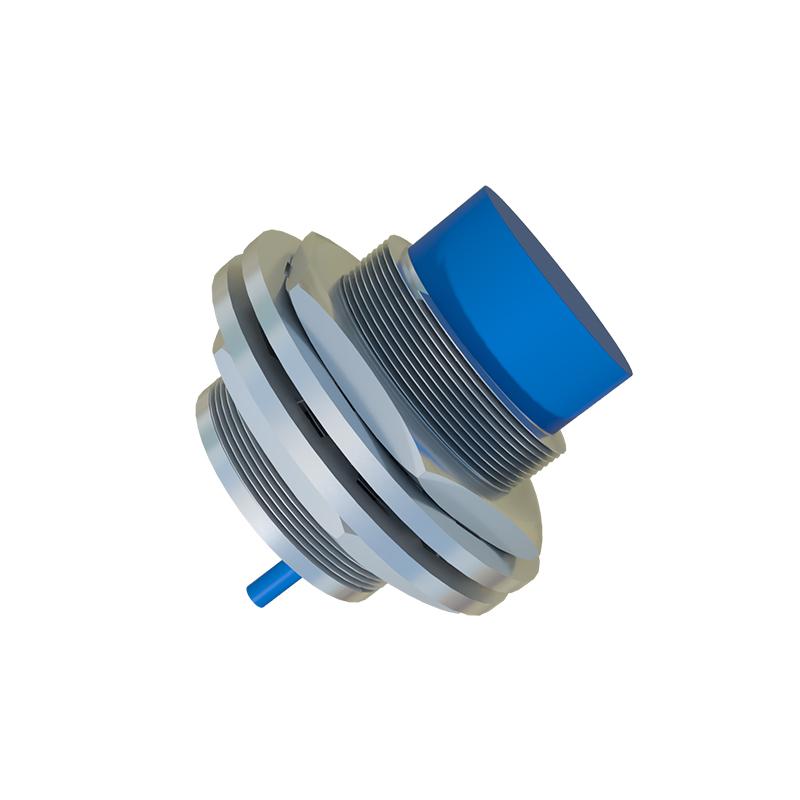
Several core technologies dominate the linear sensor landscape. Potentiometric Sensors, or linear potentiometers, are among the simplest and most cost-effective. They function like a variable resistor, with a wiper that moves along a resistive element. The change in resistance is proportional to the position. While offering good resolution and simplicity, their contacting nature leads to mechanical wear over time, limiting their lifespan in high-cycle applications.
Magnetostrictive Sensors offer non-contact, high-precision measurement. A position magnet is attached to the moving target. Inside the sensor's waveguide, a torsional strain pulse is generated at the magnet's location when interrogated by a current pulse. The time delay between the pulse initiation and the return signal arrival is measured to calculate the absolute position with remarkable accuracy, even over long strokes. They are renowned for durability, high resolution, and reliability in harsh industrial environments.
Linear Variable Differential Transformers (LVDTs) are inductive sensors that provide truly frictionless, non-contact measurement. They consist of a primary coil and two secondary coils wound on a cylindrical former, with a separate ferromagnetic core attached to the moving object. As the core moves, it changes the magnetic coupling between the coils, producing an output voltage proportional to the core's displacement. LVDTs are celebrated for their infinite resolution, excellent repeatability, and robustness against contaminants like oil, dirt, and moisture.
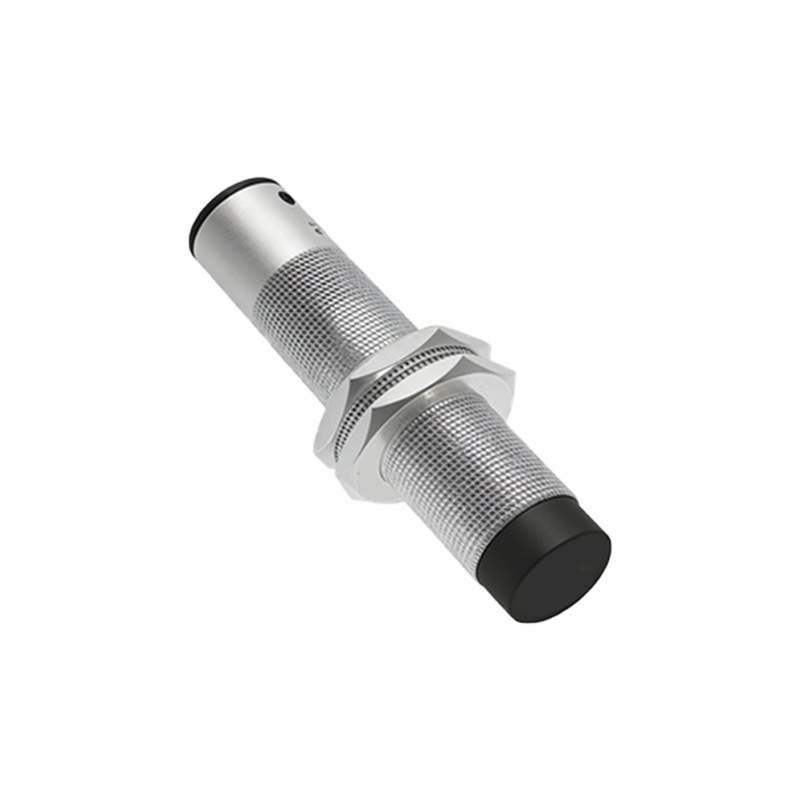
Eddy Current Sensors operate on the principle of electromagnetic induction. A coil in the sensor probe generates a high-frequency magnetic field. When a conductive target moves into this field, eddy currents are induced on its surface, which in turn affect the coil's impedance. This change is measured to determine the gap between the probe and the target. These sensors are ideal for measuring very small displacements with extremely high resolution and frequency response, but they require a specific conductive target material.
Optical Linear Encoders represent the pinnacle of precision for high-speed, high-accuracy applications. They use a scale (glass or metal) with finely etched gratings and a read head that contains a light source and photodetectors. As the read head moves relative to the scale, it interprets the alternating pattern of light and dark lines to generate digital quadrature pulses, counting each line to determine position. They offer the highest possible resolution and accuracy but can be sensitive to contamination from dust, chips, or coolant.
Selecting the right linear sensor requires a careful analysis of the application's demands. Key parameters to consider include the required measuring range (stroke length), the necessary resolution (smallest detectable change) and accuracy (deviation from the true value), the repeatability (consistency of returning to the same position), and the linearity (how well the output signal follows a straight line). Environmental factors are equally critical: will the sensor be exposed to extreme temperatures, shock/vibration, humidity, or aggressive chemicals? The installation constraints, such as available space and mounting options, also play a major role. Finally, the output signal type must be compatible with the existing control system, whether it's a simple PLC, a sophisticated motion controller, or a data acquisition system.
In practice, linear sensors are the unsung heroes of modern engineering. In factory automation, they ensure robotic grippers position components with micron-level precision for assembly. In hydraulic systems, they provide closed-loop feedback for cylinder position control. In medical equipment, they enable the precise movement of imaging devices and surgical tools. The ongoing trends towards Industry 4.0 and the Industrial Internet of Things (IIoT) are further elevating their role, with integrated diagnostics, smart sensor features, and direct network connectivity becoming increasingly common, transforming raw position data into actionable intelligence for predictive maintenance and process optimization.