In the modern landscape of industrial automation, environmental monitoring, and smart building management, the accurate detection and measurement of particulate matter have become paramount. Among the various technologies available, the laser infrared dust sensor has emerged as a leading solution, offering a blend of precision, reliability, and cost-effectiveness. This article delves into the operational principles, key applications, and critical factors for selecting the right sensor for your needs.
At its core, a laser infrared dust sensor operates on the principle of light scattering, specifically Mie scattering. A stable laser diode, typically in the infrared spectrum, emits a focused beam of light into a detection chamber. As airborne particles pass through this chamber, they intersect the laser beam. Upon this interaction, the particles scatter the light in all directions. A strategically placed photodetector, positioned at a specific angle (often 90 degrees), captures this scattered light. The intensity of the scattered light detected is directly proportional to the concentration of particles in the air. Sophisticated circuitry and algorithms then process this analog signal, converting it into a digital output that represents particle concentration, commonly in units like micrograms per cubic meter (µg/m³) or counts per liter.
The choice of infrared laser, often at wavelengths like 850nm or 940nm, is deliberate. It provides a good balance between performance and component cost, and its invisibility to the human eye makes it suitable for applications in occupied spaces. The internal design of the detection chamber is crucial; it is engineered to minimize background noise from ambient light and to ensure a consistent airflow sample, often aided by a small fan or based on natural diffusion.
The applications for laser infrared dust sensors are vast and growing. In industrial settings, they are indispensable for monitoring air quality in cleanrooms, pharmaceutical manufacturing, and electronic assembly lines, where even minute contaminants can compromise product quality. They are integral to HVAC systems in commercial buildings, enabling demand-controlled ventilation to improve indoor air quality (IAQ) and energy efficiency. The rise of smart home devices has seen these sensors embedded in air purifiers, smart thermostats, and standalone air quality monitors, providing consumers with real-time data on PM2.5 and PM10 levels. Furthermore, they are deployed in environmental monitoring stations to track urban pollution and in specific occupational health scenarios to protect workers from hazardous dust.
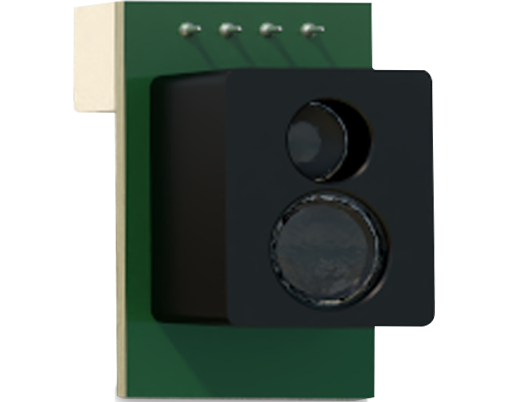
When selecting a laser infrared dust sensor, several technical specifications demand careful consideration. First is the particle size range it can detect. While many sensors target the health-relevant PM2.5 and PM10 fractions, some offer broader or more specific ranges. Measurement range and resolution define the minimum and maximum concentrations the sensor can report accurately. Output interfaces are another key differentiator; common options include UART (serial), I2C, PWM, and analog voltage (0-5V or 4-20mA), which determine how easily the sensor integrates into a larger system. Long-term stability and calibration requirements are critical for maintenance planning. High-quality sensors exhibit minimal drift over time. Finally, physical characteristics like size, power consumption, and the presence of a built-in fan (for active sampling) versus a diffusion-based design (passive) must align with the application's constraints.
It is also vital to understand the sensor's limitations. While excellent for measuring relative concentration and trends, most low-cost laser scattering sensors do not provide chemical composition analysis. They can also be influenced by factors like particle color and refractive index, and high humidity levels may sometimes require compensation algorithms. For regulatory or high-accuracy compliance, calibration against reference-grade equipment is often recommended.
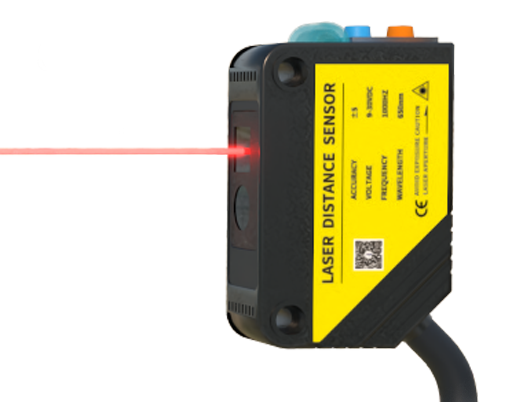
In conclusion, the laser infrared dust sensor represents a mature and versatile technology that has democratized access to precise particulate matter monitoring. Its working principle based on infrared light scattering provides a robust method for real-time detection. From safeguarding industrial processes to ensuring the air we breathe in homes and offices is clean, these sensors play a silent yet critical role. By carefully evaluating parameters such as detection range, output signal, and operational environment, engineers and product designers can effectively leverage this technology to build smarter, safer, and more responsive systems for a wide array of applications.