In the realm of industrial automation, proximity switch sensors are indispensable components for non-contact detection and precise position sensing. Their ability to generate clean, reliable pulse signals forms the backbone of countless control and counting applications. This article delves into the nature, generation, and critical considerations of pulse signals from inductive, capacitive, and magnetic proximity sensors.
A pulse signal from a proximity switch is essentially a rapid, temporary change in its output state—from OFF to ON and back to OFF—triggered by the detection of a target within its sensing range. This electrical transition is not merely a simple switch closure; it is a precisely timed event that conveys critical information about the presence, position, and sometimes speed of an object. The primary output configurations are NPN (sinking) and PNP (sourcing) for DC sensors, and 2-wire AC/DC types, each generating a pulse signal compatible with different PLC input modules and control system architectures.
The generation of a clean pulse is paramount. For instance, an inductive proximity sensor detects a metallic target. As the target enters the sensor's active electromagnetic field, it causes eddy current losses, which the sensor's oscillator circuit detects. This triggers the output circuit to switch, creating the leading edge of the pulse. The pulse width is determined by the duration the target remains within the sensing zone. A key parameter here is the sensor's switching frequency, measured in Hertz (Hz). A 1 kHz sensor can theoretically generate up to 1000 pulses per second, defining the maximum speed at which it can reliably detect passing targets. Exceeding this frequency leads to missed counts and system errors.
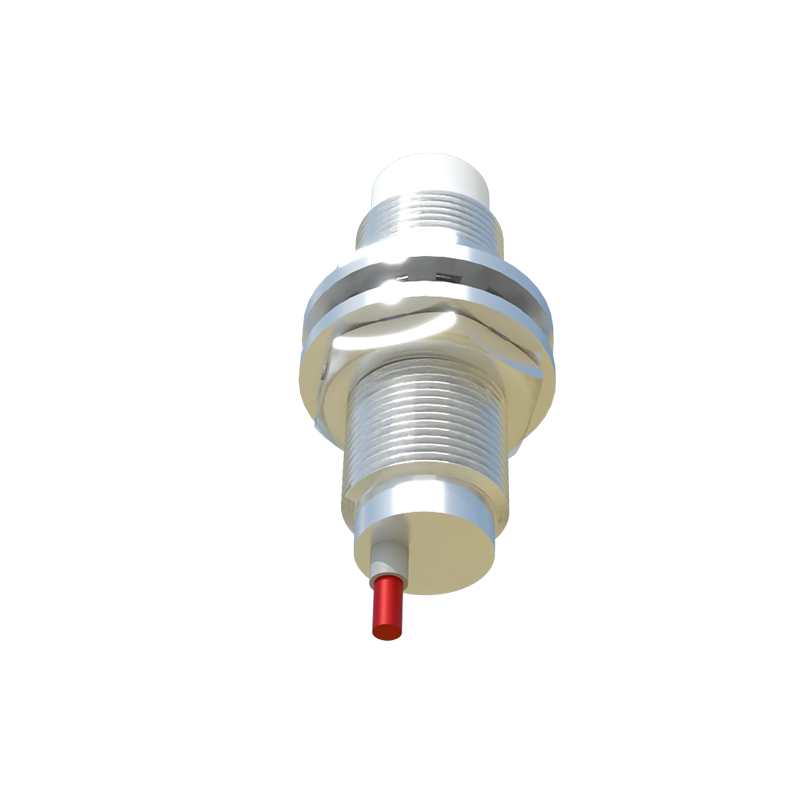
Signal integrity is a major engineering concern. In harsh industrial environments, electromagnetic interference (EMI) from motors, variable frequency drives (VFDs), and welding equipment can induce noise onto sensor lines, potentially causing false pulses. To mitigate this, shielded cables are essential, and proper grounding practices must be followed. Additionally, the physical mounting of the sensor is crucial. Incorrect alignment, excessive vibration, or sensing multiple targets simultaneously can distort the pulse shape, making it inconsistent or unstable.
The application of these pulse signals is vast. In high-speed counting on conveyor lines, each pulse represents one item, with the pulse train fed into a high-speed counter module. In rotary speed measurement, a gear or pin target attached to a shaft passing by the sensor generates a pulse train whose frequency is directly proportional to the rotational speed (RPM). This is fundamental for synchronizing processes or monitoring for overspeed conditions. Furthermore, in precision positioning systems, such as on linear actuators or pick-and-place machines, a single pulse from a sensor can define a "home" or reference position with micron-level repeatability.
When integrating these sensors, engineers must carefully match the sensor's pulse signal characteristics with the controller's input specifications. Critical parameters include voltage levels (e.g., 24V DC), required current, response time (the time delay between target detection and output switch), and the controller's input filter settings. Setting the controller's input filter too high can smooth out legitimate high-speed pulses, while setting it too low may allow noise to be registered as false signals. For high-speed applications, using sensors with a short response time (e.g.,<100 µs) and dedicated high-speed counter inputs is non-negotiable.
In conclusion, the humble pulse signal from a proximity switch is a deceptively simple yet profoundly important element in automation. Its reliability directly impacts system accuracy, efficiency, and uptime. A deep understanding of its generation, potential pitfalls from environmental factors and installation, and its interface with control systems is essential for any engineer designing, troubleshooting, or maintaining modern automated machinery. Selecting the right sensor type with appropriate speed, output configuration, and environmental ratings is the first and most critical step in ensuring a robust pulse signal for any application.