In the rapidly evolving landscape of sensing technology, Light Detection and Ranging (LiDAR) sensors have emerged as a cornerstone for advanced perception systems. Unlike traditional cameras or radar, LiDAR creates precise, three-dimensional maps of the surrounding environment by emitting pulsed laser light and measuring the time it takes for each pulse to return after reflecting off objects. This fundamental principle, known as time-of-flight (ToF) measurement, enables LiDAR to generate high-resolution point clouds with exceptional accuracy in distance and spatial detail.
The core architecture of a modern LiDAR sensor is an intricate symphony of optoelectronics and high-speed data processing. It typically consists of a laser emitter, a sensitive photodetector (often an avalanche photodiode or APD), a scanning mechanism, and a sophisticated control unit. The laser, operating at safe, eye-invisible wavelengths like 905nm or 1550nm, fires rapid pulses. The scanning mechanism, which can be mechanical, solid-state (MEMS-based), or pure solid-state (optical phased array), directs these pulses across the field of view. When the reflected photons are captured by the detector, the system calculates the distance for each point, assembling millions of such data points per second to construct a real-time 3D representation of the world.
The applications of LiDAR are vast and transformative. In the automotive sector, it is a critical enabler for autonomous driving (AD) and advanced driver-assistance systems (ADAS). By providing robust, long-range object detection and classification—even in low-light or adverse weather conditions where cameras may struggle—LiDAR allows vehicles to perceive pedestrians, cyclists, and other vehicles with high fidelity. This capability is essential for building reliable path planning and collision avoidance algorithms. Beyond automotive, LiDAR is revolutionizing fields such as robotics, where autonomous mobile robots (AMRs) use it for simultaneous localization and mapping (SLAM) to navigate dynamic warehouses and factories. In industrial automation, LiDAR sensors provide precise measurement and inspection for quality control, while in smart infrastructure, they monitor structural health and manage traffic flow. Furthermore, topographic surveying, archaeology, and forestry heavily rely on airborne LiDAR to map terrain and vegetation with unprecedented detail.
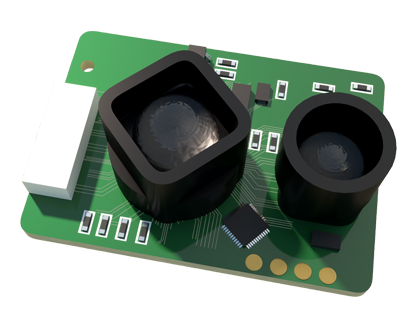
The industry is currently navigating several key technological trends aimed at enhancing performance, reliability, and scalability. A major focus is the development of solid-state LiDAR (SSL), which eliminates moving parts, leading to designs that are more compact, durable, and cost-effective for mass production. Another significant trend is the push for higher resolution and longer range. This is achieved through innovations like higher-power, eye-safe lasers and more sensitive detector arrays. Sensor fusion is also paramount; the most robust perception systems intelligently combine data from LiDAR, radar, and cameras, leveraging the strengths of each modality to create a comprehensive environmental model. Finally, edge computing integration is becoming standard, allowing for real-time point cloud processing directly on the sensor or a nearby module, reducing latency and bandwidth requirements.
However, the path forward is not without its engineering challenges. Cost remains a significant barrier for widespread consumer adoption, particularly in the automotive industry, though economies of scale and new manufacturing techniques are steadily driving prices down. Performance in extreme weather conditions, such as heavy fog, rain, or snow, can still be degraded as laser pulses scatter. Engineers are combating this with advanced signal processing algorithms and multi-wavelength systems. Furthermore, as the number of LiDAR-equipped vehicles and devices grows, managing potential interference between sensors and ensuring eye safety across all operational scenarios are critical areas of ongoing research and standardization.
Looking ahead, the future of LiDAR is exceptionally bright. We are moving towards more integrated, chip-scale solutions where LiDAR components could be manufactured using semiconductor processes, akin to modern electronics. The concept of "LiDAR-on-a-chip" promises to unlock new form factors and applications in consumer electronics, augmented reality (AR), and even personal devices. As artificial intelligence and machine learning algorithms become more sophisticated, the raw point cloud data from LiDAR will be interpreted with greater context and intelligence, enabling more predictive and nuanced autonomous decision-making.
In conclusion, LiDAR sensor technology represents a paradigm shift in how machines perceive and interact with the physical world. From enabling the dream of self-driving cars to empowering the next generation of industrial and consumer robotics, its role is foundational. For electrical engineers and industry professionals, staying abreast of the rapid advancements in laser technology, photonics, and embedded processing for LiDAR is not just an option but a necessity. As the technology continues to mature, becoming more capable and accessible, it will undoubtedly serve as a key sensory pillar for the intelligent, automated systems of tomorrow, painting our world in precise digital depth.