In the realm of industrial automation and safety systems, laser sensors play a pivotal role, offering precision, reliability, and versatility. However, not all laser sensors are created equal. Their classification, primarily based on output power and potential hazard to human eyes and skin, is critical for ensuring safe and compliant applications. This article delves into the standardized laser classes as defined by the International Electrotechnical Commission (IEC) and other regulatory bodies, providing electrical engineers with a clear framework for selection and implementation.
The foundation of laser classification lies in the IEC 60825-1 standard, which categorizes lasers into several classes based on their ability to cause damage. Class 1 lasers are inherently safe under all conditions of normal use. Even when viewed with optical instruments, they pose no risk of eye injury. These are often found in consumer electronics like CD players or certain low-power sensors enclosed within protective housings where human access to the beam is impossible.

Class 2 lasers are low-power visible lasers (typically 400–700 nm wavelength). The human aversion response, such as blinking, provides adequate protection against momentary exposure. However, deliberate staring into the beam is hazardous. Common laser pointers fall into this category. In industrial settings, some alignment tools or basic sensors might be Class 2, requiring caution during setup.
Class 3 is subdivided into 3R and 3B. Class 3R lasers pose a low risk but can be hazardous if viewed directly, especially with focusing optics. Their accessible emission limit is up to five times the limit for Class 1 (for invisible lasers) or Class 2 (for visible lasers). Class 3B lasers are hazardous if the eye is exposed directly, but diffuse reflections are usually safe. These are common in research, entertainment, and some industrial material processing applications. Protective eyewear is mandatory when working with Class 3B lasers.
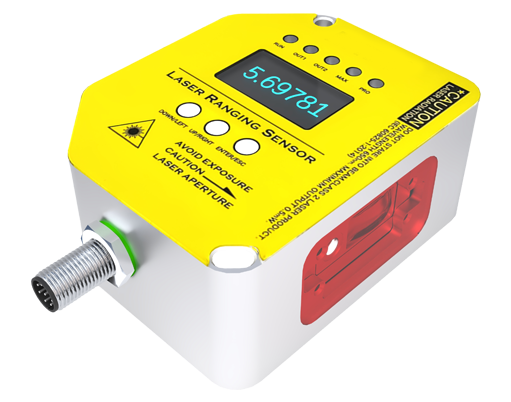
Class 4 lasers are high-power devices capable of causing severe eye and skin injuries, as well as posing fire hazards. Both direct and diffusely reflected beams are dangerous. These lasers are used extensively in manufacturing for cutting, welding, and engraving metals and other materials. Any sensor system integrated with or monitoring a Class 4 laser process must be designed with stringent safety interlocks, enclosures, and administrative controls.
For electrical engineers integrating laser sensors into a system, understanding these classes is non-negotiable. The selection process begins with a risk assessment. Will operators have potential access to the beam? Is the sensor used in an open or enclosed system? What are the consequences of a failure or misalignment? A Class 1 laser sensor, while safest, may not provide the necessary power for long-range detection or specific material interaction. Conversely, selecting a Class 4 sensor for a simple presence detection task is overkill and introduces significant liability.

Beyond the IEC standard, regional regulations like the U.S. Food and Drug Administration's (FDA) Code of Federal Regulations (CFR) Title 21 also govern laser products. Compliance often requires proper labeling, safety features (key-controlled operation, emission indicators, beam shutters), and detailed user documentation. Engineers must ensure that the chosen laser sensor not only meets the functional specifications for accuracy, response time, and environmental rating (IP code) but also carries the correct certification for its intended market.
In practical application, many industrial laser sensors are designed as Class 1 products. This is achieved by housing a higher-class laser (e.g., Class 3B) inside a fully interlocked enclosure. The sensor operates safely as Class 1 because the enclosure prevents human exposure during normal operation. If the enclosure is opened for maintenance, a safety interlock immediately disables the laser. This design philosophy is paramount for creating safe, user-friendly automation cells.
Furthermore, with the advent of Industry 4.0 and smart factories, laser sensors are becoming more intelligent. Some now feature integrated safety monitoring that can detect lens contamination or partial beam blockage, potentially alerting to a degradation in performance before a safety hazard occurs. This proactive approach aligns with functional safety standards like IEC 61508.
In conclusion, the class of a laser sensor is a fundamental safety specification, not a mere technical detail. Electrical engineers have a professional responsibility to specify, install, and maintain these devices in accordance with their hazard classification. A thorough understanding of Class 1 through Class 4 distinctions, coupled with rigorous risk assessment and adherence to international and local standards, forms the bedrock of safe, efficient, and legally compliant industrial system design. Always consult the manufacturer's datasheet and the latest edition of relevant safety standards during the design phase.