In industrial automation and electrical engineering, proximity sensors play a critical role in non-contact detection of objects. Their representation in electrical schematics follows standardized symbols, which are essential for clear communication across global engineering teams. Understanding these symbols is fundamental for designing, troubleshooting, and maintaining control systems.
The most common proximity sensor types include inductive, capacitive, and ultrasonic sensors, each with distinct operational principles and corresponding schematic depictions. According to IEC 60617 and ANSI/IEEE 315 standards, the basic symbol for a proximity sensor is a diamond shape enclosed in a square or rectangle, often with an internal designation indicating its type. For an inductive proximity sensor, which detects metallic objects, the symbol typically includes the letters 'LI' or an inductor coil icon inside or adjacent to the diamond. This sensor is widely used in metal detection applications, such as counting parts on a conveyor or determining the position of a machine tool.
Capacitive proximity sensors, capable of detecting both metallic and non-metallic materials like plastics, liquids, or granules, are represented with a similar diamond-based symbol. They often incorporate the letter 'C' or two parallel lines symbolizing a capacitor. These sensors are prevalent in level detection or material handling systems where diverse substances must be sensed.
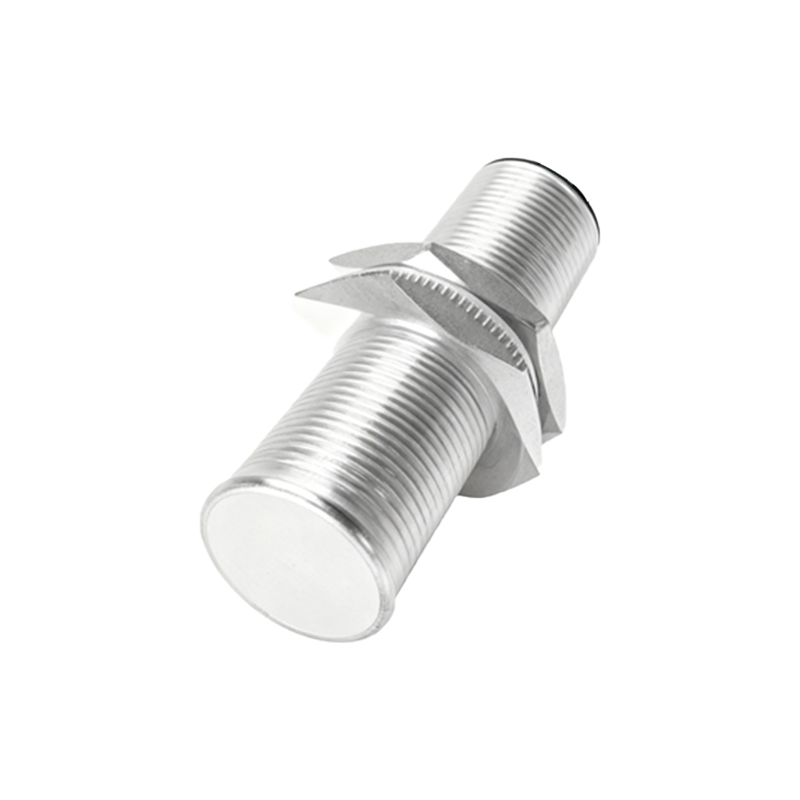
Magnetic proximity sensors, or reed switches, activated by a magnetic field, usually employ a symbol resembling a switch with a small rectangle or the Greek letter 'Φ' to denote magnetism. Photoelectric sensors, though sometimes categorized separately, share functional similarities; their symbols often include a diode-like arrow pointing to or from the diamond, representing the light beam.
In wiring diagrams, the symbol is integrated with connection points. Typically, a three-wire DC sensor symbol shows lines for positive supply (brown or red), negative/ground (blue or black), and the output signal (black or white). For a PNP (sourcing) output, the output line points outward from the symbol, while an NPN (sinking) output points inward. Two-wire AC/DC sensors, which function like a switch in series with the load, are depicted with the diamond symbol connected to two lines without a separate power terminal.
Detailed schematics also include additional markings: the sensing direction is indicated by an arrow, and the adjustment or calibration point may be shown with a diagonal arrow. The output type (e.g., NO - normally open or NC - normally closed) is represented by the contact symbol; an open contact line signifies NO, and a closed one signifies NC. Some advanced symbols incorporate a circle around the diamond to denote a shielded or flush-mountable sensor, crucial for installations in metallic environments.
Engineers must accurately interpret these symbols to ensure proper integration into programmable logic controller (PLC) systems. Misreading a symbol can lead to incorrect wiring, causing sensor failure or system downtime. For instance, confusing a PNP with an NPN symbol when connecting to a PLC input module may result in a non-functional circuit. Therefore, cross-referencing the symbol with the manufacturer's datasheet is a recommended practice.
In conclusion, proximity sensor electrical symbols form a universal language in technical documentation. Mastery of these symbols enhances design accuracy, facilitates efficient maintenance, and supports interoperability in complex industrial networks. As technology evolves, with the advent of IO-Link and smart sensors, symbols may incorporate additional communication lines or identifiers, yet the core symbolic language remains rooted in international standards for clarity and safety.
SEO Keywords:proximity sensor symbol, electrical schematic symbols, inductive sensor, capacitive sensor, industrial automation
SEO Description:Learn about standardized electrical symbols for proximity sensors in industrial schematics, including inductive, capacitive, and magnetic types, based on IEC and ANSI standards for accurate system design.