In the rapidly evolving landscape of industrial automation, laser inductive sensors stand as a cornerstone technology, yet their full capabilities often remain obscured by conventional applications. These sophisticated devices, which combine the precision of laser measurement with the robustness of inductive sensing, are engineered to detect objects, measure distances, and monitor processes with unparalleled accuracy. Unlike standard inductive sensors that rely on electromagnetic fields to sense metallic targets, laser inductive sensors integrate optical components to emit a focused laser beam. This beam interacts with the target surface, and the reflected light is analyzed to determine position, presence, or dimensions, while the inductive element ensures reliability in harsh environments by compensating for factors like dust, moisture, or vibration.
The hidden potential of these sensors lies in their adaptability and precision. For instance, in automotive manufacturing, they are deployed not just for part detection but for micron-level alignment of components during assembly, reducing errors and enhancing quality control. In logistics and packaging industries, laser inductive sensors facilitate high-speed sorting and precise filling operations by accurately gauging object sizes and positions without physical contact. Moreover, their ability to operate in extreme temperatures and corrosive atmospheres makes them indispensable in sectors like metal processing and chemical plants, where traditional sensors might fail.
A key aspect often overlooked is the integration of smart features. Modern laser inductive sensors come equipped with IO-Link communication, enabling real-time data exchange and remote configuration. This allows for predictive maintenance, as the sensors can monitor their own performance and alert operators to potential issues before downtime occurs. Additionally, advancements in miniaturization have led to compact designs that can be installed in tight spaces, expanding their utility in robotics and intricate machinery. The synergy of laser and inductive technologies also mitigates common challenges such as background interference or target material variations, ensuring consistent operation across diverse applications.
To maximize the benefits, engineers must consider factors like beam type (e.g., visible red or infrared), sensing range, and response time during selection. For example, a diffuse reflection sensor might be ideal for detecting non-metallic objects at short ranges, while a through-beam sensor could excel in long-distance measurements. Regular calibration and alignment are crucial to maintain accuracy, as misalignment can lead to false readings. Furthermore, pairing these sensors with advanced controllers and software can unlock capabilities like 3D mapping and adaptive control systems, driving efficiency in smart factories.
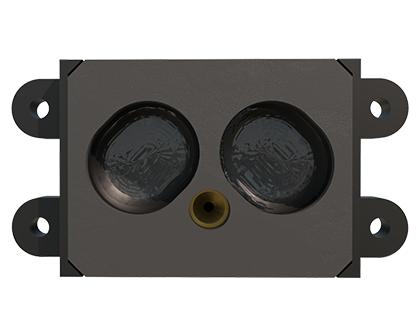
In conclusion, laser inductive sensors are far more than simple detection tools; they are enablers of innovation in automation. By delving into their hidden functionalities—from precision measurement to intelligent connectivity—industries can achieve higher productivity, reduced waste, and enhanced safety. As technology progresses, these sensors will continue to evolve, offering even greater integration with IoT and AI platforms, solidifying their role as hidden gems in the quest for industrial excellence.
