In the realm of industrial automation and control systems, proximity limit switch sensors stand as fundamental components, silently ensuring precision, safety, and reliability. Unlike traditional mechanical limit switches that require physical contact, proximity switches operate on the principle of non-contact detection, offering significant advantages in terms of longevity, speed, and operational consistency. This article delves into the operational principles, primary types, key selection criteria, and typical applications of these indispensable sensors.
At their core, proximity sensors detect the presence or absence of a target object within a specified sensing range without any physical contact. They achieve this by emitting an electromagnetic field or a beam of electromagnetic radiation (like infrared light) and monitoring for changes in the field or return signal. When a target object enters this field, it causes a change in the oscillation amplitude or the return signal, which is then converted by the sensor's circuitry into a binary electrical output signal—typically switching a solid-state output ON or OFF. This output is then used to control machinery, count objects, signal positioning, or initiate safety protocols.
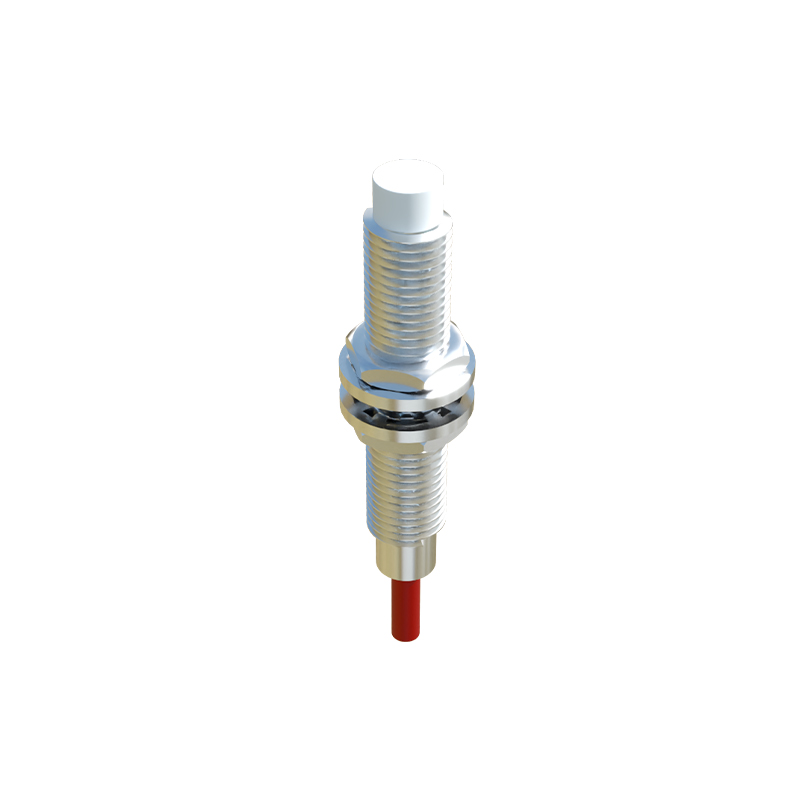
The two most prevalent types of proximity limit switches in industrial electrical engineering are inductive and capacitive sensors. Inductive proximity sensors are the workhorses for detecting metallic objects. They generate an oscillating electromagnetic field from a coil. When a ferrous or non-ferrous metal target enters this field, it induces eddy currents on the metal's surface, which dampens the oscillation. The sensor's circuit detects this damping and triggers the output switch. They are highly reliable, resistant to environmental contaminants like dust and oil, and are ideal for applications involving machine tools, robotic arms, and metal part detection.
Capacitive proximity sensors, on the other hand, can detect both metallic and non-metallic materials, including liquids, plastics, glass, and wood. They function by generating an electrostatic field. Any object with a dielectric constant different from air entering this field alters the sensor's capacitance, triggering the output. This makes them versatile for applications such as liquid level detection, material handling of non-metallic products, and presence detection of packaged goods.
When selecting a proximity switch for a specific application, several critical parameters must be considered. The sensing distance, or nominal range, is paramount and is specified by the manufacturer. It is crucial to note that this range can be affected by the target material's properties (size, shape, material) and environmental conditions. The housing material (often nickel-plated brass, stainless steel, or PBT plastic) must be chosen to withstand the operational environment, considering factors like chemical exposure, temperature extremes, and physical impact. Output configuration is another key decision; options include NPN (sinking) or PNP (sourcing) transistor outputs, which must be compatible with the PLC (Programmable Logic Controller) or control system input card. Other factors include the switching frequency (how fast the sensor can operate), voltage rating, and protection class (e.g., IP67 for dust and temporary immersion protection).
The applications for proximity limit switches are vast and integral to modern manufacturing. They are extensively used for end-of-travel detection in linear actuators and cylinders, providing precise signals to halt movement. In conveyor systems, they count objects, detect jams, and verify part presence. Rotary encoders often use them for speed and position feedback. Perhaps most critically, they serve as essential components in safety interlock systems, ensuring guards are closed or personnel are clear before machinery is energized.
Installation and maintenance, while generally straightforward, require attention to detail. Proper alignment with the target, maintaining the recommended sensing distance with a safety margin, and avoiding mutual interference between closely mounted sensors are vital for reliable operation. While solid-state designs mean no moving parts to wear out, periodic checks for physical damage, buildup of contaminants on the sensing face, and verification of output signals are recommended as part of a preventive maintenance routine.
In conclusion, proximity limit switch sensors are a cornerstone of electromechanical system design. Their non-contact operation provides a robust, fast, and maintenance-friendly solution for object detection and position limiting. A deep understanding of their types, characteristics, and application nuances enables electrical engineers to design more efficient, reliable, and safe automated systems. As technology advances, these sensors continue to evolve with features like increased sensing ranges, miniaturization, and enhanced connectivity via IO-Link, further solidifying their role in the smart factories of today and tomorrow.