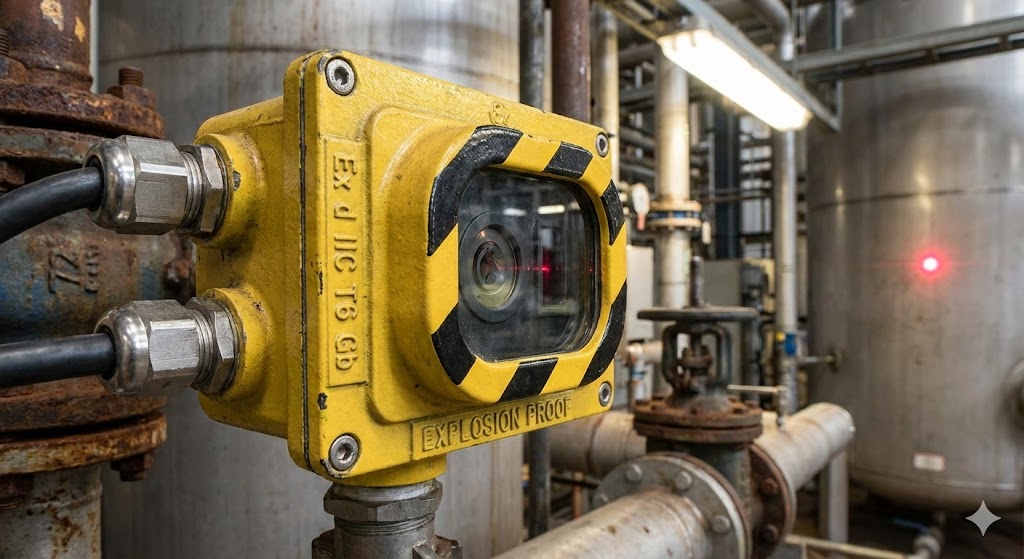
In the rapidly evolving landscape of industrial automation and consumer electronics, safety mechanisms have transitioned from simple mechanical stops to sophisticated, intelligent systems. Among these, laser anti-pinch sensors represent a pinnacle of innovation, merging precision optics with real-time control logic to prevent injuries and equipment damage. Unlike traditional contact-based sensors or capacitive proximity detectors, laser sensors operate on a non-contact principle, projecting an invisible curtain or grid of infrared laser beams across a hazardous zone, such as a closing door, window, or robotic arm path.
The core technology hinges on time-of-flight or triangulation measurement. When the laser beams are interrupted by an object—be it a hand, tool, or any obstruction—the sensor's photodetector array immediately detects the change in light pattern. This event triggers a microsecond-level signal to the central control unit, which then commands the actuator to stop, reverse, or reduce force. This process, often completed within milliseconds, is crucial for applications requiring both high-speed operation and stringent safety, such as in automotive power windows, elevator doors, automated production lines, and medical device enclosures.
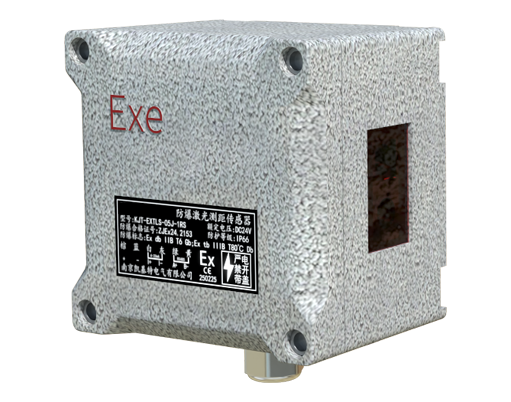
Key advantages of laser anti-pinch systems are their exceptional accuracy and reliability. They can detect objects as thin as a few millimeters, functioning effectively in diverse environmental conditions including dust, varying light intensities, and temperature fluctuations—challenges that often plague ultrasonic or capacitive sensors. Moreover, their programmable sensitivity allows customization for different force thresholds, ensuring compliance with international safety standards like ISO 13849 for machinery and FMVSS 118 for automotive windows.
Integration into modern IoT frameworks further enhances their utility. Laser sensors can be networked with supervisory control systems, providing real-time diagnostics, predictive maintenance alerts, and data logs for safety audits. For instance, in smart manufacturing, these sensors not only prevent accidents but also optimize cycle times by enabling faster, yet safer, machine movements. The absence of physical contact eliminates wear and tear, reducing long-term maintenance costs and downtime.
However, implementation requires careful consideration. Alignment calibration is critical; misaligned lasers may create blind spots. Engineers must also account for potential interference from ambient infrared sources or highly reflective surfaces. Shielding and filtering techniques, alongside robust firmware algorithms, are employed to mitigate false triggers. Future trends point toward miniaturization, multi-beam arrays for 3D spatial mapping, and AI-driven adaptive sensing, which could allow systems to distinguish between intentional intrusions and environmental noise.

In conclusion, laser anti-pinch sensors embody a transformative leap in safety engineering. By offering unparalleled precision, durability, and integration capabilities, they are becoming indispensable in safeguarding both human operators and automated equipment. As industries continue to prioritize zero-harm policies and operational efficiency, the adoption of these advanced optical sensors is set to accelerate, paving the way for smarter, safer automated environments worldwide. Their role extends beyond mere compliance—they are enablers of trust in human-machine collaboration.