In the realm of industrial automation, precision, speed, and reliability are non-negotiable. For tasks involving the counting, sorting, or monitoring of small, fast-moving objects, traditional mechanical or photoelectric sensors often fall short. This is where high-speed laser counting sensors emerge as a critical technological solution. These advanced devices leverage focused laser light to deliver unparalleled accuracy in high-throughput environments, becoming indispensable in sectors from pharmaceuticals to electronics manufacturing.
At its core, a high-speed laser counting sensor operates on the principle of laser beam interruption. The sensor comprises a laser transmitter and a receiver. The transmitter emits a highly focused, coherent beam of light—typically a visible red or infrared laser—across a defined path. The receiver, positioned opposite, continuously monitors the intensity of this beam. When an object passes through the beam, it causes a momentary interruption or attenuation of the light signal. The sensor's sophisticated internal circuitry detects this change with extreme rapidity, registers it as a count event, and outputs a corresponding digital signal. The key to "high-speed" capability lies in the sensor's response time, often in the microsecond range, and its ability to process a very high frequency of interruptions, sometimes exceeding 10,000 counts per second. Advanced models utilize background suppression technology or precise triangulation methods to define a very narrow, exact sensing window, ignoring objects outside this defined field and eliminating interference from ambient light or reflective backgrounds.
The applications for these sensors are vast and varied. In pharmaceutical packaging, they are used to verify pill counts in blister packs or bottles with absolute certainty, ensuring regulatory compliance and patient safety. On high-speed bottling and canning lines, they monitor container flow, detecting jams or missing items to maintain production efficiency. In the electronics industry, they count tiny components like resistors, capacitors, and microchips as they travel on vibratory feeders or tape reels. Postal and logistics sorting centers rely on them to track parcel flow on conveyor belts. Furthermore, they are instrumental in textile manufacturing for thread break detection and in printing for sheet or label counting.
Selecting the right high-speed laser counting sensor requires careful consideration of several technical parameters. First is the minimum detectable object size. This must be smaller than the smallest item to be counted. The sensor's spot size and beam shape (a precise point or a thin slit) should match the application. Second, the response time or switching frequency dictates the maximum count rate achievable. For instance, a sensor with a 50 µs response time can theoretically handle up to 20,000 events per second. Third, the sensing distance and required mounting space are practical constraints; some models are compact for tight installations, while others offer longer ranges. Environmental robustness is crucial; look for high Ingress Protection (IP) ratings (e.g., IP67) for resistance to dust and water, and ensure the housing can withstand vibration, shock, and temperature fluctuations common in industrial settings. Finally, consider the output type (PNP/NPN transistor, push-pull, or analog) and connectivity for seamless integration with Programmable Logic Controllers (PLCs) or other control systems.

Installation and alignment are critical for optimal performance. The laser beam must be precisely aimed at the receiver. Many modern sensors feature integrated alignment aids, such as visible laser dots or LED indicators that signal optimal reception strength. Proper mounting on stable fixtures minimizes vibration-induced misalignment. Regular maintenance involves keeping the lenses clean from dust, oil, or debris that could scatter or attenuate the laser beam, leading to false counts or missed events.
Looking ahead, the evolution of high-speed laser counting sensors is intertwined with Industry 4.0 trends. Future sensors will feature enhanced connectivity via IO-Link, which allows for parameter setting, real-time diagnostics, and process data monitoring directly from the control room. Integration with machine vision systems for combined counting and inspection (e.g., counting while verifying orientation or color) is another growing frontier. Furthermore, advancements in laser diode and receiver technology will push the limits of speed and miniaturization even further.
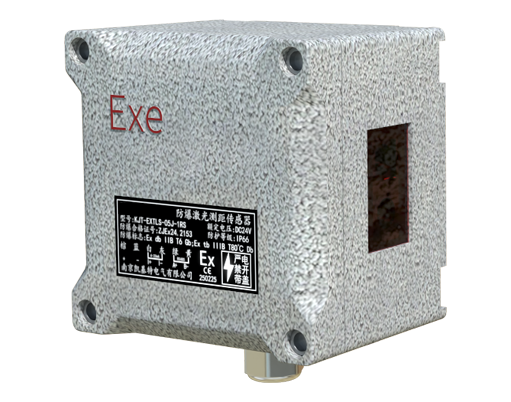
In conclusion, high-speed laser counting sensors are a pinnacle of applied electro-optics in automation. Their ability to deliver contactless, wear-free, and exceptionally fast object detection makes them a cornerstone for quality control and efficiency in modern manufacturing and logistics. By understanding their operating principles, key specifications, and application requirements, engineers and system integrators can leverage these powerful tools to build smarter, faster, and more reliable automated systems.