In the realm of industrial automation, achieving precise material handling, cutting, and alignment is paramount. Laser sensor-based edge detection, or "edge following," has emerged as a cornerstone technology for these tasks, offering unparalleled accuracy, speed, and reliability compared to traditional mechanical or vision-based methods. This article delves into the operational principles, key advantages, and diverse applications of laser sensors in automated edge guidance systems.
At its core, a laser edge detection system utilizes a focused laser beam projected onto the surface of a material. A high-resolution receiver, typically a position-sensitive device (PSD) or a CMOS/CCD array, captures the reflected light. When the sensor is positioned such that the laser spot straddles the material's edge, a portion of the beam reflects off the material while the other portion does not, creating a distinct shift in the light pattern on the receiver. The sensor's internal processor calculates this shift with micron-level precision, determining the exact position of the edge relative to the sensor's own axis. This real-time positional data is continuously fed to a programmable logic controller (PLC) or motion controller, which dynamically adjusts the machinery—be it a cutting head, printing unit, or robotic arm—to follow the edge precisely, regardless of irregularities in the material's path.
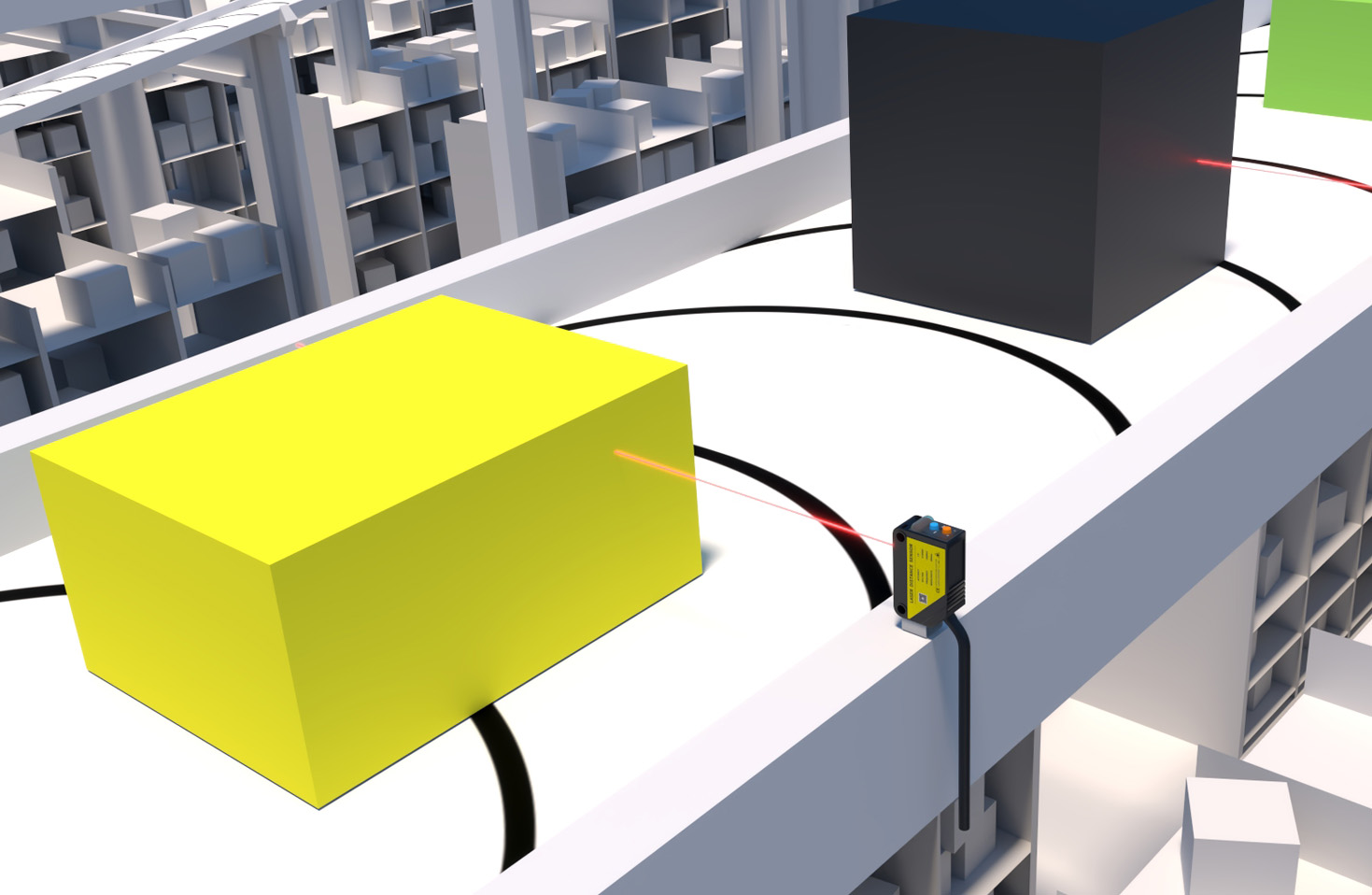
The superiority of laser edge detection lies in several key attributes. First is its exceptional accuracy and resolution, capable of detecting edge positions with repeatability often within ±10 microns. This is critical for high-precision industries like semiconductor manufacturing and precision metal cutting. Second, laser sensors are largely immune to ambient light variations and surface color or texture changes, a significant limitation for many machine vision systems. They perform consistently on glossy, matte, transparent, or even highly reflective surfaces when properly configured. Third, the response time is extremely fast, enabling real-time correction at high line speeds, which is essential for web guiding in printing, packaging, and converting applications. Furthermore, laser sensors are non-contact, eliminating wear and tear on both the sensor and the material, and they require minimal maintenance.
Applications for laser-guided edge following are vast and cross-sectoral. In the printing industry, they ensure flawless registration by guiding paper, film, or foil webs to maintain precise alignment for multi-color printing or laminating processes. In metal fabrication, laser sensors guide plasma or laser cutting heads along the edge of sheet metal, optimizing material usage and cut quality, even when processing warped or inconsistently shaped blanks. The textile industry employs them for guiding fabric edges during spreading, cutting, and sewing operations to prevent costly waste. In roll-to-roll processing for batteries or flexible electronics, they maintain critical alignment of thin, sensitive materials. Additionally, autonomous mobile robots (AMRs) and automated guided vehicles (AGVs) can use laser edge detection for precise docking or navigating along warehouse racking.
Implementing a successful system requires careful consideration of sensor selection and integration. Factors such as sensing range, spot size, response frequency, and the type of output signal (analog, digital, or fieldbus) must match the application's requirements. Mounting stability is crucial, as vibrations can introduce noise into the measurement. Environmental factors like dust, steam, or heavy spray may necessitate sensors with higher ingress protection (IP) ratings. Proper calibration and tuning of the control loop's proportional-integral-derivative (PID) parameters are also essential to achieve a stable follow without oscillation.

In conclusion, laser sensor technology for edge detection represents a mature, robust, and highly effective solution for modern industrial automation. Its ability to deliver micron-level precision at high speeds under challenging environmental conditions makes it an indispensable tool for enhancing quality, reducing waste, and increasing throughput. As industries continue to push the boundaries of precision and efficiency, the role of laser-based guidance systems will only become more central, driving further innovations in sensor design and integration with Industry 4.0 data ecosystems.