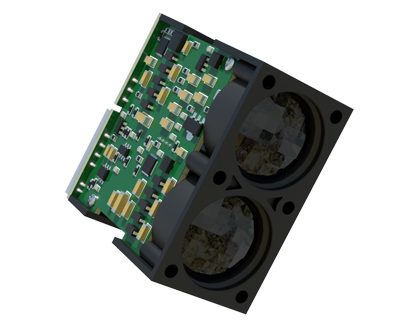
In the rapidly evolving landscape of industrial automation and precision measurement, real-time transmission laser sensors have emerged as a cornerstone technology, driving unprecedented levels of accuracy, efficiency, and reliability. These sophisticated devices operate by emitting a focused laser beam towards a target object. The sensor then detects the reflected or transmitted light, and advanced onboard processors analyze this data to determine critical parameters such as distance, displacement, thickness, or presence—all with micron-level precision. The defining feature of these systems is their ability to transmit this processed measurement data instantaneously to central control units, programmable logic controllers (PLCs), or data acquisition systems with near-zero latency. This real-time data pipeline is fundamental to modern closed-loop control systems, enabling immediate corrective actions and dynamic process adjustments that were previously impossible.
The architecture of a real-time transmission laser sensor is a marvel of integrated engineering. It typically comprises a high-stability laser diode, precision optics for beam shaping and focusing, a high-speed photodetector, and a powerful digital signal processor (DSP). The DSP is the brain of the operation, executing complex algorithms to filter noise, compensate for environmental variables like ambient light or temperature fluctuations, and convert raw optical signals into precise digital measurements. The communication interface is equally critical; industrial-grade protocols like EtherCAT, PROFINET, IO-Link, and high-speed analog outputs ensure seamless, deterministic integration into broader automation networks. This allows the sensor to function not as an isolated measurement tool but as an intelligent node within a responsive Industrial Internet of Things (IIoT) ecosystem.
Applications for these sensors are vast and transformative across multiple sectors. In automotive manufacturing, they are indispensable for real-time gap and flush measurement during vehicle assembly, ensuring perfect panel alignment. In the electronics industry, they verify component placement on printed circuit boards (PCBs) at high speeds, catching defects milliseconds after they occur. In pharmaceutical packaging, they monitor fill levels in vials and blister packs with non-contact precision, guaranteeing compliance with stringent regulatory standards. Furthermore, in logistics and warehousing, they enable high-speed dimensioning and volumetric scanning for automated sorting systems. The real-time capability means that any deviation from the tolerance window triggers an immediate alert or automated line stoppage, minimizing waste and preventing the production of non-conforming goods.
The advantages of implementing real-time laser sensor technology are compelling. First and foremost is the dramatic enhancement in quality control. Continuous, in-line measurement replaces slow, statistical sampling, ensuring 100% inspection coverage. This leads to a significant reduction in scrap and rework costs. Secondly, it boosts overall equipment effectiveness (OEE) by minimizing unplanned downtime; potential machine faults or process drifts are identified and addressed proactively before they cause a failure. Thirdly, the wealth of real-time data generated provides invaluable insights for predictive maintenance and process optimization, forming the backbone of data-driven smart factories.

However, successful deployment requires careful consideration. Selecting the appropriate sensor model involves evaluating factors such as required measurement range, resolution, spot size, and the material properties of the target (e.g., color, reflectivity, transparency). Integration challenges include ensuring stable mechanical mounting to avoid vibration-induced errors and configuring the communication protocol to match the existing network infrastructure. Environmental hardening is also crucial for operation in harsh conditions involving dust, coolant mists, or extreme temperatures, often necessitating sensors with high IP ratings.
Looking ahead, the future of real-time transmission laser sensors is intertwined with advancements in artificial intelligence and edge computing. Next-generation sensors will feature embedded AI chips capable of performing advanced pattern recognition and anomaly detection directly at the source, further reducing latency and network load. Enhanced connectivity through 5G technology will facilitate wireless real-time sensing in mobile applications, such as autonomous guided vehicles (AGVs) and collaborative robots (cobots). As industries continue to pursue the ideals of Industry 4.0, the demand for faster, smarter, and more interconnected laser sensing solutions will only intensify, solidifying their role as the eyes of the automated factory, delivering not just data, but instantaneous, actionable intelligence.