In the realm of industrial automation, precision measurement is paramount. Laser distance sensors have become indispensable tools for tasks ranging from object detection and positioning to level monitoring and thickness gauging. While much attention is rightly given to the sensor head itself—its laser class, accuracy, resolution, and measurement range—the critical role of the connecting cable is often underestimated. This cable is the lifeline, transmitting power, control signals, and the precise measurement data back to the controller. A substandard or inappropriate cable can introduce noise, cause signal degradation, lead to intermittent failures, and ultimately compromise the entire measurement system's reliability and accuracy.
The anatomy of a typical laser sensor cable is more complex than a standard power cord. It is a multi-conductor cable designed to handle multiple signal types simultaneously. At its core, you will find conductors for the DC supply voltage (commonly 12-24V DC), ground, and the actual data output. The output signal type dictates the cable's specific requirements. For sensors with analog output (e.g., 0-10V or 4-20mA), the cable must have excellent shielding to protect the low-voltage analog signal from electromagnetic interference (EMI) generated by nearby motors, drives, or welding equipment. Digital interfaces like IO-Link, RS-422, or Ethernet/IP require twisted-pair conductors with specific impedance characteristics to maintain signal integrity, especially over longer distances. Some advanced sensors may even have separate conductors for synchronization or diagnostic functions.
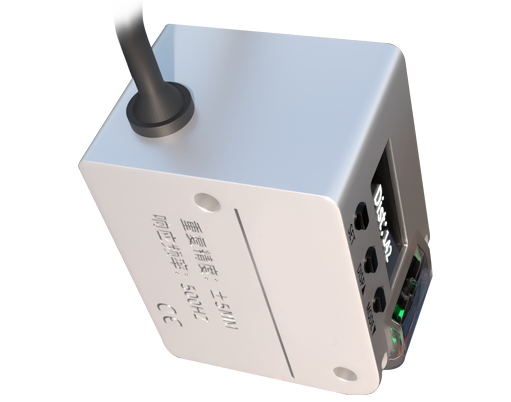
Shielding is arguably the most critical aspect of sensor cable design. Effective shielding, typically a braided copper shield or a foil laminate, acts as a Faraday cage, preventing external EMI from corrupting the sensitive measurement signals and preventing the cable itself from radiating noise. For environments with severe interference, double shielding (a combination of foil and braid) is often recommended. The shield must be properly terminated at the connector, usually to a dedicated shield clamp or pin, to ensure a continuous, low-resistance path to ground. A floating or poorly grounded shield is virtually useless.
The cable's physical construction must withstand the rigors of the industrial environment. This includes the jacket material. Polyurethane (PUR) jackets are highly resistant to oils, coolants, and abrasion, making them ideal for machine tool and robotic applications. PVC jackets offer good general-purpose flexibility and cost-effectiveness for less demanding settings. For extreme conditions, such as continuous flexing on cable carriers (e.g., in gantry systems or robots), specially designed high-flex cables with finely stranded conductors and stress-relief elements are mandatory to prevent conductor breakage from fatigue. Temperature rating is also crucial; ensure the cable is rated for both the ambient temperature and any potential exposure to localized heat sources.
Connector selection is the final, vital link. Most industrial laser sensors use standardized, robust connectors like M8 or M12 circular connectors, with 4, 5, or 8 pins depending on the functionality. These connectors are rated for IP67 or higher, protecting against dust and water ingress. Keying (coding) prevents mating with incorrect ports. It is essential to use the connector specified by the sensor manufacturer or a fully compatible equivalent. Crimping the pins correctly is a skilled task; a poor crimp can lead to high resistance, intermittent connection, and failure. Pre-assembled, molded cables from the sensor manufacturer offer the highest guarantee of compatibility and reliability but come at a premium. Field-assembable connectors offer flexibility but require proper tools and expertise.

When installing laser sensor cables, proper routing is essential. Avoid running sensor cables in parallel with high-power AC lines; cross them at a 90-degree angle if they must intersect. Use cable trays or conduits for physical protection, but avoid overfilling them, which can lead to crushing and damage. Ensure adequate strain relief at both the sensor and control cabinet connections to prevent tension from being transferred to the electrical terminations. For long cable runs, be mindful of voltage drop on the supply lines, which could cause the sensor to brown out; using a cable with a larger conductor gauge may be necessary.
In conclusion, the cable connecting a laser distance sensor is not merely an accessory; it is an integral, performance-defining component of the measurement system. Specifying a cable with the correct signal compatibility, robust shielding, appropriate jacket material, and secure connectors is a critical engineering decision. Neglecting this component can turn a high-precision, capable sensor into an unreliable source of production errors and downtime. Investing in high-quality, correctly specified cabling and proper installation practices is a small price to pay for ensuring the accuracy, repeatability, and long-term stability that modern industrial processes demand from laser measurement technology.