Eddy current proximity sensors are a cornerstone of modern industrial automation, offering non-contact detection of metallic objects with high precision and reliability. A fundamental parameter defining their performance and application suitability is the sensing distance. This article delves into the technical intricacies of this critical specification, exploring the factors that influence it and providing practical guidance for optimal sensor selection and implementation.
At its core, the sensing distance, often termed the nominal sensing distance (Sn), is the maximum distance at which a sensor can reliably detect a standard target under specified conditions. For eddy current sensors, this standard target is typically a square of mild steel (e.g., Fe 360) with a side length equal to the sensor's sensing face diameter or the diameter of a circular sensing face. It is crucial to understand that this is a theoretical value established under ideal laboratory conditions. The actual, usable sensing distance in a real-world application is often less due to several influencing variables.
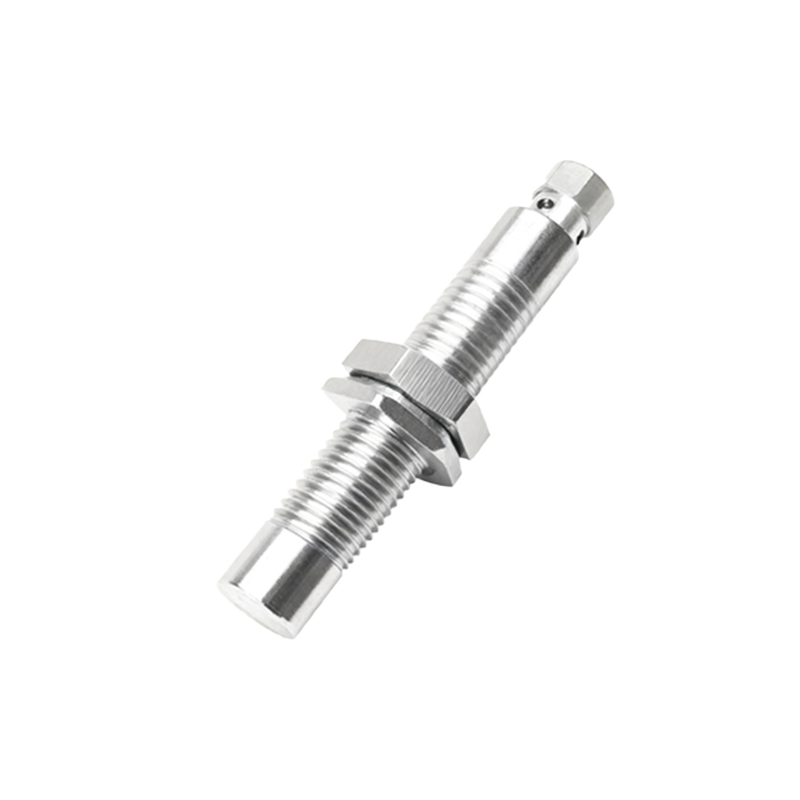
The primary factor is the target material. Eddy current sensors operate by generating a high-frequency electromagnetic field from an oscillator coil. When a conductive metal target enters this field, eddy currents are induced on its surface, causing a change in the sensor's oscillation amplitude or frequency, which is then detected. Different metals have varying electrical conductivity and magnetic permeability, which directly affect the strength of the eddy currents and thus the effective sensing range. For instance, a sensor calibrated for mild steel will have a reduced sensing distance for aluminum (higher conductivity, non-ferrous) and an increased distance for carbon steel (ferrous). Manufacturers provide correction factors (often between 0.3 to 1.2) to calculate the effective sensing distance for common metals like stainless steel, copper, brass, and aluminum.
Target size and shape are equally critical. The standard target size is defined for a reason. If the target is smaller than the sensor's active face, the sensing distance decreases. A general rule is that the target should be at least as large as the sensing face to achieve the nominal Sn. For very thin targets (e.g., foil), the penetration depth of the eddy currents may be insufficient, also reducing performance. The target should ideally be flat and parallel to the sensor face for maximum distance; angled or curved surfaces will diminish the effective range.
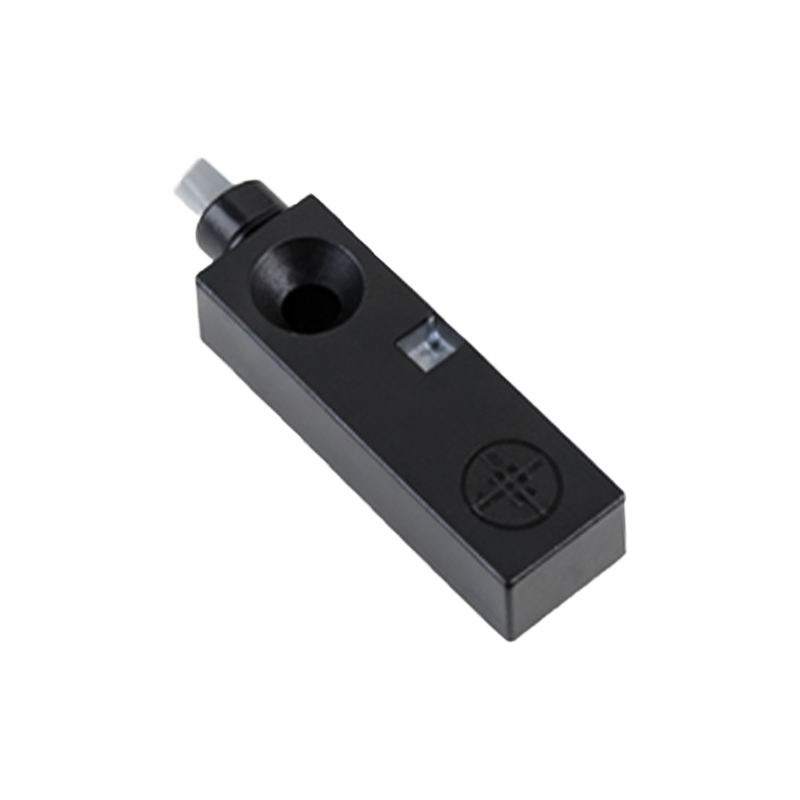
Environmental conditions cannot be overlooked. Temperature fluctuations affect the electrical properties of both the sensor's internal coils and the target material, leading to drift in the sensing point. High-quality sensors incorporate temperature compensation circuits to mitigate this. The presence of other metals in the vicinity—adjacent machinery, mounting brackets, or even other sensors—can distort the electromagnetic field. This "side-by-side" or "flush-mounted" interference must be considered. For minimal interference, sensors are often specified with a required clearance from surrounding metals, or special shielded models are used which confine the magnetic field more tightly to the front.
Electrical factors, such as supply voltage stability and output load, also play a minor role. While modern sensors have wide operating voltage ranges, operating at the extremes can slightly affect performance. Furthermore, the choice between analog output (e.g., 4-20mA, 0-10V) and discrete switching output (PNP/NPN) involves setting a threshold within the sensing range. For switching applications, the repeat accuracy—the consistency of the switch point—is often more critical than the absolute maximum distance.
To ensure reliable operation, engineers must apply a safety margin. It is standard practice to use only 60% to 80% of the nominal sensing distance (Sn) as the actual operating distance. This derating accounts for all the aforementioned variables—material differences, temperature effects, mechanical tolerances, and long-term stability—preventing false triggers or missed detections. For example, a sensor with an Sn of 10mm should be installed to detect a standard steel target at approximately 6-8mm.
In conclusion, the sensing distance of an eddy current proximity sensor is not a single fixed number but a system-dependent variable. Successful application requires a holistic analysis of the target material, geometry, installation environment, and required safety factor. By meticulously considering these parameters, engineers can leverage the exceptional durability and precision of eddy current technology for demanding tasks in metal processing, automotive assembly, robotics, and aerospace, ensuring robust and fault-free operation in critical measurement and control systems.