Laser test sensors represent a critical technology in modern industrial automation, enabling precise non-contact measurement across diverse applications. These sensors operate on fundamental principles of optics, electronics, and signal processing, providing high accuracy, speed, and reliability where traditional mechanical methods fall short.
The core working principle involves emitting a focused laser beam toward a target object. The sensor typically contains a laser diode that generates coherent, monochromatic light. When this light strikes the target, several interactions occur: reflection, scattering, or absorption, depending on the surface properties. For distance or displacement measurement, two primary methods are prevalent: triangulation and time-of-flight (ToF).
In triangulation-based laser sensors, the emitted laser beam forms a spot on the target surface. A receiving lens, positioned at a known angle relative to the emitter, captures the reflected light and focuses it onto a position-sensitive detector, such as a CCD or CMOS array. As the target distance changes, the position of the light spot on the detector shifts. Using trigonometric calculations, the sensor’s processor determines the exact distance to the target. This method offers exceptional resolution, often in the micrometer range, making it ideal for precision tasks like thickness gauging, vibration analysis, and part dimension verification.
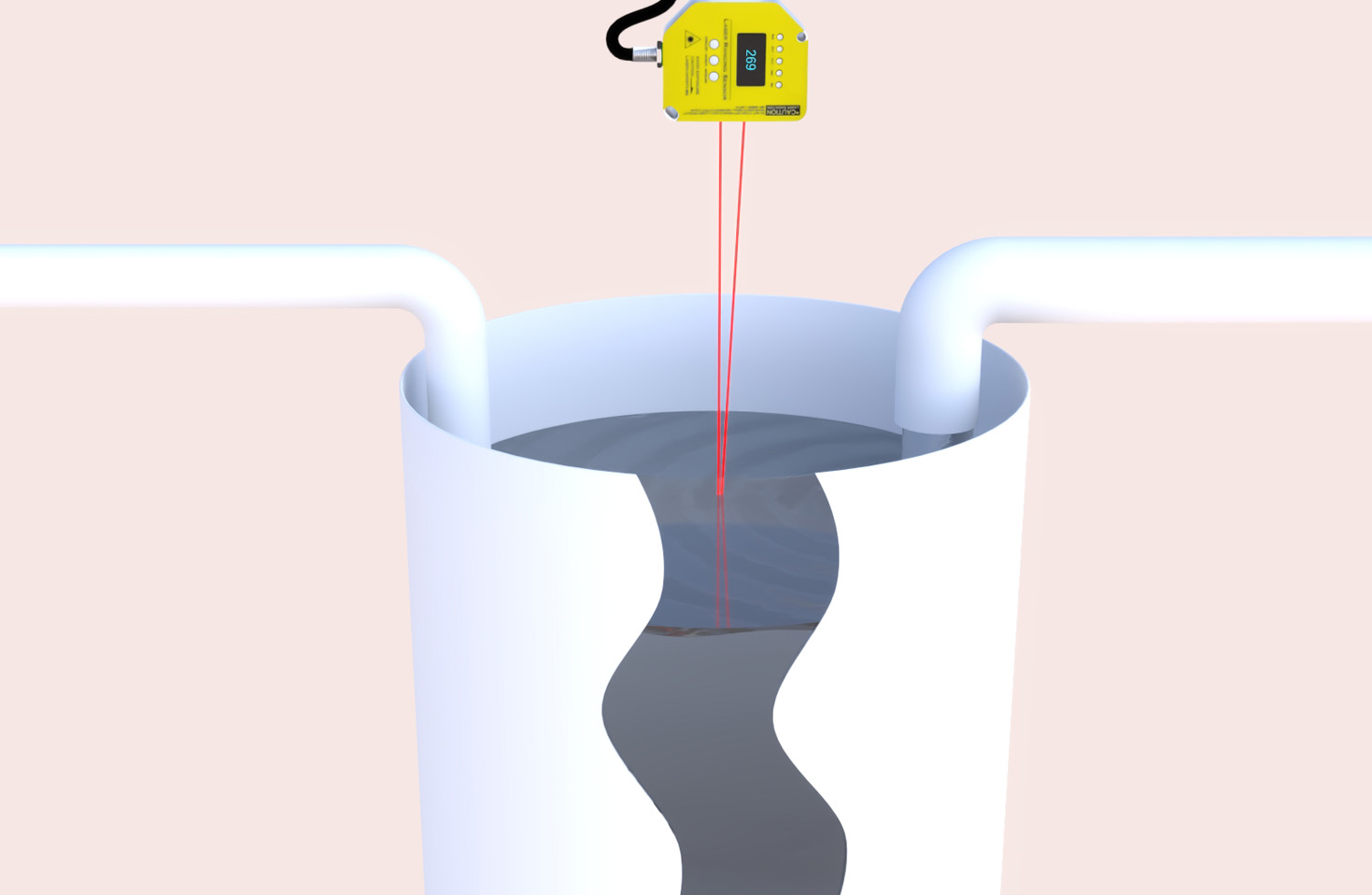
Time-of-flight sensors, alternatively, measure the round-trip time for a laser pulse to travel to the target and back. Given the constant speed of light, the distance is calculated as D = (c × t) / 2, where c is the speed of light and t is the measured time interval. Advanced ToF sensors use phase-shift analysis of modulated continuous-wave laser signals for enhanced accuracy. These sensors excel in longer-range applications, such as level monitoring in silos, vehicle detection, or large-scale 3D scanning, where measurement distances can extend to several hundred meters.
Beyond distance, laser sensors are configured for various measurement types. Laser contrast sensors exploit differences in surface reflectivity to detect marks, labels, or material edges. Luminescence sensors use specific wavelengths to excite and detect fluorescent materials. Confocal chromatic sensors employ white light split into spectral components to measure minute distances or thicknesses of transparent materials, like glass or films, with nanometer precision.
Key components defining sensor performance include laser class (with Class 1 or 2 being common for eye-safe operation), wavelength (typically red visible lasers at 650 nm or infrared at 850-1550 nm for reduced ambient light interference), spot size, and sampling rate. Environmental factors like ambient light, dust, steam, or target surface characteristics (color, texture, reflectivity) can influence readings. Modern sensors integrate adaptive algorithms, digital filtering, and temperature compensation to mitigate these effects.
Industrial integration involves interfaces such as analog outputs (4-20 mA, 0-10 V), digital I/O (PNP/NPN), and fieldbus protocols (EtherNet/IP, PROFINET, IO-Link). Configuration software allows parameter setting, including measurement windows, thresholds, and response times. Applications span automotive assembly (weld seam inspection, gap control), electronics (PCB alignment, component placement), packaging (fill level, label verification), and metallurgy (hot strip profiling, roll gap measurement).
The advantages of laser test sensors are manifold: non-contact operation eliminates wear and mechanical damage; high-speed response suits dynamic production lines; sub-micron resolution ensures quality control; and compact designs facilitate integration into tight spaces. However, limitations exist, such as sensitivity to highly reflective or transparent surfaces, requiring careful selection and calibration.
Future trends point toward miniaturization, multi-function sensors combining measurement with imaging, enhanced connectivity for Industry 4.0 data analytics, and smarter sensors with embedded AI for predictive maintenance and adaptive control. As industries demand higher precision and efficiency, laser test sensors will continue evolving, underpinning advancements in automation and quality assurance.
In summary, laser test sensors leverage sophisticated optical-electronic principles to deliver critical measurement data. Understanding their operation, types, and application considerations enables engineers to select and deploy these tools effectively, driving productivity and innovation in industrial environments.