In the realm of industrial automation and quality control, laser gap sensors have emerged as indispensable tools for achieving unparalleled precision in measurement applications. These advanced devices utilize laser triangulation or time-of-flight principles to accurately measure the distance, width, or presence of gaps, seams, and clearances with micron-level resolution. Unlike traditional contact-based measurement tools, laser gap sensors operate non-contact, eliminating the risk of part damage or wear, which is critical in high-speed production environments such as automotive assembly, aerospace manufacturing, and electronics fabrication.
The core technology behind laser gap sensors involves emitting a focused laser beam onto the target surface. The reflected light is captured by a high-resolution receiver, and sophisticated onboard algorithms calculate the precise distance based on the angle or time delay of the returned signal. This allows for real-time, continuous monitoring of gap dimensions, enabling immediate feedback for process adjustments. For instance, in automotive body-in-white assembly, laser sensors ensure consistent weld seam gaps, directly impacting structural integrity and safety. Similarly, in battery manufacturing, they verify the precise spacing between electrodes, a factor crucial for performance and longevity.
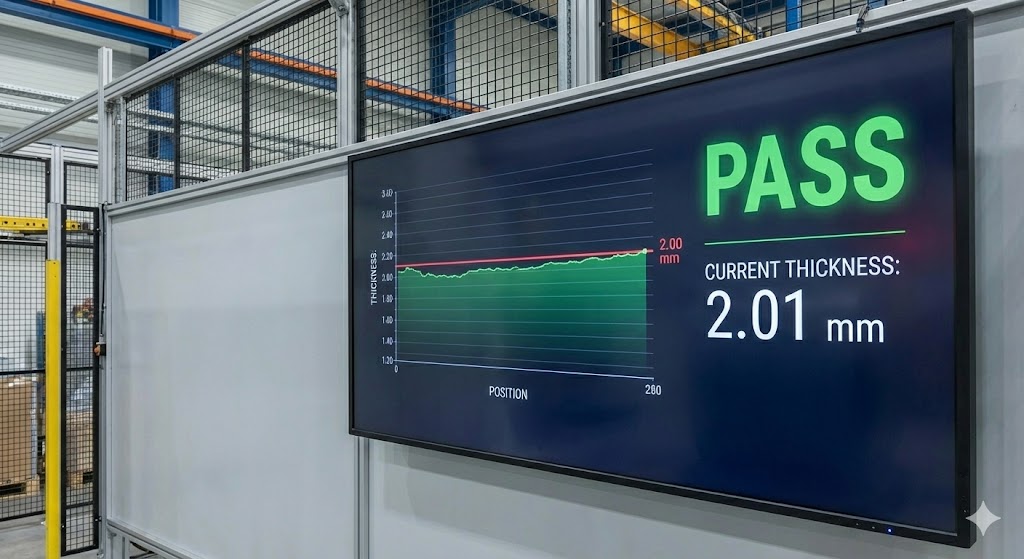
Modern laser gap sensors are designed to withstand harsh industrial conditions, featuring robust housings rated for IP67 or higher, resistance to vibrations, and immunity to ambient light interference. Integration with industrial networks like EtherCAT, PROFINET, or IO-Link facilitates seamless data exchange with PLCs and SCADA systems, supporting Industry 4.0 initiatives. Key performance parameters include measurement range (often from a few millimeters to several meters), repeatability (typically within ±0.1% of full scale), and response time in the microsecond range, ensuring compatibility with fast-moving production lines.
Applications extend beyond gap measurement to include edge detection, step height analysis, and presence sensing. For example, in roll-to-roll printing, sensors maintain exact web alignment by monitoring edge gaps, while in semiconductor packaging, they verify lid placements. The choice between red laser (visible) and blue laser (for dark or reflective surfaces) depends on material properties, enhancing versatility. Regular calibration using certified standards is recommended to maintain accuracy, though many models offer self-diagnostic features.

As manufacturing trends lean toward miniaturization and tighter tolerances, the demand for high-precision laser gap sensors continues to grow. Future developments may incorporate AI-driven analytics for predictive maintenance and adaptive control, further reducing downtime. By providing reliable, non-contact measurements, these sensors not only enhance product quality but also optimize production efficiency, making them a cornerstone of modern industrial metrology. For engineers, selecting the right sensor involves evaluating factors like environmental conditions, target material, required precision, and integration capabilities to ensure optimal performance in specific applications.