In modern industrial environments, precision measurement is a cornerstone of quality control, process optimization, and automation. Among the various technologies available, laser width sensors have emerged as a critical tool for non-contact, high-accuracy dimensional inspection. These sensors operate on the principle of laser triangulation or time-of-flight measurement, projecting a focused laser beam onto a target surface and analyzing the reflected light to determine distance and, by extension, width.
The core advantage of laser width sensors lies in their non-contact nature. Unlike mechanical gauges or contact probes, they eliminate the risk of damaging delicate materials or causing wear on the sensor itself. This is particularly vital in industries handling sensitive products like thin films, foils, textiles, or freshly extruded plastics and metals. Furthermore, laser sensors offer exceptional measurement speed, capable of performing thousands of measurements per second. This high-frequency data acquisition is indispensable for real-time process monitoring on high-speed production lines, such as in paper manufacturing, steel rolling mills, or converting machinery, where instantaneous feedback is required for automatic control systems to adjust rollers, cutters, or guides.
A typical laser width measurement system consists of a laser emitter and a receiver, often configured in a through-beam arrangement. The emitter projects a laser line or spot across the material's width. The receiver, positioned on the opposite side, detects the laser light. Any deviation in the material's edges causes a change in the shadow or the received light pattern. Sophisticated onboard electronics and algorithms then calculate the precise width by analyzing the position of these edge points. Advanced models incorporate CMOS or CCD arrays and digital signal processors to achieve micron-level resolution and repeatability, even in challenging conditions involving vibration, ambient light interference, or varying surface properties.
When selecting a laser width sensor, several key parameters must be considered. Measurement range and standoff distance define the operational envelope. Resolution and linearity determine the sensor's accuracy across its entire range. The response time must be fast enough to keep pace with line speed. Environmental robustness is another critical factor; sensors are often housed in IP67-rated enclosures to withstand dust, moisture, and temperature fluctuations common in industrial settings. Integration capability is also paramount. Modern laser sensors offer a variety of digital and analog outputs (e.g., Ethernet/IP, PROFINET, 4-20mA, 0-10V) and software interfaces for seamless connectivity with Programmable Logic Controllers (PLCs), Human-Machine Interfaces (HMIs), and data acquisition systems. This allows for not only real-time control but also comprehensive data logging for statistical process control (SPC) and traceability.
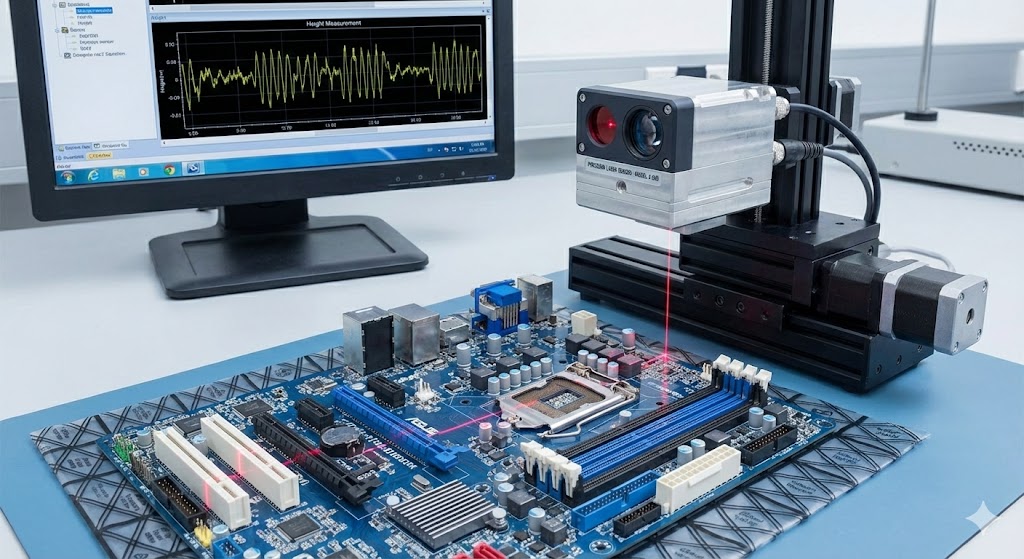
Applications for laser width sensors are vast and varied. In metal processing, they continuously monitor the width of hot-rolled or cold-rolled strips to ensure dimensional conformity and minimize trim loss. In the plastics industry, they measure extruded sheets or cast films, providing feedback to die bolts for automatic die lip adjustment. In the nonwovens and textile sectors, they control the width of fabrics to prevent neck-in or stretching. Beyond these, they are used in lumber sizing, rubber extrusion, glass production, and battery electrode coating. The consistent, reliable data they provide is fundamental to reducing material waste, improving product quality, and enhancing overall equipment effectiveness (OEE).
Despite their robustness, optimal performance requires proper installation and maintenance. Sensors must be correctly aligned perpendicular to the material flow. Regular cleaning of lenses is necessary to prevent contamination from process debris like oil mist or dust. Periodic calibration against a known standard ensures long-term measurement integrity. Understanding the material's surface characteristics—such as color, reflectivity, transparency, or texture—is also crucial during sensor selection and setup, as these factors can influence the laser's reflection and require specific sensor configurations or filters.
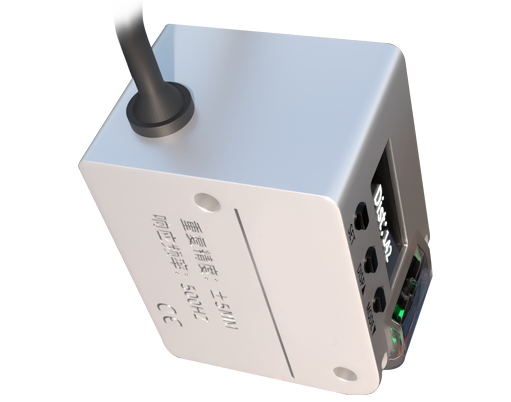
In conclusion, laser width sensors represent a mature yet continuously evolving technology that addresses the stringent demands of modern industrial measurement. Their ability to deliver fast, accurate, and reliable non-contact width data makes them an indispensable component in automated production systems. As industries push towards greater precision, efficiency, and connectivity under the framework of Industry 4.0, the role of intelligent laser measurement systems will only become more central, driving quality and productivity to new heights.