In the realm of industrial automation and precision measurement, laser sensors have become indispensable tools. Their ability to provide non-contact, high-accuracy detection for distance, position, and presence is critical in countless applications, from assembly line quality control to robotic guidance. However, the performance and reliability of any laser sensor system are profoundly dependent on a component often overlooked: the connector. The laser sensor connector serves as the critical interface between the sensor's sensitive electronics and the broader control network, ensuring stable power delivery and flawless data transmission.
A connector failure in a high-speed packaging line or a精密焊接 cell can lead to costly downtime, measurement errors, or even safety hazards. Therefore, a deep understanding of connector types, their specifications, and proper installation practices is essential for any engineer or technician working with these systems.

The primary function of a laser sensor connector is threefold: to supply electrical power, to transmit the sensor's output signal, and to provide a secure mechanical and environmental seal. Connectors are typically categorized by their design and locking mechanism. The most common types found in industrial settings include:
* Circular Connectors (M-Series): These are the workhorses of industrial automation. Defined by their metric thread (e.g., M8, M12), they offer excellent resistance to vibration, dust, and moisture. M12 connectors, with their 4 to 8 pins, are particularly ubiquitous for sensors. Keying (coding) options (A-coded for sensors/actuators, D-coded for Profinet, etc.) prevent mismating.
* Rectangular Connectors: Often used for multi-pin applications or where space allows a different form factor. Examples include the common D-subminiature (D-Sub) or more modern industrial rectangular housings.
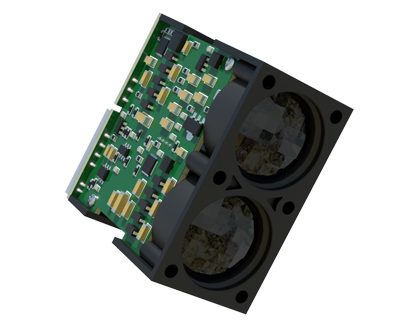
* Field-Wireable vs. Pre-molded Connectors: Field-wireable connectors allow cables to be terminated on-site, offering flexibility. Pre-molded connectors come with a fixed cable length and are factory-sealed, providing superior ingress protection and consistency but less customization.
Selecting the correct connector is a multi-parameter decision. The first and most critical step is consulting the sensor's datasheet. It will specify the required connector type, pinout, voltage, and current ratings. Beyond this, environmental factors dominate the selection criteria:
* Ingress Protection (IP Rating): This two-digit code (e.g., IP67, IP69K) defines protection against solids and liquids. An IP67 rating ensures the connector is dust-tight and can withstand temporary immersion, which is standard for washdown environments in food and beverage or pharmaceutical industries.
* Material and Housing: Connector housings are typically made from rugged plastics (PBT) or metals (brass, stainless steel). Metal housings provide superior electromagnetic interference (EMI) shielding and mechanical strength for harsh environments.
* Cable Considerations: The cable must match the connector's rating and be suitable for the application's mechanical stress (flexing, torsion) and temperature range. PUR (polyurethane) cables offer excellent oil and chemical resistance, while PVC is a cost-effective general-purpose option.
Proper installation is non-negotiable. For field-wireable connectors, meticulous attention must be paid to stripping lengths, wire ferrules, and torque specifications for screw terminals. Each wire must be seated in its correct pin position according to the sensor's pinout diagram (common configurations: 1+ for power, 1- for power return, 2 for signal output, 3 for signal common). A single crossed wire can damage the sensor or controller. After wiring, the connector's strain relief must be properly secured to prevent tension on the electrical contacts. Finally, the coupling nut must be tightened to the specified torque to ensure the environmental seal is complete.
A common challenge is signal integrity, especially with analog or high-speed digital outputs. Using shielded cables and connectors with proper 360-degree shield termination is crucial to mitigate electrical noise from motors, variable frequency drives, or welding equipment. For networked sensors using IO-Link or Ethernet protocols, using the correctly coded connector (e.g., M12 D-coded for Ethernet) is mandatory for proper communication.
In summary, the laser sensor connector is far more than a simple plug. It is a precision-engineered component vital for system integrity. By carefully selecting the connector based on the sensor requirements and operational environment, and by adhering to rigorous installation standards, engineers can ensure their laser sensing systems deliver maximum uptime, accuracy, and longevity. Neglecting this critical link in the signal chain undermines the sophisticated technology of the laser sensor itself, turning a potential asset into a recurring point of failure.