In the realm of modern building automation and smart sanitation, laser proximity sensors have emerged as a pivotal technology, particularly for restroom applications. These sensors offer a significant leap in hygiene, efficiency, and user experience compared to traditional infrared (IR) or ultrasonic sensors. This guide delves into the operational principles, key advantages, implementation considerations, and future trends of laser-based sensing in restroom environments.
At its core, a laser proximity sensor for restroom use operates by emitting a focused beam of light, typically from a laser diode in the safe Class 1 or Class 2 range. This beam is directed towards a target area, such as the space in front of a faucet, soap dispenser, hand dryer, or the vicinity of a toilet or urinal. When a user's hand or body enters this predefined zone, it reflects the laser light back to a photodetector within the sensor module. The sensor's internal circuitry, often utilizing time-of-flight (ToF) or phase-shift measurement principles, calculates the precise distance to the object. This high-precision measurement allows the sensor to trigger the connected fixture—be it a valve, dispenser, or flush mechanism—only when a valid target is detected within an exact range, minimizing false triggers.
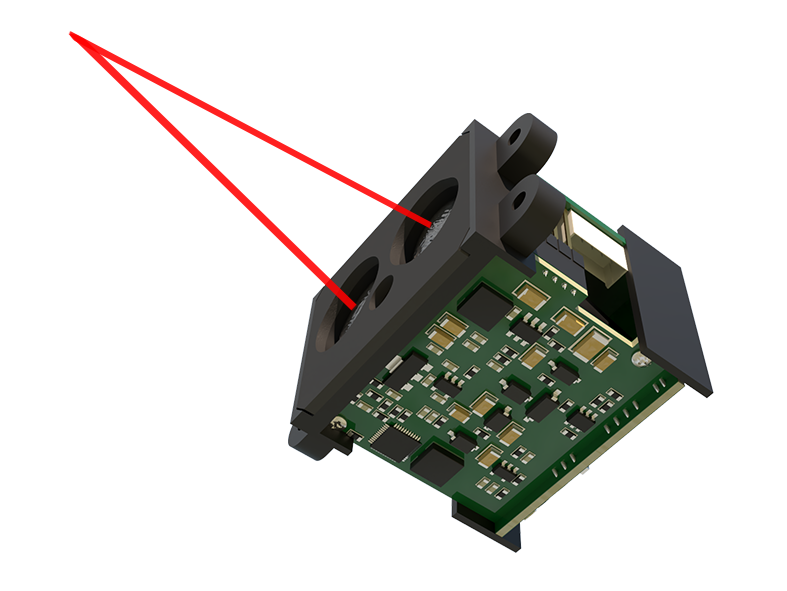
The superiority of laser sensors in restrooms is anchored in several technical advantages. First and foremost is precision and accuracy. Laser beams are highly collimated, allowing for exact zone definition. This eliminates the "phantom flushes" or accidental activations common with older, less focused IR sensors that can be triggered by stray movements or reflections. Secondly, they exhibit remarkable performance stability. Unlike IR sensors, whose performance can degrade due to dust accumulation on the lens or interference from ambient light (including sunlight), laser sensors are less susceptible to these factors. Their focused nature makes them more resilient to lens fouling, a critical factor in the humid and often dirty restroom environment. Furthermore, laser sensors provide consistent operation regardless of the color or material of the user's clothing or skin, a variable that can affect the reflectivity and performance of standard IR sensors.
From a hygiene standpoint, laser sensors are unparalleled. They enable truly touch-free operation, crucial for interrupting the chain of germ transmission in public and commercial restrooms. This not only improves public health but also enhances the perceived quality and modernity of a facility. For facility managers, the long-term operational benefits are substantial. The reduced rate of false activations translates directly into conservation of water, soap, and electricity (for dryers), leading to lower utility costs and a smaller environmental footprint. Moreover, the reliability and durability of these sensors decrease maintenance calls and associated labor costs.

Successful implementation requires careful engineering consideration. Sensor placement is critical and must be calculated based on the specific fixture and expected user interaction. For faucets and soap dispensers, the optimal sensing distance and beam angle must ensure easy activation without accidental triggers from passing traffic. For toilets and urinals, the sensor must distinguish between a user standing nearby and actual departure to initiate an automatic flush. Environmental robustness is non-negotiable; housings must have a high Ingress Protection (IP) rating (e.g., IP65 or higher) to withstand moisture, splashing, and frequent cleaning with chemicals. Integration with the building's management system is also increasingly important, allowing for remote monitoring of usage patterns, predictive maintenance alerts, and data collection on foot traffic.
Looking ahead, the integration of laser sensing with the Internet of Things (IoT) and Artificial Intelligence (AI) represents the next frontier. Smart sensor networks could monitor restroom occupancy in real-time, enabling dynamic cleaning schedules and supply replenishment alerts. AI algorithms could analyze sensor data to distinguish between different types of usage, further optimizing resource consumption. Additionally, advancements in laser diode and detector technology will continue to drive down costs while improving performance and energy efficiency, making this technology accessible for an even wider range of applications.
In conclusion, laser proximity sensors are redefining the standards for restroom automation. Their precision, reliability, and hygiene benefits offer a compelling return on investment for any commercial, institutional, or high-traffic public facility. As technology evolves, these sensors will become even more intelligent and integral to creating sustainable, efficient, and user-friendly smart restroom ecosystems.
