In the rapidly evolving landscape of industrial automation and smart systems, micro metal proximity sensors have emerged as indispensable components for precise, non-contact detection. These compact devices are engineered to detect the presence or absence of metallic objects without physical contact, leveraging electromagnetic fields to achieve high reliability in demanding environments. Typically measuring just a few millimeters in diameter, they are ideal for applications where space constraints are critical, such as in robotics, automotive assembly lines, packaging machinery, and consumer electronics.
The operational principle of micro metal proximity sensors is rooted in electromagnetic induction. A high-frequency oscillator generates an alternating magnetic field from the sensor's coil. When a metallic target enters this field, eddy currents are induced in the metal, causing a change in the oscillation amplitude or frequency. This alteration is detected by the sensor's circuitry, which then triggers an output signal—commonly in the form of a digital switch (PNP or NPN) or analog output. Key performance metrics include sensing distance, which ranges from 0.5 mm to 5 mm for standard models, response frequency up to 5 kHz, and robust environmental ratings like IP67 for dust and water resistance.
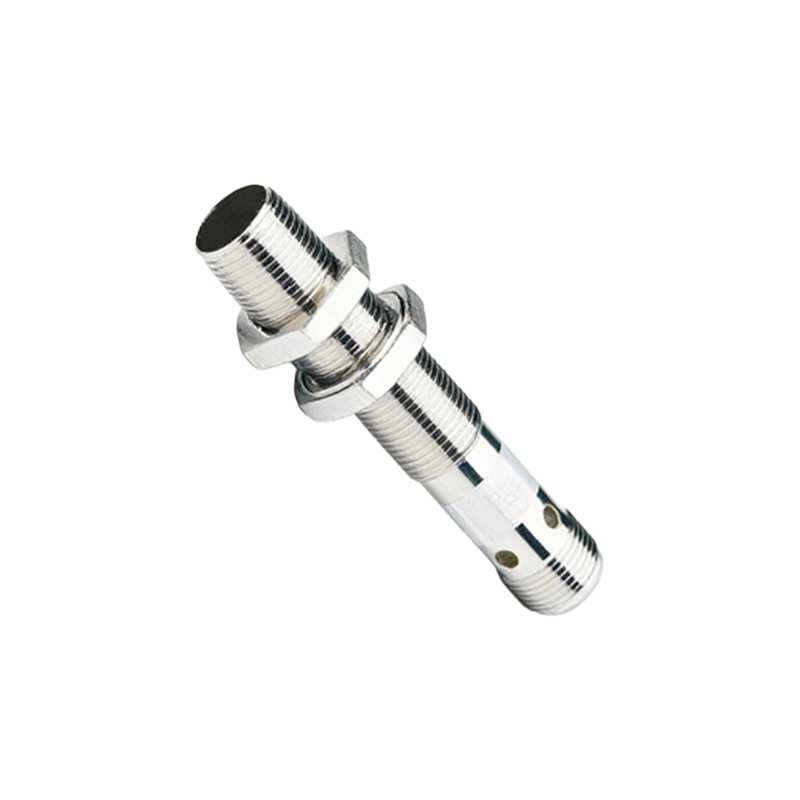
One of the standout advantages of these sensors is their durability. With no moving parts and sealed housings often made of stainless steel or nickel-plated brass, they withstand vibrations, shocks, and harsh conditions involving oils, coolants, or temperature extremes from -25°C to 70°C. This makes them superior to mechanical limit switches, reducing maintenance needs and downtime. Additionally, their non-contact nature eliminates wear and tear, ensuring long-term stability and accuracy.
In practice, micro metal proximity sensors are deployed across diverse sectors. In automotive manufacturing, they monitor position in engine components or verify part placement. In robotics, they provide feedback for arm movement or gripper alignment. Electronics assembly lines use them to detect tiny screws or connectors, while conveyor systems rely on them for object counting and jam prevention. Advanced versions incorporate features like teach-in functionality for easy calibration, short-circuit protection, and immunity to electromagnetic interference (EMI), enhancing integration with PLCs and IoT networks.
Selecting the right sensor involves considering factors such as target material (ferrous vs. non-ferrous metals affect sensing range), installation requirements (flush or non-flush mounting), output type, and supply voltage (typically 10-30 V DC). Engineers must also account for environmental influences; for instance, adjacent metal surfaces or high temperatures can impact performance. Proper shielding and mounting techniques are crucial to minimize false triggers.
Looking ahead, innovations in micro metal proximity sensors focus on miniaturization, enhanced sensitivity, and smart capabilities. Integration with IO-Link communication allows for real-time diagnostics and parameter adjustments, supporting Industry 4.0 initiatives. As industries push for higher precision and efficiency, these sensors will continue to play a pivotal role in enabling automated, reliable detection solutions. Their compact design, coupled with robust performance, ensures they remain a cornerstone of modern electrical engineering and automation systems.