In the landscape of industrial automation, precision measurement is a cornerstone of efficiency, quality control, and safety. Among the plethora of sensing technologies available, real-time laser distance sensors have emerged as a critical tool for engineers seeking non-contact, high-speed, and highly accurate measurement solutions. This article delves into the operational principles, key application areas, and essential selection criteria for these sophisticated devices.
At its core, a real-time laser distance sensor operates by emitting a focused beam of coherent light—the laser—towards a target object. The sensor then analyzes the reflected light to calculate the distance. The two most prevalent measurement principles are time-of-flight (ToF) and triangulation. Time-of-flight sensors measure the time delay between the emission of a laser pulse and the detection of its reflection. Given the constant speed of light, this time interval is directly proportional to the distance traveled. ToF sensors are ideal for long-range measurements, often up to several hundred meters, with moderate accuracy. They are commonly used in applications like vehicle detection, bulk material level monitoring, and large-scale surveying.
In contrast, laser triangulation sensors are the go-to choice for high-precision, short to medium-range measurements. Here, the laser beam is projected onto the target surface at a known angle. The reflected light is focused onto a position-sensitive detector (like a CCD or CMOS array) at a different angle. As the target distance changes, the position of the reflected light spot on the detector shifts. Using simple trigonometric calculations, the sensor's processor determines the exact distance with micron-level resolution. This principle is indispensable in industries requiring extreme precision, such as semiconductor manufacturing, electronics assembly, and precision machining.
The term "real-time" is paramount. Modern laser sensors are equipped with high-speed processors and communication interfaces (e.g., Ethernet/IP, PROFINET, EtherCAT, or analog/digital I/O) that provide measurement data with minimal latency, often in the microsecond range. This enables their integration into closed-loop control systems where instantaneous feedback is required to adjust robotic arms, control conveyor speeds, or trigger sorting mechanisms without halting production lines.
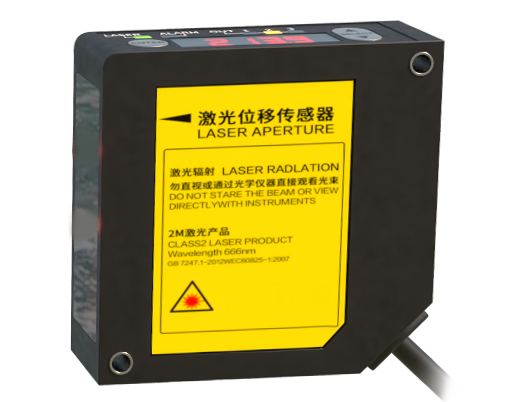
The applications for real-time laser distance sensors are vast and varied across industrial sectors. In automotive manufacturing, they are used for robotic guidance in welding and assembly, gap and flush measurement on car bodies, and inspection of component dimensions. In the packaging industry, these sensors monitor fill levels in bottles and containers, check package thickness, and control the stacking height on pallets. In logistics and warehousing, they facilitate dimensioning systems for parcels, guide automated guided vehicles (AGVs), and manage inventory by measuring stockpile volumes. Furthermore, in metal processing, they ensure precise control in rolling mills by measuring strip thickness and width in real-time.
Selecting the appropriate laser distance sensor requires careful consideration of several technical parameters. First, define the required measuring range and the desired resolution or repeatability. A sensor with sub-micron resolution is unnecessary for meter-level bin monitoring, just as a long-range ToF sensor would be unsuitable for inspecting microchip profiles. Second, consider the target surface properties. Dark, matte, or transparent materials absorb or scatter laser light, potentially reducing signal strength. Many modern sensors feature automatic exposure control or specialized algorithms to compensate for varying surface colors and textures. Third, the environmental conditions are critical. Factors like ambient light interference, dust, fog, vibration, and temperature fluctuations can impact performance. Look for sensors with high IP ratings for dust and water resistance, robust housings, and built-in temperature compensation.
Finally, the output and integration capabilities must align with the existing control architecture. Ensure the sensor's data output format (e.g., analog voltage/current, discrete switching, or industrial Ethernet protocol) is compatible with your PLC, PC, or data acquisition system. The physical size and mounting options of the sensor are also practical concerns in space-constrained installations.
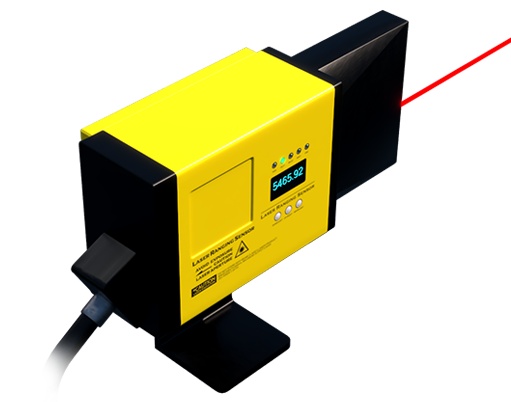
In conclusion, real-time laser distance sensors represent a fusion of optical precision and electronic speed, offering unparalleled capabilities for non-contact measurement. By understanding the underlying principles—ToF for long range and triangulation for high precision—and meticulously evaluating application requirements against sensor specifications, electrical and automation engineers can leverage this technology to drive significant improvements in productivity, quality, and operational intelligence. As Industry 4.0 and smart factory initiatives advance, the role of these precise, data-generating sensors will only become more central to connected, automated industrial ecosystems.
