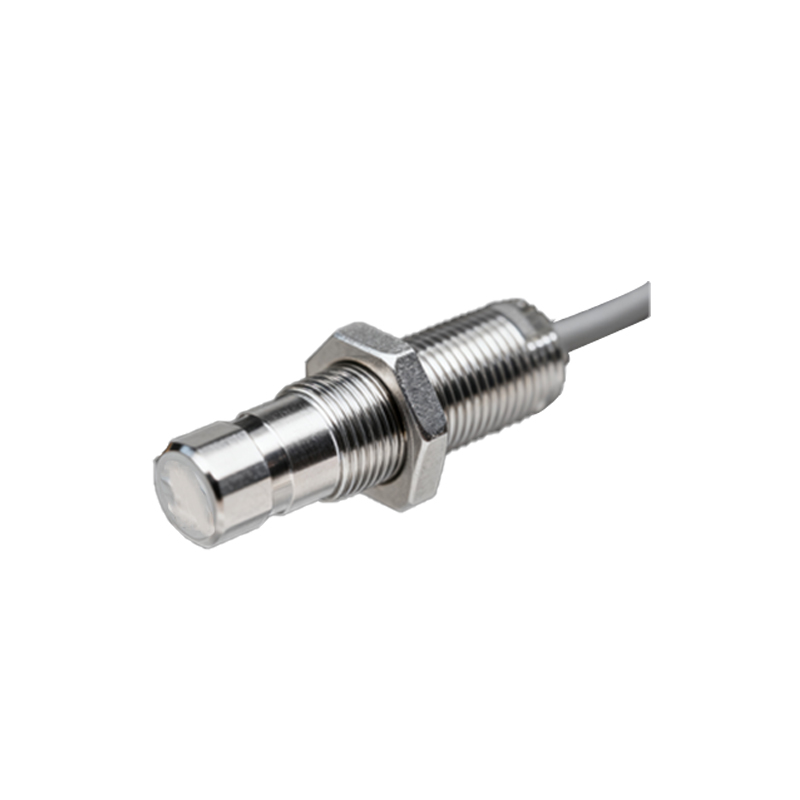
Metal proximity inductive sensors are fundamental components in modern industrial automation, offering non-contact detection of metallic objects. These devices operate on the principle of electromagnetic induction, generating an oscillating electromagnetic field from a coil within the sensor. When a metallic target enters this field, eddy currents are induced on the metal surface, causing a change in the oscillation amplitude or frequency. This alteration is detected by the sensor's internal circuitry, which then triggers a switching output—typically a solid-state PNP, NPN, or relay contact. The key advantage lies in their ability to detect ferrous and non-ferrous metals without physical contact, eliminating mechanical wear and enabling high-speed operation in harsh environments.
The construction of these sensors is robust, often housed in stainless steel, nickel-plated brass, or ruggedized plastic bodies with ingress protection ratings like IP67 or IP69K. This makes them resistant to dust, moisture, oils, and mechanical impacts. Common sensing ranges vary from a few millimeters to about 60 millimeters, depending on the sensor size and target material. For instance, a sensor calibrated for mild steel might have a nominal range of 10mm, but for aluminum or copper, the effective range reduces due to lower permeability and conductivity. Engineers must account for this reduction factor—often 0.4 for aluminum and 0.3 for copper—during system design to ensure reliable detection.
Applications are widespread across manufacturing and processing industries. In conveyor systems, inductive sensors count metal parts or detect their position for robotic handling. In machine tools, they serve as limit switches to monitor spindle position or tool presence. Automotive assembly lines utilize them for verifying component placement, while packaging machinery employs sensors to detect metallic foils or caps. A critical consideration is the installation environment; sensors must be mounted with adequate clearance from surrounding metal structures to prevent false triggering—a parameter known as "flush mounting" capability. Shielded sensors can be embedded in metal, whereas unshielded types require non-metallic surroundings for optimal performance.
Selecting the right sensor involves evaluating several technical parameters. The operating voltage, usually between 10-30V DC or 20-250V AC, must match the control system. Output configuration is another decision point: PNP (sourcing) outputs are common in Europe and Asia, while NPN (sinking) prevails in North America. Response frequency, up to several kilohertz, determines how quickly the sensor can detect objects in high-speed applications. Additionally, temperature tolerance, typically from -25°C to 70°C, ensures functionality in extreme conditions. Modern advancements include analog output sensors that provide continuous distance measurement, and IO-Link enabled models for digital communication, allowing parameter adjustment and diagnostics via industrial networks.
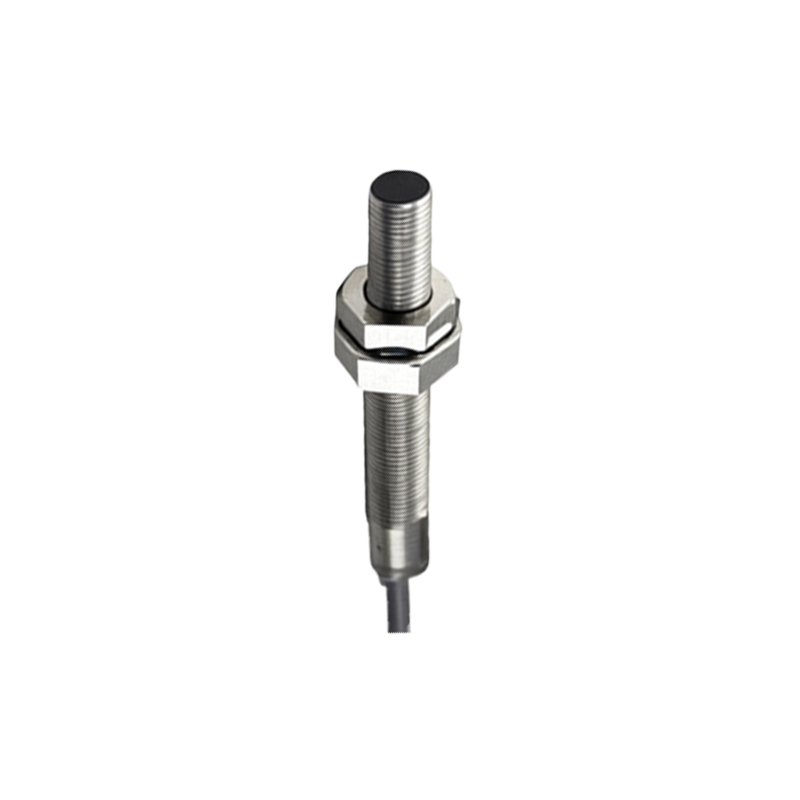
Maintenance is minimal but crucial. Regular checks should verify sensing distance stability and housing integrity. Contaminants like metal chips or conductive dust can affect performance, necessitating periodic cleaning. In summary, metal proximity inductive sensors are indispensable for reliable, non-contact metal detection. Their durability, speed, and adaptability make them a cornerstone of industrial automation, enhancing efficiency and safety in countless applications. By understanding their operating principles and selection criteria, engineers can optimize system design for precision and longevity.