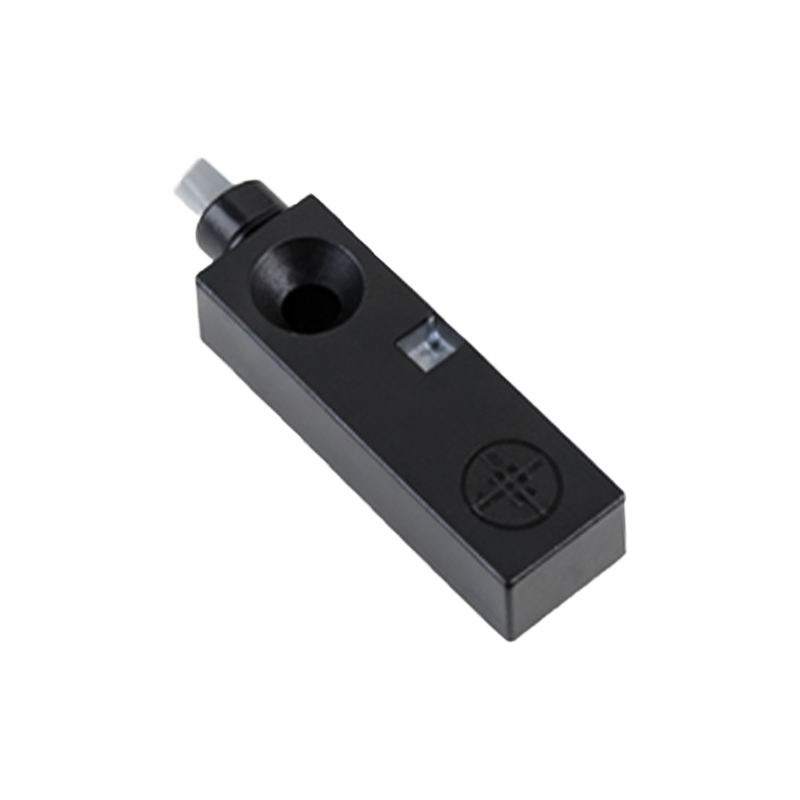
In the realm of industrial automation, robotic systems have become indispensable for tasks ranging from assembly and welding to material handling and inspection. At the heart of these sophisticated machines lies a critical component that ensures their operational accuracy and safety: the proximity sensor. These sensors are pivotal in enabling robots to interact with their environment intelligently, detecting the presence or absence of objects without physical contact. This article delves into the types, working principles, applications, and future trends of proximity sensors in robotic systems, highlighting their role in modern manufacturing and beyond.
Proximity sensors are non-contact devices designed to detect the presence of nearby objects. They operate based on various physical principles, including electromagnetic, capacitive, and optical technologies. In robotic applications, the most commonly used types are inductive, capacitive, and photoelectric proximity sensors. Inductive sensors are ideal for detecting metallic objects, utilizing an electromagnetic field to sense ferrous and non-ferrous metals. They are widely employed in robotic arms for positioning metal parts or tools, ensuring precise movements in assembly lines. Capacitive sensors, on the other hand, can detect both metallic and non-metallic materials, such as plastics, liquids, or granular substances, by measuring changes in capacitance. This makes them suitable for applications like liquid level sensing or handling delicate materials in packaging robots. Photoelectric sensors use light beams to detect objects, offering long-range sensing capabilities and high accuracy, often applied in robotic vision systems for object recognition and quality control.
The working mechanism of these sensors involves generating a field or beam and monitoring disturbances caused by target objects. For instance, an inductive proximity sensor consists of an oscillator circuit that creates an alternating magnetic field. When a metallic object enters this field, eddy currents are induced, altering the oscillation amplitude and triggering a detection signal. This signal is then processed by the robot's control system to initiate actions like stopping movement, adjusting grip force, or changing direction. Similarly, capacitive sensors rely on changes in the dielectric constant between sensor plates, while photoelectric sensors detect interruptions or reflections of light beams. The choice of sensor depends on factors such as target material, sensing distance, environmental conditions (e.g., dust, humidity), and required response speed.
In robotic systems, proximity sensors serve multiple functions that enhance efficiency and safety. One key application is collision avoidance, where sensors mounted on robot arms or end-effectors detect obstacles in their path, preventing damage to both the robot and surrounding equipment. This is crucial in collaborative robotics (cobots), where humans and robots work side-by-side, requiring reliable safety mechanisms. Additionally, proximity sensors enable precise positioning and alignment, such as in pick-and-place operations, where they ensure accurate grasping of components from conveyors. They also facilitate object counting, part verification, and edge detection in automated inspection processes. For example, in automotive manufacturing, robots equipped with inductive sensors can identify metal brackets for welding, while photoelectric sensors help align car bodies during assembly.
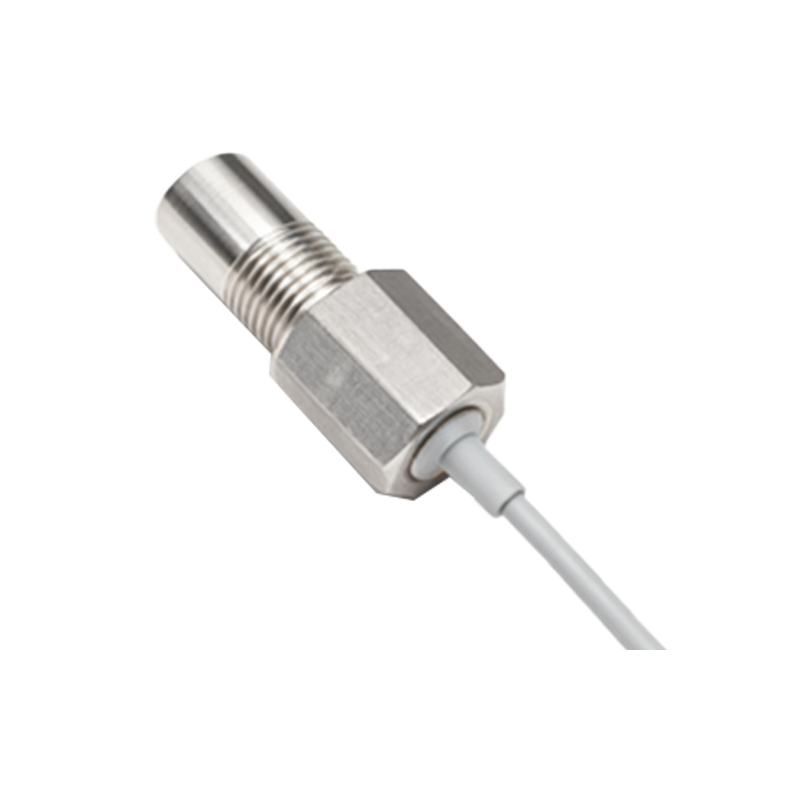
The integration of proximity sensors with advanced technologies like the Internet of Things (IoT) and artificial intelligence (AI) is driving innovation in robotics. Smart sensors with embedded microprocessors can now communicate real-time data to central control systems, enabling predictive maintenance and adaptive operations. In smart factories, networked sensors allow robots to adjust their behavior based on production line changes, improving flexibility and reducing downtime. Future trends include the development of miniaturized sensors for compact robotic designs, enhanced sensitivity for detecting subtle variations, and improved resistance to harsh industrial environments. Moreover, the rise of autonomous mobile robots (AMRs) relies heavily on proximity sensing for navigation and obstacle detection in dynamic settings.
Despite their advantages, challenges remain in optimizing proximity sensors for robotics. Issues like electromagnetic interference, temperature fluctuations, and material variations can affect sensor performance. Engineers must carefully calibrate sensors and implement shielding or filtering techniques to mitigate these effects. Regular maintenance and calibration are essential to ensure long-term reliability. As robotics continues to evolve, proximity sensors will play an increasingly vital role in enabling more autonomous, efficient, and safe automation solutions. By understanding their capabilities and limitations, industry professionals can leverage these devices to push the boundaries of what robots can achieve in diverse sectors, from manufacturing and logistics to healthcare and agriculture.
In conclusion, proximity sensors are fundamental to the functionality of modern robotic systems, providing the "senses" needed for intelligent interaction with the environment. Their ability to detect objects without contact enhances precision, productivity, and safety in industrial applications. As technology advances, these sensors will become even more integral to the next generation of robotics, supporting the transition toward fully automated and interconnected smart industries. For engineers and technicians, staying abreast of sensor innovations is key to harnessing their full potential in driving automation forward.