In the realm of industrial automation, robotics, and smart devices, the proximity sensor acts as the silent sentinel, detecting the presence or absence of an object without physical contact. While the sensing technology—be it inductive, capacitive, ultrasonic, or photoelectric—often garners attention, the true utility of the sensor is realized at its output terminal. The output stage is the critical interface where the sensor's detection event is translated into a usable signal for control systems, programmable logic controllers (PLCs), or microcontrollers. Understanding the types, characteristics, and integration methods of proximity sensor outputs is fundamental for ensuring reliable system operation.
The output of a proximity sensor is not a simple on/off switch in the conventional sense. It is an electronically controlled circuit designed to handle specific voltage and current levels compatible with industrial control logic. The most fundamental classification is based on the output configuration: Digital (Discrete) Outputs and Analog Outputs.
Digital Outputs are the most common, providing a clear, binary signal indicating "object detected" or "object not detected." Within this category, there are two primary transistor-based types defined by their circuit design in relation to the load and power supply:
NPN Output (Sinking): In this configuration, the sensor's output transistor connects the load to ground (negative) when active. The load (e.g., a PLC input) must be connected to the positive voltage supply. When the sensor detects a target, the NPN transistor switches on, allowing current to sink from the load through the sensor to ground, completing the circuit. This type is sometimes referred to as "negative switching."
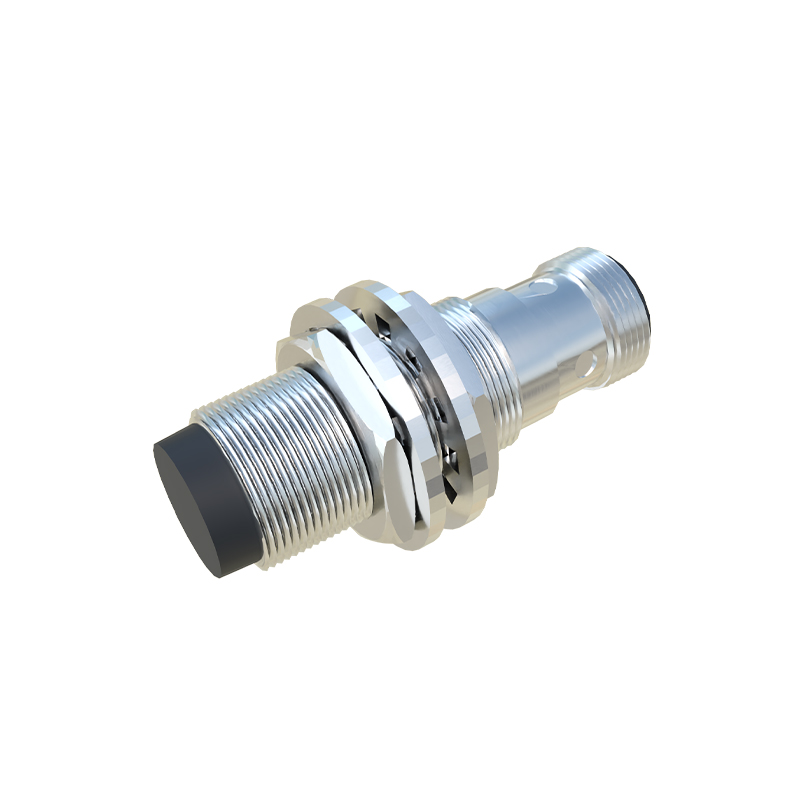
PNP Output (Sourcing): Here, the sensor's output transistor connects the load to the positive voltage supply when active. The load is connected to ground. Upon detection, the PNP transistor switches on, sourcing current from the positive supply, through the sensor, and into the load. This is known as "positive switching."
Choosing between NPN and PNP is crucial and depends on the input circuitry of the controller. Many modern sensors offer a Selectable Output (often labeled as NPN/PNP or universal), which can be wired for either mode, providing greater flexibility.
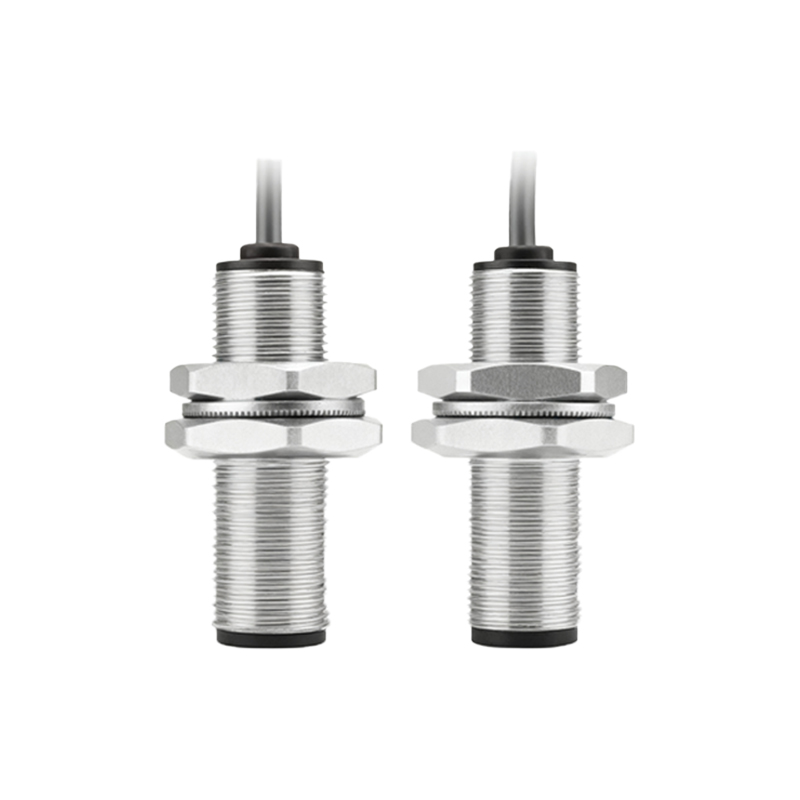
For applications requiring more information than mere presence, Analog Outputs come into play. Instead of a simple switch, these outputs provide a continuously variable signal—typically a voltage (e.g., 0-10V) or current (e.g., 4-20mA)—that is proportional to the distance to the target. A 4-20mA analog output, for instance, might correspond to 4mA for no target in range and 20mA for a target at the sensor's minimum sensing distance, with a linear relationship in between. This allows for precise distance measurement, thickness monitoring, or edge guiding. The 4-20mA standard is particularly valued in industrial environments for its inherent noise immunity and ability to indicate a wire break (current falls to 0mA).
Another important specification is the Output Function. A Normally Open (NO) output is inactive (off) when no target is present and becomes active (on) when a target is detected. Conversely, a Normally Closed (NC) output is active (on) in the idle state and turns off upon detection. Many sensors provide a Programmable Output function, allowing the user to configure the logic (NO, NC, or even timed delays) via pushbuttons or software.
Integrating the sensor output correctly is paramount. Key electrical parameters must be matched:
1. Load Compatibility: Ensure the sensor's output can handle the voltage and current requirements of the connected device (the load). Exceeding the maximum current can damage the sensor's output transistor.
2. Wiring: A standard 3-wire sensor has connections for power supply positive (+V), power supply negative (0V or GND), and the output signal wire. Correctly identifying and connecting these wires according to the chosen NPN or PNP scheme is essential. Shielding the cable may be necessary in electrically noisy environments.
3. Protection Circuits: Incorporating protective elements like flyback diodes for inductive loads (relays, solenoids) or surge suppressors is critical to prevent voltage spikes from damaging the sensitive output circuitry.
4. PLC Input Matching: A PLC with a sinking input module (common on the positive side) requires a PNP (sourcing) sensor. A PLC with a sourcing input module requires an NPN (sinking) sensor. Mismatching will result in the system not functioning.
In summary, the output terminal of a proximity sensor is where theory meets practice. Selecting the appropriate output type—NPN, PNP