In the rapidly evolving landscape of mobile device technology, the proximity sensor stands as a critical yet often underappreciated component. For electrical engineers designing and integrating hardware for Android platforms, a deep understanding of this sensor's operation, integration, and optimization is paramount. This guide delves into the technical specifics, implementation challenges, and future trends of proximity sensors within the Android ecosystem.
Fundamentally, an Android proximity sensor is a type of non-contact sensor that detects the presence of nearby objects without any physical contact. The most common implementation is an infrared (IR) LED paired with an IR light detector. The sensor emits a beam of infrared light; when an object comes close, the light reflects back to the detector. The sensor's driver and the Android sensor framework then interpret the reflected signal strength to determine proximity, typically returning a binary "near" or "far" state. This simple mechanism is crucial for power saving and preventing accidental touchscreen inputs during calls—when the phone is held to the ear, the sensor detects "near" and turns off the display.
From an engineering perspective, integrating a proximity sensor into an Android device involves several hardware and software layers. On the hardware side, engineers must consider the choice of sensor module (common vendors include AMS-TAOS, Vishay, and Lite-On), its placement to avoid interference from other components or the user's hand, and the precise calibration of the IR emitter and receiver. Factors like the sensor's response time, detection range (usually up to 5 cm), and power consumption are key specifications. The sensor connects to the main Application Processor (AP) or a dedicated sensor hub via standard interfaces like I2C or SPI.
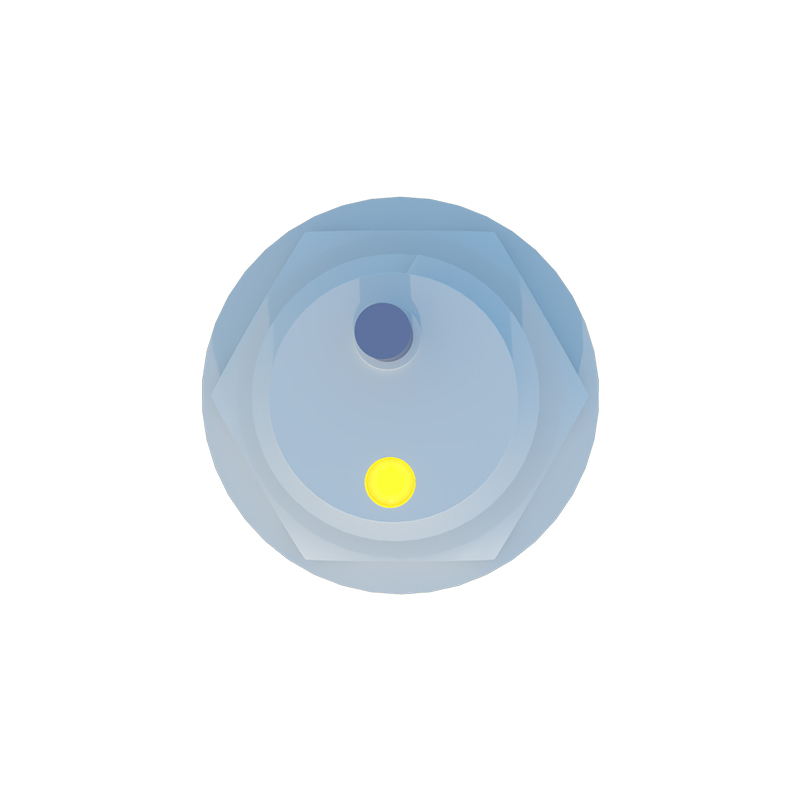
The software stack is governed by the Android Sensor Framework, part of the Android HAL (Hardware Abstraction Layer). Engineers must develop a kernel driver that interfaces with the physical sensor hardware. This driver reports raw data to the Android sensor service through the HAL. The Android system then provides standardized APIs (likeSensorManager andSensorEvent) that allow applications to request proximity data. A significant challenge is calibration and noise filtering. Environmental factors such as ambient IR light (from sunlight or artificial sources) can cause false readings. Sophisticated algorithms in the driver or firmware are required to establish a dynamic baseline and distinguish between true proximity events and environmental noise.
Debugging and validation are critical phases. Engineers use tools likeadb shell dumpsys sensorservice to inspect sensor registration and event streams. Oscilloscopes and logic analyzers are used to verify the integrity of the I2C/SPI communication and the IR signal itself. Testing must cover extreme scenarios: different skin tones (which reflect IR differently), various phone cases, and high-ambient-light conditions.
Beyond the basic phone-call function, creative applications of the proximity sensor are emerging. It can be used for gesture recognition (simple wave-to-wake gestures), power conservation in IoT devices, or as a rudimentary obstacle detector in robotics projects built on Android platforms. However, these uses require careful signal processing and low-latency response from the system.
Looking forward, the role of the discrete proximity sensor is being re-evaluated. The trend towards bezel-less displays and under-display camera technology poses a significant placement challenge. Some manufacturers are experimenting with alternative technologies, such as time-of-flight (ToF) sensors or using a combination of other sensors (ambient light, ultrasonic) to infer proximity data. Furthermore, sensor fusion—combining data from the accelerometer, gyroscope, and proximity sensor—allows for more context-aware decisions, improving accuracy and user experience.
For electrical engineers, mastering the Android proximity sensor is more than understanding a simple IR pair. It encompasses analog circuit design for clean signal transmission, digital communication protocols, low-power design principles, kernel-level driver development, and an intimate knowledge of the Android software architecture. As Android continues to dominate not just phones but also automotive systems, kiosks, and industrial devices, the principles of reliable, efficient sensor integration remain a foundational and valuable skill set. The humble proximity sensor exemplifies the intricate hardware-software co-design that defines modern consumer electronics.