In the modern landscape of industrial automation, renewable energy, and meteorological science, the precise measurement of wind parameters is critical. Traditional mechanical anemometers, while reliable, often suffer from limitations such as inertia, mechanical wear, and the need for physical intrusion into the airflow. This is where wind measurement laser sensors, specifically Laser Doppler Anemometers (LDAs) and more recently, LiDAR (Light Detection and Ranging) wind sensors, have revolutionized the field. These contactless instruments offer unparalleled accuracy, high temporal resolution, and robust performance in demanding environments.
The core principle behind laser-based wind sensing is the Doppler effect. When a laser beam is directed towards airborne particles (aerosols, dust, moisture) naturally present in the air, the light scattered back from these moving particles undergoes a slight frequency shift. This shift is directly proportional to the velocity of the particle along the beam's axis. By precisely measuring this frequency shift using interferometric techniques, the sensor calculates the wind speed component in that specific direction. A typical LiDAR-based wind sensor employs multiple laser beams pointed at different non-coplanar angles. By combining the velocity components from these divergent beams through vector analysis, the system can resolve the full three-dimensional wind vector—speed, direction, and even turbulence characteristics—at a remote point in space.
The advantages of laser wind sensors are manifold. Firstly, their non-contact nature eliminates mechanical wear, significantly reducing maintenance needs and increasing long-term reliability. They have no moving parts to freeze, corrode, or fatigue. Secondly, they provide extremely high spatial and temporal resolution, capable of capturing rapid gusts and micro-turbulence that mechanical cups or sonic anemometers might average out. This is vital for applications like wind turbine control, where understanding inflow wind shear and gusts in real-time can optimize blade pitch adjustment, reducing structural loads and maximizing energy capture. Thirdly, they can measure wind at a distance, from tens to hundreds of meters away. This is particularly useful for profiling wind shear over a vertical column or assessing wind resources at the hub height of a planned wind turbine without erecting a tall meteorological mast.
Industrial and scientific applications are diverse. In the wind energy sector, laser sensors are deployed for site assessment, power performance verification, and advanced turbine control. They are mounted on the nacelle to look upstream, providing several seconds of preview wind data, allowing for proactive control strategies. In aviation, they are used for airport wind shear detection and wake vortex monitoring, enhancing safety. In environmental monitoring and meteorology, they contribute to high-fidelity atmospheric boundary layer studies and air pollution dispersion modeling. Furthermore, in specialized industries like civil engineering, they assess wind loads on tall structures and bridges.

Recent technological advancements continue to push boundaries. The development of continuous-wave (CW) and pulsed LiDAR systems has expanded measurement ranges. Solid-state LiDAR, with no rotating optics, offers greater durability and lower costs, facilitating wider adoption. Integration with IoT platforms and cloud analytics allows for networked sensor arrays providing real-time wind field maps over large areas like wind farms. Challenges remain, such as performance degradation in heavy rain or fog where particle density is too high or signal attenuation occurs, and the relatively higher cost compared to basic mechanical sensors. However, ongoing research in signal processing and photonics is steadily improving performance in all weather conditions and driving costs down.
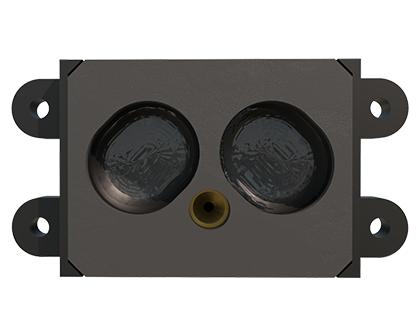
In conclusion, wind measurement laser sensors represent a paradigm shift from mechanical sensing to sophisticated optoelectronic measurement. Their ability to deliver accurate, remote, and high-resolution wind data makes them indispensable tools for advancing efficiency in renewable energy, safety in transportation, and precision in scientific research. As technology matures and costs decrease, their deployment is set to become even more pervasive, solidifying their role as a cornerstone of modern industrial and environmental measurement systems.