In the high-stakes world of industrial laser welding, precision is paramount. The quality, strength, and consistency of a weld are directly influenced by the thermal conditions at the point of fusion. While the laser itself provides the concentrated energy, it is the temperature sensor integrated into or near the welding torch that acts as the critical eye, monitoring and safeguarding the process. This article delves into the role, types, integration challenges, and future directions of temperature sensors specifically designed for laser welding applications.
The primary function of a temperature sensor in a laser welding system is to provide real-time, accurate thermal feedback. This data serves multiple crucial purposes. First, it enables process control and optimization. By monitoring the temperature of the workpiece or the heat-affected zone (HAZ), the system can dynamically adjust laser power, welding speed, or pulse frequency to maintain optimal thermal conditions, ensuring consistent weld penetration and geometry. Second, it is vital for quality assurance. Abnormal temperature spikes or dips can indicate defects such as porosity, cracking, or lack of fusion, allowing for immediate intervention or post-process flagging. Third, it protects the welding torch and optics. Excessive reflected heat can damage the torch's internal lenses and mirrors. A strategically placed sensor can trigger safety shut-offs or power reductions to prevent costly damage.
Several sensor technologies are employed, each with its own advantages and ideal use cases. The most common are non-contact pyrometers, particularly two-color (ratio) pyrometers. These sensors measure infrared radiation at two different wavelengths. Their key advantage is that the measurement is largely independent of the target's emissivity and less affected by obstructions like smoke, plasma plumes, or minor contamination on viewing windows—common challenges in welding environments. They provide a reliable temperature reading of the molten weld pool or the immediate HAZ.
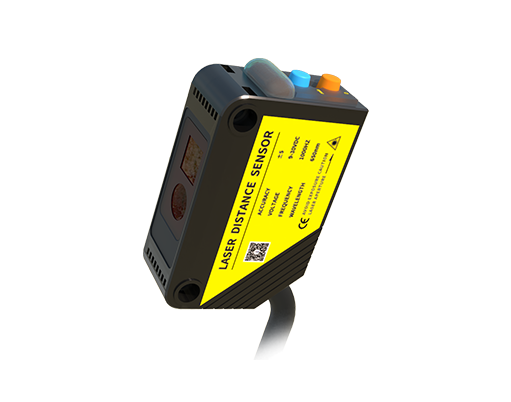
For monitoring the torch body and internal components, contact sensors like Resistance Temperature Detectors (RTDs) or thermocouples are often used. K-type thermocouples, with their wide temperature range and robustness, are commonly embedded near critical optical components or cooling channels to monitor for overheating. These sensors are crucial for predictive maintenance, signaling when cooling efficiency is degrading or when lens contamination is causing abnormal heat absorption.
Integrating these sensors into a laser welding torch presents significant engineering challenges. Space is at an absolute premium within the compact housing of a modern laser torch. Sensor placement must not interfere with the laser path, gas shielding nozzles, or wire feeding mechanisms. Furthermore, the sensor and its cabling must withstand extreme environments: intense electromagnetic interference (EMI) from the high-power laser driver and other machinery, constant vibration, and exposure to occasional spatter. Robust shielding and intelligent signal processing are mandatory to obtain a clean, usable signal.
The sensor's field of view is another critical design parameter. It must be precisely aligned to focus on the relevant thermal zone—be it the tiny weld pool, which can be sub-millimeter in size for precision welding, or a broader area for HAZ monitoring. This often requires custom-designed optical paths or miniature fiber-optic light guides integrated into the torch head.
The future of temperature sensing in laser welding is moving towards greater intelligence and integration. The trend is not just to measure temperature, but to fuse this data with other process signals—such as melt pool imaging via coaxial cameras, acoustic emissions, and plasma spectroscopy—within a unified data analytics platform. Machine learning algorithms can then correlate complex thermal signatures with ultimate weld quality, moving from simple threshold-based alarms to predictive quality models.
Another emerging area is the development of ultra-fast pyrometers and photodiodes capable of tracking the rapid temperature fluctuations inherent in pulsed laser welding. This high-temporal-resolution data provides deeper insights into melt pool dynamics and solidification behavior. Additionally, the miniaturization of sensor components continues, enabling more sophisticated multi-point temperature monitoring within a single torch assembly.
In conclusion, the temperature sensor in a laser welding torch is far from a passive component. It is an active sentinel and a key enabler of Industry 4.0 in welding technology. By providing a critical stream of thermal data, it allows for closed-loop control, robust quality assurance, and equipment protection. As sensor technology, data fusion, and analytical algorithms advance, their role will only become more central to achieving the ultimate goals of laser welding: unparalleled precision, repeatability, and efficiency in manufacturing.