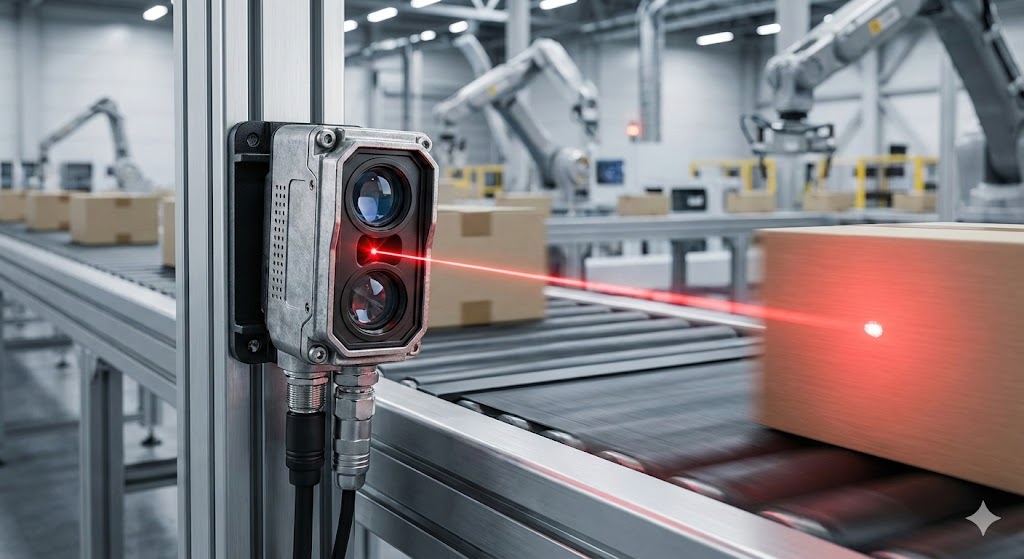
In the realm of precision measurement and spatial awareness, laser rangefinder sensors stand as a cornerstone technology. These devices, which determine the distance to a target by illuminating it with laser light and measuring the reflected pulse, have evolved from specialized military and surveying tools into ubiquitous components across numerous industries. Their operation hinges on a few fundamental principles, primarily time-of-flight (ToF) and phase-shift measurement.
Time-of-flight rangefinders calculate distance by precisely timing the round-trip journey of a laser pulse. A laser diode emits a short, intense pulse of light directed at the target. A high-speed photodetector then captures the faint reflection. An internal clock measures the elapsed time between emission and detection. Since the speed of light (c) is a known constant, the distance (d) is computed using the simple formula: d = (c t) / 2. This method excels for long-range measurements, from hundreds of meters to several kilometers, and is favored in applications like terrain mapping, forestry, and long-distance sports like golf.
Phase-shift rangefinders, often used for shorter ranges with higher accuracy, employ a different tactic. They emit a continuous laser beam modulated at a specific frequency. The sensor measures the phase difference between the emitted wave and the reflected wave. This phase shift is directly proportional to the distance traveled. While typically limited to shorter ranges than ToF systems, phase-shift sensors can achieve sub-millimeter accuracy, making them ideal for industrial automation, construction alignment, and archaeological documentation.
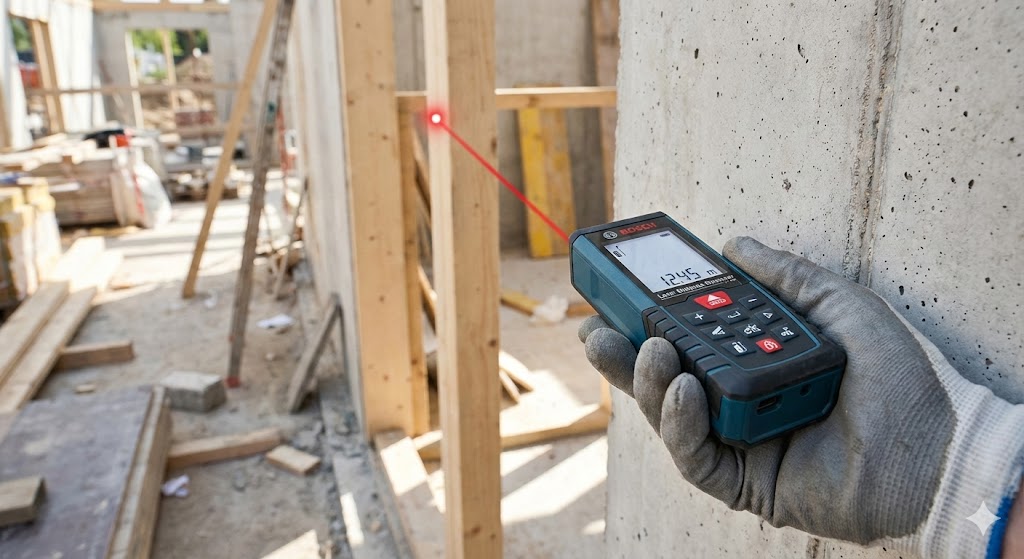
The applications of laser rangefinder sensors are vast and continually expanding. In the automotive sector, they are the eyes of advanced driver-assistance systems (ADAS) and autonomous vehicles, providing real-time, high-resolution 3D point clouds of the surrounding environment for obstacle detection and navigation. Robotics leverages these sensors for simultaneous localization and mapping (SLAM), allowing robots to navigate and interact with dynamic spaces safely. Construction and civil engineering professionals rely on them for quick, accurate measurements of volumes, areas, and alignments, drastically improving efficiency and reducing human error. Consumer electronics have also adopted miniaturized versions, with smartphones and cameras using them for fast autofocus and augmented reality experiences.
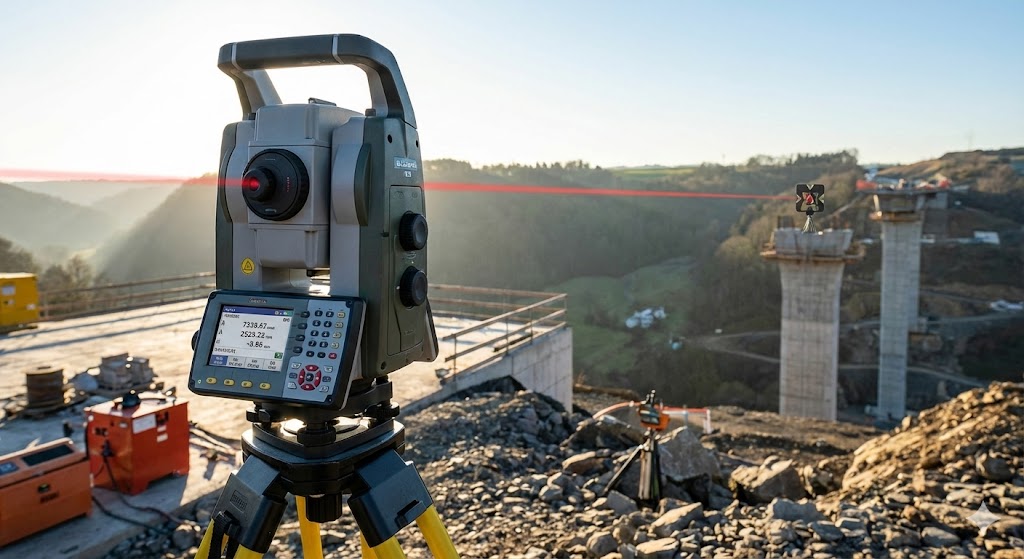
Several key specifications define a laser rangefinder's capability. Range is the maximum distance it can measure effectively, which varies from a few centimeters to over several kilometers. Accuracy denotes how close the measured value is to the true distance, while precision refers to the consistency of repeated measurements. Measurement rate, or how many distance points can be captured per second, is critical for dynamic applications like scanning. The laser's wavelength, typically in the near-infrared spectrum for safety and performance, and its beam divergence also play crucial roles.
Looking ahead, the future of laser rangefinder sensors is geared towards greater integration, miniaturization, and intelligence. The convergence with other sensing modalities like cameras and inertial measurement units (IMUs) is creating more robust and context-aware perception systems. Solid-state LiDAR, which uses no moving parts, is driving down costs and size while improving reliability, paving the way for mass-market adoption in consumer and industrial products. Furthermore, advancements in signal processing and machine learning are enabling these sensors not only to collect distance data but also to interpret it, identifying objects and predicting movements.
Despite their advantages, challenges remain. Environmental factors like fog, rain, or highly reflective surfaces can degrade performance. Eye safety is a perpetual design consideration, leading to the use of Class 1 laser products in most consumer and many industrial applications. However, ongoing research into new materials, optical designs, and computational methods continues to push the boundaries of what is possible.
In conclusion, the laser rangefinder sensor is a transformative technology whose precision and versatility have cemented its role in modern engineering and technology. From enabling autonomous machines to enhancing the tools of tradespeople, its ability to accurately gauge distance forms a fundamental layer of data for an increasingly automated and measured world. As the technology becomes smaller, smarter, and more affordable, its integration into our daily lives and industrial processes will only deepen, revealing new applications and driving further innovation.