In the realm of industrial automation, structural health monitoring, and robotics, precise distance measurement is paramount. While many sensing technologies exist, outdoor laser displacement sensors stand out for their ability to deliver high-accuracy, non-contact measurements in challenging, uncontrolled environments. Unlike their indoor counterparts, these sensors are engineered to combat variables like ambient light, temperature extremes, moisture, dust, and vibration. This article delves into the operational principles, key applications, and critical selection criteria for these robust measurement tools.
At its core, a laser displacement sensor operates on the principle of optical triangulation or time-of-flight (ToF). For high-precision, short to medium-range applications (typically up to several meters), the triangulation method is predominant. The sensor projects a focused laser beam onto the target surface. The diffusely reflected light is then captured by a receiving lens at a known angle and focused onto a position-sensitive detector (PSD) or a CMOS/CCD array. The position of the light spot on the detector shifts proportionally to the distance of the target. This analog or digital signal is processed by the sensor's internal circuitry to calculate the exact displacement or distance value with micron-level resolution. For longer ranges (tens to hundreds of meters), pulsed or phase-shift Time-of-Flight technology is often employed, measuring the time delay between an emitted laser pulse and its return reflection.
The true value of an outdoor-grade sensor lies in its environmental hardening. Key design features include:

* Robust Housing: Typically IP67, IP68, or IP69K rated enclosures protect against dust ingress and high-pressure water jets, ensuring reliability in rain, snow, or wash-down conditions.
* Temperature Compensation: Specialized components and algorithms stabilize performance across a wide operating temperature range, often from -30°C to +70°C or broader.
* Sunlight Immunity: Advanced optical filters and modulated laser light (often in the visible red or blue spectrum) allow the sensor to distinguish its own signal from intense background sunlight, preventing measurement errors.
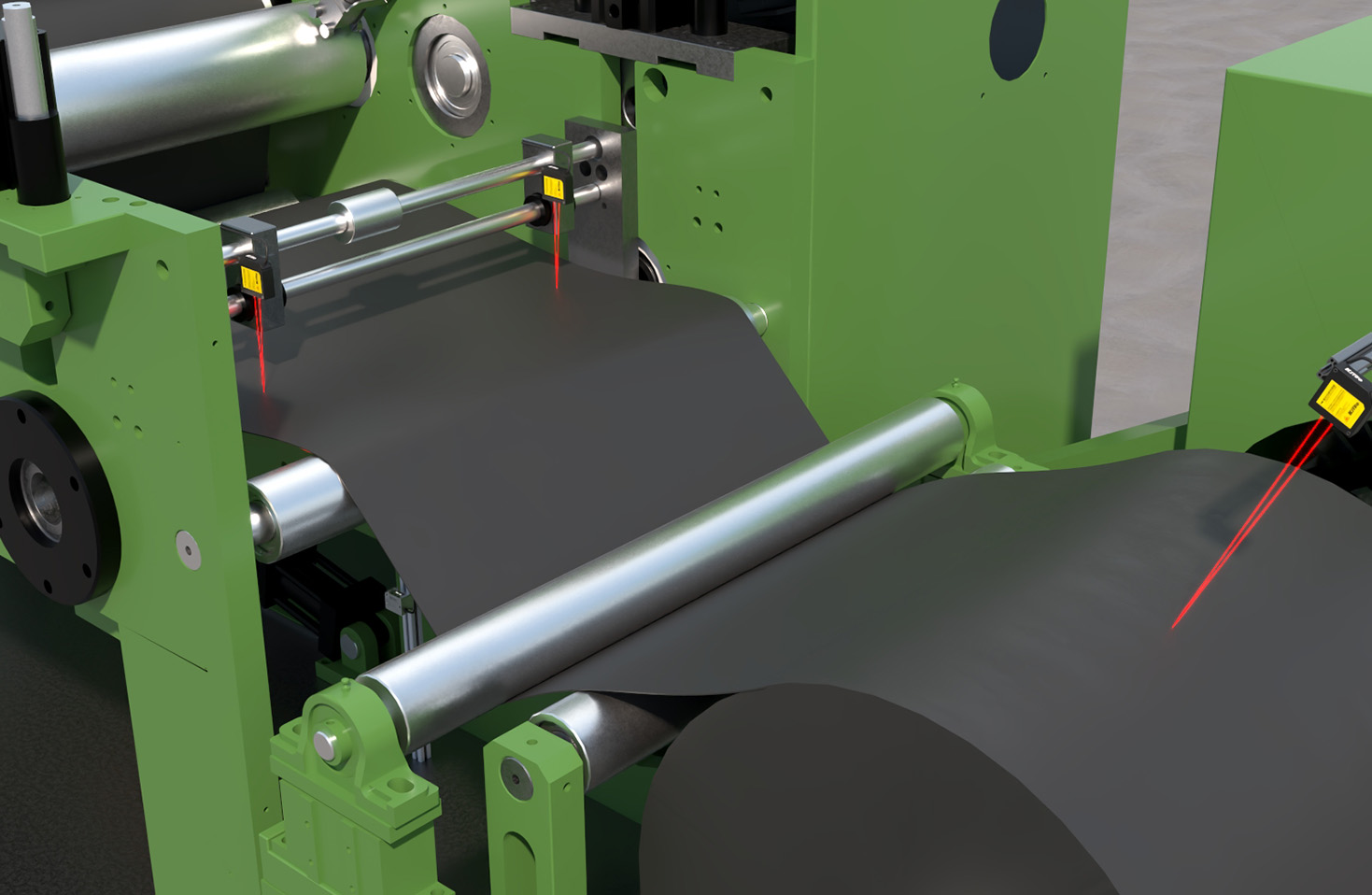
* Vibration and Shock Resistance: Mechanically ruggedized designs withstand shocks and vibrations common in mobile equipment or industrial settings.
These capabilities unlock a wide array of outdoor and harsh-environment applications:
1. Civil Engineering & Infrastructure: Monitoring bridge deflection, dam deformation, settlement of foundations, and crack propagation in concrete structures. Continuous, remote monitoring provides early warning signs of potential failure.
2. Heavy Industry & Mining: Measuring stockpile volumes of coal, ore, or gravel. Monitoring conveyor belt alignment and material height. Controlling positioning of large cranes and gantries.
3. Agriculture and Forestry: Guiding autonomous agricultural vehicles, measuring crop height for yield estimation, and monitoring timber volume on logging equipment.
4. Transportation: Vehicle detection and classification systems, measuring overhead clearance for trucks at entrances, and monitoring rail track geometry.
5. Renewable Energy: Precisely aligning solar panels for optimal sun tracking and monitoring blade deflection on wind turbines.
Selecting the right outdoor laser displacement sensor requires careful consideration of several parameters beyond just measuring range and accuracy:
* Laser Class: Class 2 (visible) lasers are common for alignment, but Class 1 (inherently safe) or Class 1M lasers are preferable for applications where accidental exposure is a concern.
* Target Surface: The sensor must be matched to the surface material and color. Dark, absorbent, or transparent materials may require a sensor with higher laser power or a specific wavelength (e.g., blue laser for red-hot metals).
* Output Interface: Common options include analog (4-20mA, 0-10V), digital (RS-232, RS-485), and industrial Ethernet (EtherNet/IP, PROFINET) for seamless integration into control systems.
* Data Stability & Speed: Evaluate the sensor's response time and sampling rate for dynamic measurements, and its filtering capabilities to handle environmental noise.
* Power Supply: Ensure compatibility with available DC power sources, typically 12-24V DC.
In conclusion, outdoor laser displacement sensors are indispensable instruments for achieving reliable, non-contact metrology where environmental conditions would defeat conventional sensors. Their evolution continues, with trends pointing towards increased intelligence (built-in IoT connectivity), enhanced multi-sensor fusion capabilities, and even greater robustness. By understanding their operating principles and meticulously matching specifications to the application's demands—considering not just distance but also target properties, environmental extremes, and integration needs—engineers can leverage these powerful tools to enhance safety, efficiency, and automation in the most demanding outdoor scenarios.