Selecting the optimal proximity sensor for an industrial application is a critical decision that impacts system reliability, efficiency, and cost. As an experienced electrical engineer, I understand that a "one-size-fits-all" approach is ineffective. The key to a successful selection lies in a systematic evaluation of the application's specific requirements against the sensor's technical capabilities. This guide outlines the essential parameters and considerations to ensure you choose the best sensor for the job.
The first and most fundamental step is to identify the target material. Inductive proximity sensors are designed to detect metallic objects, primarily ferrous metals like steel and iron, with some types capable of sensing non-ferrous metals like aluminum, copper, or brass, albeit with a reduced sensing range. Capacitive sensors, on the other hand, can detect a wide variety of materials, including metals, plastics, glass, wood, and liquids. For detecting transparent or opaque objects regardless of material, photoelectric sensors are the primary choice, using a beam of light. Ultrasonic sensors use sound waves and are excellent for detecting objects of virtually any material, including liquids and granular substances, and are less affected by color or transparency.
Once the material is known, the required sensing distance, or nominal range (Sn), must be determined. This is the rated operating distance under standardized conditions. A critical rule is to select a sensor with a nominal range 20-30% greater than the actual application distance to account for factors like temperature fluctuations, voltage variations, and manufacturing tolerances. Never operate a sensor at its absolute maximum rated distance. Consider the installation environment: will the sensor be flush-mounted (embedded in a metal bracket) or non-flush? Flush-mounted inductive sensors have a reduced sensing range but are immune to lateral interference from surrounding metal.
The physical size and form factor of the sensor are often constrained by the available mounting space. Miniature sensors are necessary for tight spaces but may sacrifice sensing distance or output current. The housing material is equally important; sensors in harsh environments may require stainless steel housings (e.g., V4A/AISI 316) for corrosion resistance, while plastic housings (e.g., PBT) are suitable for general industrial use. The ingress protection (IP) rating, such as IP67 or IP69K, indicates the level of protection against dust and water, which is vital for washdown areas in food & beverage or outdoor applications.
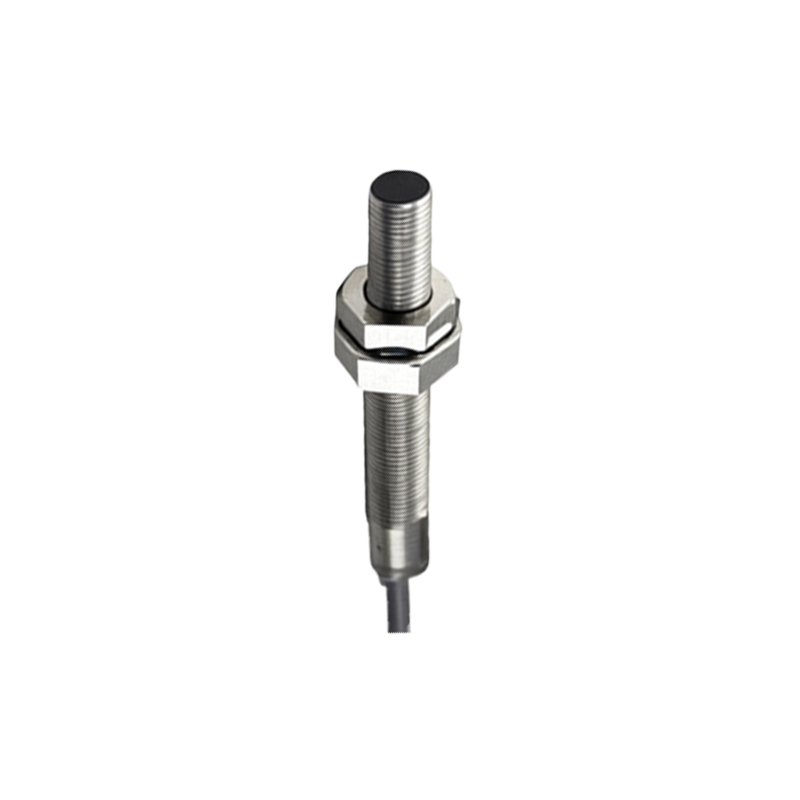
Output configuration is a key electrical consideration. The two main types are discrete (digital) and analog. Discrete outputs, either PNP (sourcing) or NPN (sinking), provide a simple ON/OFF signal and are the most common. The choice between PNP and NPN must align with the input card of your PLC or controller. Analog outputs (e.g., 4-20mA, 0-10V) provide a continuous signal proportional to the distance to the target, used for positioning or measuring applications. Also, consider the output function: normally open (NO) or normally closed (NC), and whether a short-circuit protected, reverse polarity protected, and pulse-extended version is needed for reliability.
The operating environment presents significant challenges. Extreme temperatures can affect performance; standard sensors typically operate from -25°C to +70°C, while specialized versions exist for cryogenic or high-temperature settings up to 150°C. Strong electromagnetic fields (EMF) from motors or welders can interfere with inductive sensors; look for models with welded-shielded coils or increased noise immunity. Exposure to chemicals, oils, or cutting fluids necessitates sensors with appropriate chemical resistance. Vibration and mechanical shock require robust construction and secure mounting.
For advanced applications, special features may be mandatory. IO-Link communication enables digital data exchange for condition monitoring, parameter setting, and advanced diagnostics, facilitating Industry 4.0 integration. Sensors with high switching frequencies (up to 10 kHz) are necessary for high-speed counting or sorting on fast-moving production lines. For precise positioning tasks, analog sensors with high linearity and resolution are required. In safety-critical systems, only sensors designed and certified to relevant safety standards (e.g., SIL, PL) should be used.
Finally, while unit cost is a factor, the Total Cost of Ownership (TCO) is more insightful. Consider installation time, wiring complexity, maintenance needs, and mean time between failures (MTBF). A slightly more expensive, robust sensor from a reputable manufacturer often proves more economical in the long run by minimizing downtime.
In conclusion, effective proximity sensor selection is a multi-parameter optimization process. By meticulously analyzing the target material, required range, environmental conditions, electrical interface, and any special needs, you can specify a sensor that delivers precise, reliable, and long-lasting performance. Always consult the manufacturer's detailed datasheets and application engineers for complex or borderline cases; their expertise is an invaluable