In the intricate world of industrial automation, the ability to detect the presence or absence of an object without physical contact is fundamental. Among the myriad of sensing technologies available, small metal proximity sensors stand out for their reliability, durability, and precision in detecting metallic targets. These compact devices are the unsung heroes on production lines, within machinery, and across countless automated systems, providing critical feedback that ensures seamless operation.
A small metal proximity sensor operates primarily on the principle of electromagnetic induction. The core component is a coil housed within the sensor's head, which is energized by an oscillator to generate a high-frequency electromagnetic field. When a metallic object—typically ferrous metals like steel or iron, though many sensors can also detect non-ferrous metals like aluminum or copper—enters this field, eddy currents are induced on the surface of the target. This interaction causes a change in the oscillation amplitude or frequency within the sensor. An integrated evaluation circuit detects this change and triggers a solid-state output switch, sending a signal to the controller (e.g., a PLC) without any mechanical movement.
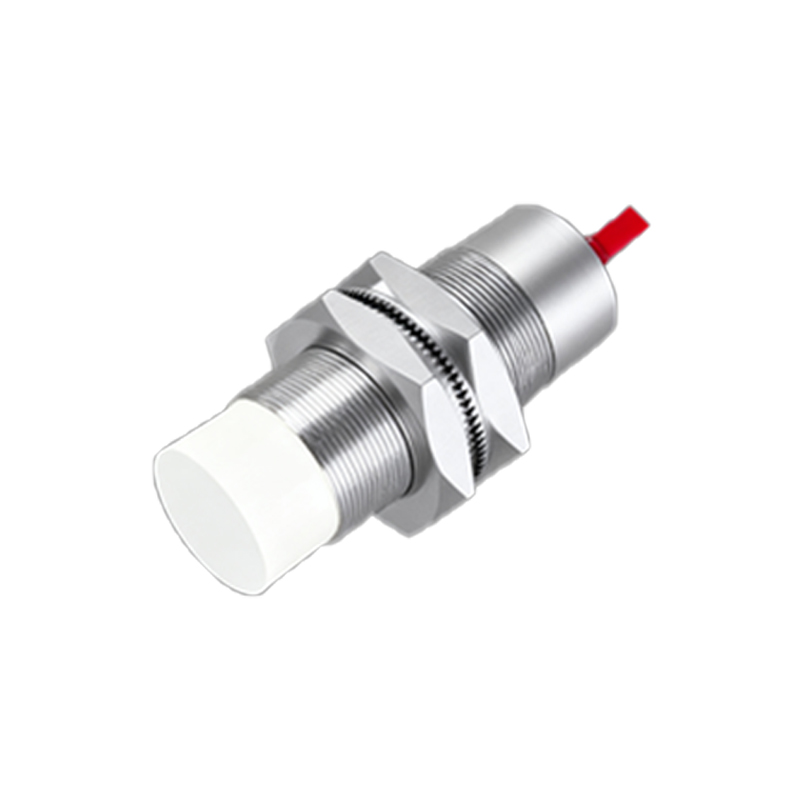
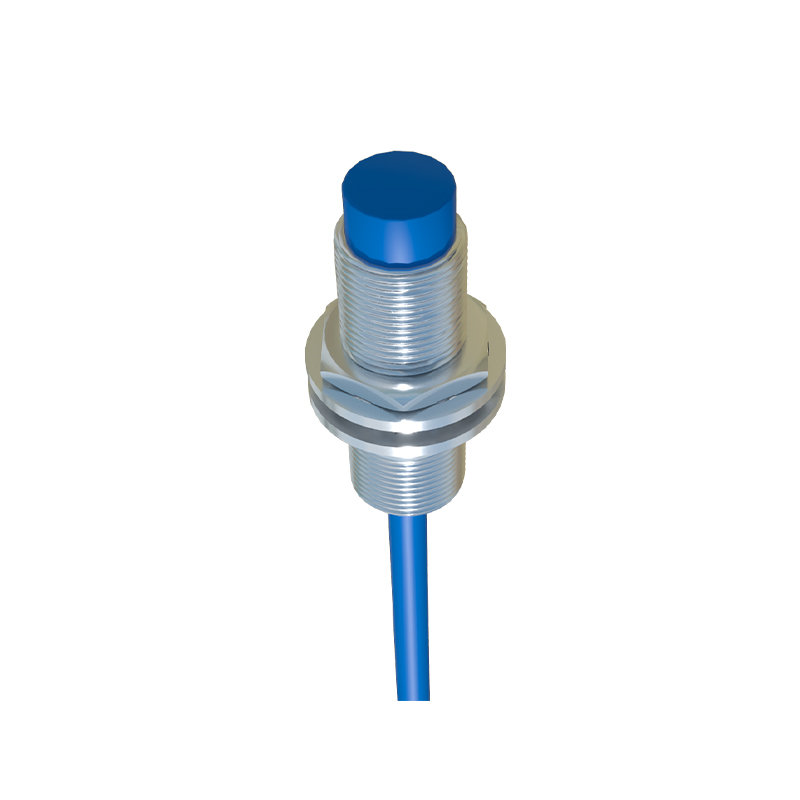
The defining characteristic of these sensors is their compact size. Common cylindrical housing diameters, such as M5, M8, M12, and M18, allow for installation in space-constrained environments where larger sensors would be impractical. Despite their small footprint, they offer impressive sensing ranges, typically from 1mm to 15mm depending on the model and target material. Key specifications to consider include:
Sensing Distance: The nominal operating distance for a standard target.
Hysteresis: The difference between the switch-on and switch-off points, preventing chatter.
Output Type: Typically PNP (sourcing) or NPN (sinking) transistor outputs, with 2-wire, 3-wire, or 4-wire configurations. Analog and IO-Link versions are also available for advanced diagnostics and parameterization.
Switching Frequency: How quickly the sensor can detect objects, critical for high-speed applications.
Housing Material: Often made of stainless steel (e.g., V2A/AISI 304, V4A/AISI 316) or nickel-plated brass for robustness.
Protection Rating: IP67 and IP69K ratings are common, ensuring resistance to dust, water jets, and harsh washdowns.
The applications for small metal proximity sensors are vast and varied. They are indispensable for:
Position Sensing: Verifying the end position of a cylinder piston (via a built-in ring magnet) or confirming the presence of a part on a conveyor.
Counting and Monitoring: Tallying products, bottles, or components on a moving line.
Speed Detection: Monitoring the rotation of gear teeth or encoder wheels.
Machine Safety: Acting as interlock sensors on guards or doors.
Robotics: Providing precise feedback for end-effector positioning and tool verification.
When selecting a sensor, engineers must carefully evaluate the operating environment. Factors such as temperature extremes, exposure to chemicals or coolants, potential electrical interference from nearby motors or welding equipment, and the specific type of metal to be detected all influence the choice. For instance, a sensor optimized for mild steel may have a reduced sensing range for aluminum. Mounting considerations are equally crucial; flush-mounted sensors can be installed without protruding, while non-flush types offer longer ranges but require a clear lateral space.
Installation and wiring demand attention to detail. Proper shielding and grounding are essential to mitigate electromagnetic interference. Maintaining the specified mounting distances between multiple sensors prevents mutual interference. Regular maintenance, though minimal, involves checking for physical damage, buildup of metallic swarf or debris on the sensing face, and verifying signal integrity.
The future of small metal proximity sensors is intertwined with the rise of Industry 4.0. Modern sensors increasingly feature IO-Link communication, transforming them from simple switches into intelligent data points on the network. IO-Link enables remote monitoring of operating parameters, condition-based maintenance alerts, and easy device replacement without manual recalibration. This digital transformation enhances system transparency, predictive maintenance capabilities, and overall operational efficiency.
In conclusion, small metal proximity sensors are a cornerstone of modern industrial automation. Their combination of compact design, non-contact operation, and robust performance makes them an essential component for engineers designing reliable and efficient systems. By understanding their operating principles, key specifications, and application nuances, professionals can select and implement the optimal sensor to solve detection challenges, thereby enhancing productivity and ensuring the smooth flow of automated processes.