In the realm of industrial process control and environmental monitoring, precise humidity measurement is critical for ensuring product quality, operational safety, and energy efficiency. Traditional humidity sensors, such as capacitive or resistive types, often face challenges including drift, contamination sensitivity, and limited performance in extreme conditions. Recent research and development efforts have pivoted toward laser-based humidity sensing technologies, which offer superior accuracy, stability, and non-contact operation. This article delves into the principles, advancements, and practical applications of laser humidity sensors in modern industrial settings.
The fundamental principle behind laser humidity sensors lies in optical absorption spectroscopy. Water vapor molecules exhibit specific absorption lines in the infrared spectrum, particularly near wavelengths of 1.4 μm or 2.7 μm. A tunable diode laser emits light at a wavelength corresponding to one of these absorption peaks. As the laser beam passes through the gas sample, water vapor molecules absorb a fraction of the light proportional to their concentration. By measuring the attenuation of the laser intensity using a photodetector, the absolute humidity can be calculated with high precision using the Beer-Lambert law. This direct absorption method eliminates the need for calibration against reference standards, reducing long-term maintenance requirements.

Key technological advancements have propelled laser humidity sensors from laboratory prototypes to robust industrial instruments. The development of distributed feedback (DFB) lasers and vertical-cavity surface-emitting lasers (VCSELs) has enabled compact, low-power, and wavelength-stable light sources. These lasers can be precisely tuned to target water absorption lines while avoiding interference from other gases like carbon dioxide or methane. Additionally, the integration of wavelength modulation spectroscopy (WMS) techniques enhances sensitivity and minimizes noise from background light or particulate scattering. Modern sensors incorporate advanced signal processing algorithms and temperature compensation circuits, ensuring reliable performance across a wide range of industrial environments—from sub-zero cold storage facilities to high-temperature drying ovens.
One significant advantage of laser-based sensors is their non-contact measurement capability. Unlike traditional probes that must be exposed directly to the process medium, laser sensors can operate in a bypass or extractive sampling configuration. This is particularly beneficial in aggressive atmospheres containing corrosive chemicals, sticky particulates, or high-velocity airflows that could degrade sensor elements. For instance, in pharmaceutical manufacturing, laser sensors monitor humidity inside lyophilization chambers without risking contamination. In power generation, they measure moisture levels in natural gas pipelines to prevent hydrate formation and corrosion. The fast response time, often in the millisecond range, allows for real-time control of dynamic processes such as paper coating or semiconductor fabrication.
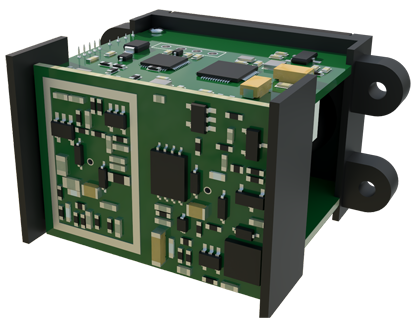
Recent research focuses on overcoming limitations and expanding applicability. Challenges include signal attenuation in high-humidity environments (above 90% RH) where condensation may occur, and interference from window fouling in dirty gas streams. Innovations such as dual-wavelength differential absorption—using one laser at an absorption line and another at a non-absorbing reference wavelength—compensate for optical losses due to window contamination. Furthermore, the emergence of photonic integrated circuits (PICs) promises miniaturized, cost-effective sensor modules suitable for distributed sensing networks in smart factories or HVAC systems. Field trials in cement plants and food processing facilities have demonstrated durability with maintenance intervals exceeding two years, showcasing strong return on investment through reduced downtime and improved process consistency.
Looking ahead, the convergence of laser sensing with Industrial Internet of Things (IIoT) platforms will unlock new potentials. Wireless laser sensor nodes can transmit humidity data to cloud analytics systems, enabling predictive maintenance and energy optimization. As industries increasingly prioritize sustainability and precision, laser-based humidity sensors are poised to become indispensable tools. Continued research in quantum cascade lasers and hollow-core photonic crystal fibers may further enhance sensitivity for trace moisture detection below 1 ppmv, opening doors to applications in ultra-dry processes like lithium-ion battery manufacturing or aerospace component testing.
In conclusion, laser humidity sensor technology represents a paradigm shift in moisture measurement, combining high accuracy with robust, low-maintenance operation. By leveraging optical principles and cutting-edge photonics, these sensors address the shortcomings of conventional methods and meet the evolving demands of modern industry. Engineers and decision-makers should consider adopting laser-based solutions for critical humidity monitoring tasks to enhance process reliability and product quality.