In the rapidly evolving landscape of industrial automation and precision engineering, the integration of laser sensors with camera systems has emerged as a transformative force. This synergy combines the visual acuity of high-resolution imaging with the exacting measurement capabilities of laser technology, creating powerful tools for quality control, robotics, and machine vision. Unlike traditional camera systems that rely solely on ambient or structured light, laser-enhanced cameras utilize focused laser beams to project reference points, measure distances, and detect minute surface variations with micron-level accuracy.
The core principle involves a laser sensor emitting a coherent beam of light—often in the infrared or visible spectrum—towards a target object. A specialized camera, synchronized with the laser, captures the interaction of this beam with the object. This interaction can take several forms. In triangulation-based systems, the camera observes the position of the laser dot or line from a known angle; any deviation in the object's height or contour causes a shift in the laser's position in the camera's field of view, which software then calculates into precise 3D coordinates. This method is indispensable for real-time inspection of assembly lines, verifying component dimensions, and detecting defects like dents or warping that are invisible to 2D imaging alone.
Another critical application is laser profiling or scanning, where a laser line is swept across an object. The camera captures a sequence of profiles, constructing a detailed point cloud that represents the object's complete surface geometry. This non-contact metrology is vital in industries such as automotive manufacturing for panel gap analysis, aerospace for turbine blade inspection, and electronics for solder paste height measurement. The laser provides consistent, controlled illumination that is immune to the challenging lighting conditions—shadows, glare, or low contrast—that often plague conventional vision systems.
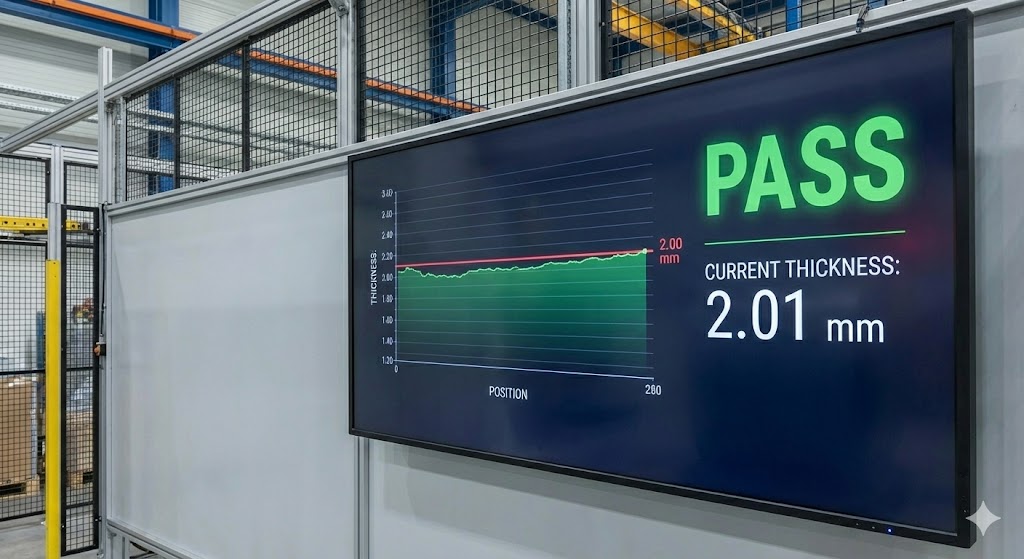
Furthermore, the combination enhances speed and reliability. Laser sensors can operate at extremely high frequencies, enabling cameras to capture data for fast-moving production lines without motion blur. Advanced systems integrate time-of-flight (ToF) laser sensors, which measure the time for a laser pulse to reflect back to a sensor, directly providing depth information. When fused with camera imagery, this creates rich datasets where every pixel has associated spatial data, enabling robots to perform complex bin-picking tasks or navigate dynamic environments autonomously.
The benefits extend beyond manufacturing. In logistics, laser-guided camera systems accurately measure parcel dimensions for automated sorting and packaging. In agriculture, they assess crop health and growth patterns. The technology also drives advancements in autonomous vehicles, where LiDAR (Light Detection and Ranging)—a form of laser sensing—works in concert with cameras to build a comprehensive 3D map of the surroundings.
However, implementing these systems requires careful engineering. Factors like the laser's wavelength, power, and safety class (adhering to IEC 60825 standards) must be matched to the application and material properties. The camera's resolution, frame rate, and lens must be calibrated to the laser's projection. Environmental considerations, such as ambient light interference, dust, or vibrations, also necessitate robust housing and filtering solutions.

In conclusion, the marriage of camera and laser sensor technology represents a significant leap forward in sensing capability. It moves industrial vision from passive observation to active, precise interrogation of the physical world. As laser sources become more compact, affordable, and powerful, and as camera processing algorithms grow more sophisticated through AI and machine learning, this integration will continue to push the boundaries of what is possible in automation, quality assurance, and intelligent systems, solidifying its role as a cornerstone of Industry 4.0.