In the realm of industrial automation and control systems, proximity switch sensors are indispensable components for detecting the presence or absence of objects without physical contact. While traditional inductive proximity sensors are renowned for detecting metallic targets, non-metallic proximity switch sensors have carved out a critical niche, enabling detection of materials such as plastics, glass, wood, liquids, and even biological substances. This article delves into the operating principles, primary technologies, key applications, and essential selection criteria for non-metallic proximity sensors.
The fundamental working principle of non-metallic proximity sensors diverges significantly from their inductive counterparts. Instead of relying on electromagnetic fields that interact with metals, these sensors typically utilize capacitive or ultrasonic technologies. Capacitive proximity sensors operate by generating an electrostatic field. When any object, regardless of its material composition, enters this field, it causes a detectable change in capacitance. This change is processed by the sensor's internal oscillator and trigger circuit, resulting in a switching output. The sensitivity of capacitive sensors allows them to detect virtually any material, provided its dielectric constant differs from that of air. Ultrasonic sensors, another prominent type for non-metallic detection, emit high-frequency sound waves and measure the time taken for the echo to return. The presence of an object alters the echo's return time or intensity, triggering the sensor's output. This method is highly effective for detecting transparent objects, uneven surfaces, or materials at variable distances.
Several core technologies underpin non-metallic proximity sensing. Capacitive sensors are the most versatile, capable of detecting solids, powders, and liquids through non-metallic container walls, making them ideal for level detection tasks. Photoelectric sensors, though often considered a separate category, are frequently used for non-metallic object detection by employing a light beam (infrared, visible, or laser). The detection occurs when the target interrupts (through-beam) or reflects (reflective or diffuse) the light beam. For challenging environments with dust, steam, or color variations, ultrasonic sensors offer reliable performance as they are largely unaffected by these factors. Fiber optic sensors, often coupled with photoelectric amplifiers, provide solutions for extremely small or hot targets, as the sensing tip can be made from glass or plastic fibers.
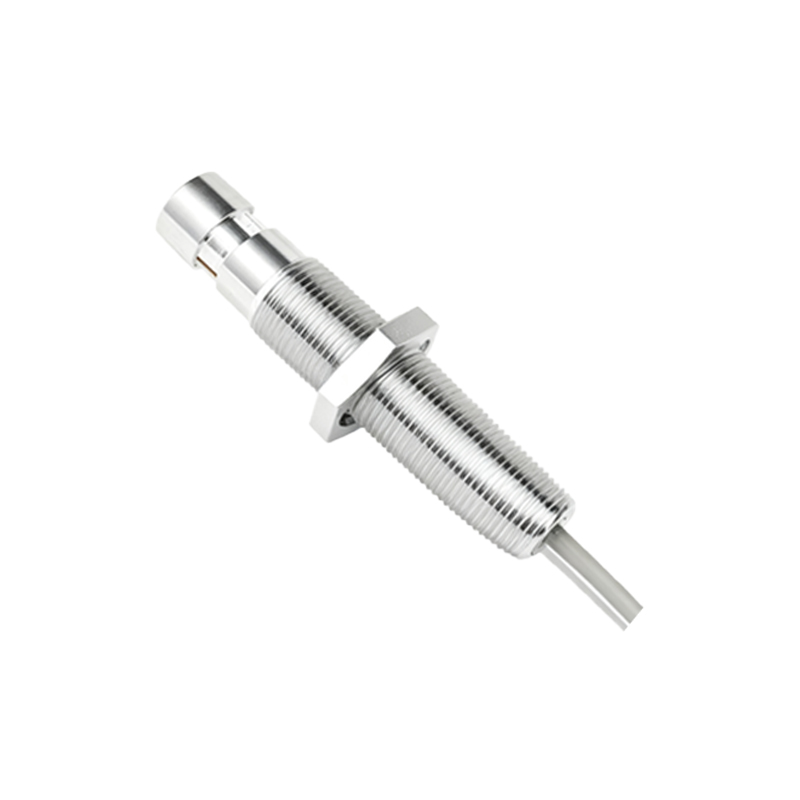
The applications for non-metallic proximity sensors are vast and span numerous industries. In packaging and bottling lines, they reliably detect plastic containers, glass bottles, cardboard boxes, and labels to control filling, capping, and sorting processes. The wood and paper industry employs these sensors to monitor lumber position, paper sheet count, and roll diameter. In food and beverage processing, capacitive sensors excel at detecting liquid levels in plastic or glass tanks, monitoring the presence of food products on conveyor belts, and controlling filling operations. The pharmaceutical sector relies on them for precise detection of vials, blister packs, and powder levels in hoppers, often in cleanroom environments. Furthermore, in automotive assembly, they verify the presence of non-metallic components like dashboards, trim pieces, and fluid reservoirs.
Selecting the appropriate non-metallic proximity sensor requires careful consideration of several parameters. First, identify the target material (e.g., plastic, wood, liquid) and its properties, such as dielectric constant for capacitive sensing or color/transparency for photoelectric sensing. The required sensing distance, or range, is crucial and must be derated for materials different from the sensor's calibration standard. Environmental conditions are paramount; factors like temperature extremes, humidity, washdown requirements (IP rating), and the presence of contaminants (dust, oil, foam) will dictate the sensor's housing material and ingress protection level. The output type (PNP/NPN, NO/NC analog, IO-Link) must be compatible with the controller (PLC). Finally, consider the physical form factor (barrel, rectangular, ring-shaped) and mounting constraints in the application space.
Installation and commissioning also demand attention. For capacitive sensors, the presence of surrounding conductive materials or fluctuating environmental humidity can affect sensitivity. Most capacitive sensors feature a potentiometer for sensitivity adjustment to fine-tune the detection threshold for the specific target while ignoring the background. Ultrasonic sensors may require calibration for the speed of sound in the ambient medium, which can change with temperature. Photoelectric sensors need alignment and may suffer from interference from ambient light; selecting models with modulated light sources mitigates this risk.
In conclusion, non-metallic proximity switch sensors are vital enablers of automation in processes involving organic or insulating materials. By understanding the capabilities of capacitive, ultrasonic, and photoelectric technologies, engineers can implement robust and reliable detection solutions. The correct selection, based on a thorough analysis of the target, environment, and performance needs, ensures optimal system functionality, reduces downtime, and enhances overall operational efficiency. As Industry 4.0 advances, the integration of smart sensors with diagnostic capabilities and digital communication like IO-Link will further elevate the role of these