In the realm of industrial automation and precision measurement, laser sensors have become indispensable tools, offering high accuracy, non-contact operation, and rapid response times. At the heart of these sophisticated devices lies a critical component often overlooked yet vital to their performance: the ceramic head. This article delves into the design, benefits, and applications of advanced ceramic heads in laser sensors, highlighting why they are a preferred choice in demanding environments.
Ceramic heads, typically crafted from materials like alumina (Al2O3) or zirconia (ZrO2), serve as the protective housing and optical interface for laser sensor elements. Unlike traditional metal or plastic alternatives, ceramics offer a unique combination of properties that directly enhance sensor functionality. Their exceptional hardness and wear resistance ensure longevity, even in abrasive settings such as machining, mining, or material handling, where particulate matter can degrade lesser materials. This durability translates to reduced maintenance costs and extended service life, a key consideration for industrial operations aiming to minimize downtime.
Thermal stability is another standout feature of ceramic heads. In high-temperature applications—common in foundries, welding, or automotive manufacturing—ceramics maintain structural integrity and dimensional accuracy where metals might warp or plastics melt. This stability prevents calibration drift in laser sensors, ensuring consistent measurement precision over time. Moreover, ceramics exhibit low thermal expansion coefficients, meaning they resist shape changes with temperature fluctuations, further safeguarding sensor alignment and output reliability.
From an optical perspective, ceramic heads can be engineered with high surface smoothness and tailored reflectivity properties. This allows for optimal transmission and reception of laser beams, minimizing signal loss or scattering that could compromise accuracy. For instance, in laser triangulation sensors used for distance or thickness measurement, a precisely molded ceramic head ensures the laser spot remains well-defined, enabling sub-micron resolution. Additionally, ceramics are inherently inert and resistant to chemical corrosion, making them suitable for harsh environments involving oils, solvents, or acidic fumes, where other materials might degrade or contaminate the sensor pathway.

The integration of ceramic heads also addresses electrical insulation needs. In electrically noisy industrial settings, ceramics provide excellent dielectric strength, shielding sensitive laser components from electromagnetic interference (EMI) and preventing short circuits. This is crucial for sensors deployed in power generation or robotics, where signal integrity is paramount. Furthermore, modern manufacturing techniques, such as injection molding and sintering, allow for complex, miniaturized ceramic head designs that fit compact sensor packages without sacrificing robustness.
Applications of laser sensors with ceramic heads span diverse sectors. In automotive assembly, they enable precise gap detection and part alignment; in electronics manufacturing, they facilitate wafer inspection and component placement; in logistics, they support barcode scanning and object sorting. Each scenario benefits from the ceramic head’s ability to withstand mechanical shocks, temperature extremes, and environmental contaminants. As Industry 4.0 advances, with trends toward smart factories and IoT connectivity, the demand for reliable, high-performance sensors will only grow, positioning ceramic heads as an enabler of next-generation automation.
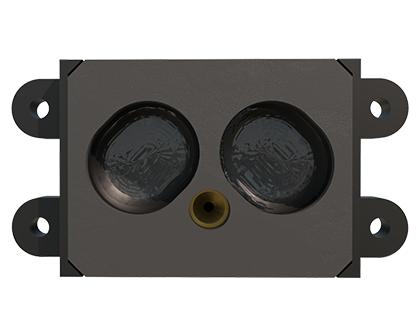
In summary, the ceramic head is more than a mere housing—it is a performance multiplier for laser sensors. By leveraging ceramics’ mechanical, thermal, and electrical advantages, engineers can deploy sensors with confidence in the toughest conditions. Future developments may include nanocomposite ceramics for enhanced toughness or integrated cooling channels for ultra-high-temperature use. For industries prioritizing precision, durability, and cost-efficiency, investing in laser sensors equipped with advanced ceramic heads is a strategic move toward operational excellence.
