In the realm of industrial automation and electronic control systems, proximity Hall effect sensors stand as pivotal components for non-contact detection and position sensing. These devices leverage the Hall effect—a fundamental physical phenomenon discovered by Edwin Hall in 1879—to accurately sense the presence or absence of magnetic objects without physical contact. This article delves into the underlying principles, construction, and operational mechanisms of proximity Hall effect sensors, tailored for professionals in the electrical and automation industries.
The core of a proximity Hall effect sensor is the Hall element, typically a thin semiconductor material such as gallium arsenide or indium antimonide. When a current (I) flows through this material and an external magnetic field (B) is applied perpendicular to the current direction, a voltage known as the Hall voltage (V_H) is generated across the material. This voltage is perpendicular to both the current and the magnetic field, as described by the equation V_H = (R_H I B) / d, where R_H is the Hall coefficient and d is the thickness of the material. The Hall voltage is directly proportional to the magnetic flux density, enabling precise measurement of magnetic field strength.
In a proximity configuration, the sensor is designed to detect changes in the magnetic field caused by a nearby ferromagnetic or permanent magnet target. When the target approaches the sensor, it alters the magnetic field distribution, which in turn modulates the Hall voltage. This change is processed by integrated electronics within the sensor, such as amplifiers, comparators, and Schmitt triggers, to produce a clean, digital output signal (e.g., open-collector or push-pull). The output typically switches states (from high to low or vice versa) when the target reaches a predefined threshold distance, known as the sensing range. This allows for reliable detection in applications like position sensing in motors, speed monitoring in conveyors, or limit switching in machinery.
Proximity Hall effect sensors are categorized based on their output type and sensing method. Bipolar sensors require both positive and negative magnetic fields to operate, making them suitable for applications with alternating magnetic poles, such as in rotary encoders. Unipolar sensors, on the other hand, respond only to a single magnetic polarity, often used in simple presence detection. Additionally, latching versions maintain their output state until a reverse magnetic field is applied, ideal for memory-based functions. The construction typically includes a protective housing (often IP-rated for durability), the Hall element, signal conditioning circuitry, and output terminals, ensuring robustness in harsh industrial environments with factors like temperature variations, vibration, and electromagnetic interference.
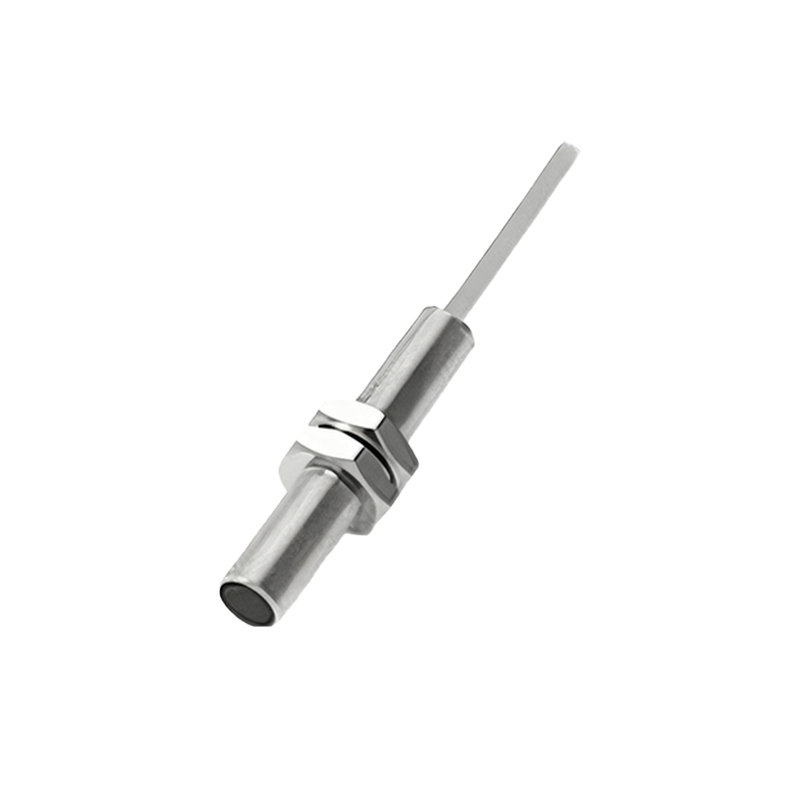
Key advantages of these sensors include their non-contact nature, which eliminates mechanical wear and extends lifespan; high reliability with fast response times (often in microseconds); and immunity to contaminants like dust or oil, as they do not rely on physical touch. However, limitations exist, such as sensitivity to external magnetic fields and a limited sensing range compared to other proximity technologies like inductive or capacitive sensors. To optimize performance, engineers must consider factors like target material (ferromagnetic materials like iron work best), magnet strength, alignment, and environmental conditions. Calibration may be necessary to fine-tune the sensing distance and avoid false triggers.
In practical applications, proximity Hall effect sensors are ubiquitous. They are integral to automotive systems for detecting wheel speed in anti-lock braking systems (ABS) or gear position in transmissions. In industrial automation, they enable precise control in robotic arms, conveyor belt monitoring, and valve position feedback. Consumer electronics also utilize them, such as in laptop lid closure detection or smartphone flip covers. The trend toward miniaturization and integration with IoT (Internet of Things) platforms is driving innovations, including smart sensors with digital interfaces like I2C or SPI for enhanced diagnostics and connectivity.
In summary, proximity Hall effect sensors operate on the well-established Hall effect, converting magnetic field variations into electrical signals for accurate, non-contact detection. Their design combines semiconductor physics with electronic processing to deliver robust performance in diverse settings. For electrical engineers and industry professionals, understanding these principles is essential for selecting, implementing, and troubleshooting sensors in modern automated systems, ensuring efficiency and reliability in an increasingly interconnected industrial landscape.