In the rapidly evolving landscape of industrial automation and smart systems, laser sensor lighting has emerged as a cornerstone technology, driving unprecedented levels of precision, efficiency, and safety. Unlike conventional photoelectric or ultrasonic sensors, laser sensors utilize focused coherent light beams to detect, measure, and respond to objects with micron-level accuracy. This article delves into the core principles, diverse applications, and future trends of laser sensor lighting, offering insights for engineers and decision-makers in the electrical and automation sectors.
At its heart, a laser sensor operates by emitting a concentrated beam of light—typically from a laser diode—towards a target. The sensor then analyzes the reflected light. Depending on the technology, this analysis can be based on time-of-flight (ToF), triangulation, or interferometry principles. For instance, ToF sensors calculate distance by measuring the time delay between the emitted and returned pulse, making them ideal for long-range detection in logistics and automotive assembly. Triangulation sensors, on the other hand, use a known angle between the emitter and a receiver to pinpoint an object's position with extreme accuracy, commonly deployed in quality control on manufacturing lines for thickness or profile measurement.
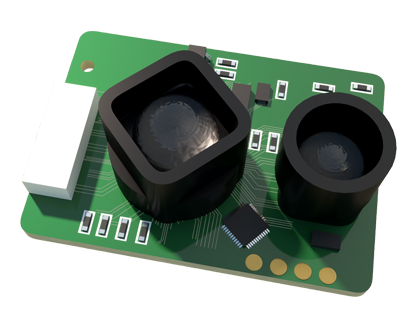
The integration of these sensors into lighting systems, particularly for indication, alignment, and safety purposes, has revolutionized industrial workflows. Laser sensor lights provide clear, visible beams or points that guide robotic arms, verify part placement, or demarcate hazardous zones. In automotive manufacturing, red or green laser lines project onto assembly surfaces to ensure precise component alignment before welding or bonding. In warehouse automation, laser grid lights work in tandem with safety scanners to create dynamic warning fields around autonomous mobile robots (AMRs), instantly halting operations if a human intrusion is detected.
Key advantages of laser sensor lighting include its exceptional resolution, minimal beam divergence, and high signal-to-noise ratio. These features allow reliable operation in challenging environments with dust, steam, or variable ambient light—conditions that often plague traditional sensors. Modern units are increasingly robust, with IP67 or higher ratings for dust and water resistance, and can operate across wide temperature ranges. Furthermore, the advent of Class 1 or Class 2 laser products ensures eye safety, broadening their applicability in human-collaborative workspaces.
Looking ahead, the convergence of laser sensing with IoT and AI is set to unlock smarter predictive capabilities. Embedded with microprocessors and connectivity modules, next-generation laser sensors can not only capture data but also perform edge analytics, predicting maintenance needs or optimizing energy consumption of connected lighting systems. Developments in blue laser technology and VCSEL (Vertical-Cavity Surface-Emitting Laser) arrays promise even smaller form factors, higher efficiency, and enhanced performance for 3D scanning and LiDAR applications in smart factories and autonomous vehicles.
For electrical engineers and system integrators, selecting the right laser sensor lighting solution requires careful consideration of parameters such as sensing range, response time, output type (e.g., digital switch, analog signal, or serial communication), and environmental durability. Partnering with reputable manufacturers who offer comprehensive technical support and customization is crucial for seamless integration into existing control architectures, such as PLCs or industrial Ethernet networks.
In conclusion, laser sensor lighting is not merely an incremental improvement but a transformative force in industrial automation. By delivering unmatched accuracy and adaptability, it enhances productivity, ensures stringent quality standards, and fortifies workplace safety. As technology continues to advance, its role will only expand, solidifying its status as an indispensable tool in the modern engineer's arsenal.