In industrial automation and material handling, proximity sensors are indispensable components for detecting the presence or absence of objects without physical contact. Their reliability is paramount for ensuring smooth operations in systems like silos, hoppers, and conveyors. However, a specific and often perplexing challenge arises in applications involving hourglass-shaped or constricted flow paths: the consistent non-recognition or failure of proximity sensors. This article delves into the technical root causes of this phenomenon, analyzing it from the perspectives of sensor physics, material properties, and system geometry.
The primary function of an inductive or capacitive proximity sensor is to generate an electromagnetic field. When a target object enters this detection field, it causes a change in the field's characteristics (e.g., eddy current loss in inductive sensors, dielectric constant change in capacitive sensors), which the sensor's oscillator and subsequent circuitry interpret as a detection event. In a standard, open application with a well-defined target, this process is highly reliable. The problem in an hourglass-shaped conduit stems from the fundamental operating principles being compromised by the unique environment.
Firstly, let's consider the geometry of the detection zone. Proximity sensors have a defined nominal sensing distance (Sn). This distance is calibrated for standard conditions and specific target materials (e.g., steel for inductive sensors). In an hourglass design, the sensor is typically mounted on the exterior of the constricted neck. The material flowing inside—be it granules, powders, or pellets—does not present a solid, continuous metallic mass to the sensor. Instead, it is a moving stream with significant air gaps. From the sensor's perspective, the "target" is discontinuous and may not provide a sufficient, consistent cross-sectional area to reliably disrupt the electromagnetic field. The field may partially penetrate the stream without triggering the detection threshold, leading to intermittent or complete non-recognition.
Secondly, the material characteristics play a crucial role. For inductive sensors, the detection capability is directly tied to the target's electrical conductivity and magnetic permeability. Many bulk materials (grains, plastics, certain ores) are poor conductors. Even if metallic, in powdered or granular form, the effective conductivity presented to the sensor is drastically lower than that of a solid block. Capacitive sensors, while better suited for non-metallics, are highly sensitive to the material's dielectric constant and can be fooled by environmental factors. In the confined, often dusty environment of an hourglass neck, material buildup on the sensor face or internal walls can permanently alter the dielectric conditions, effectively "blinding" the sensor or causing false triggers. This buildup creates a new, permanent "target" that the sensor locks onto, ignoring the actual material flow.
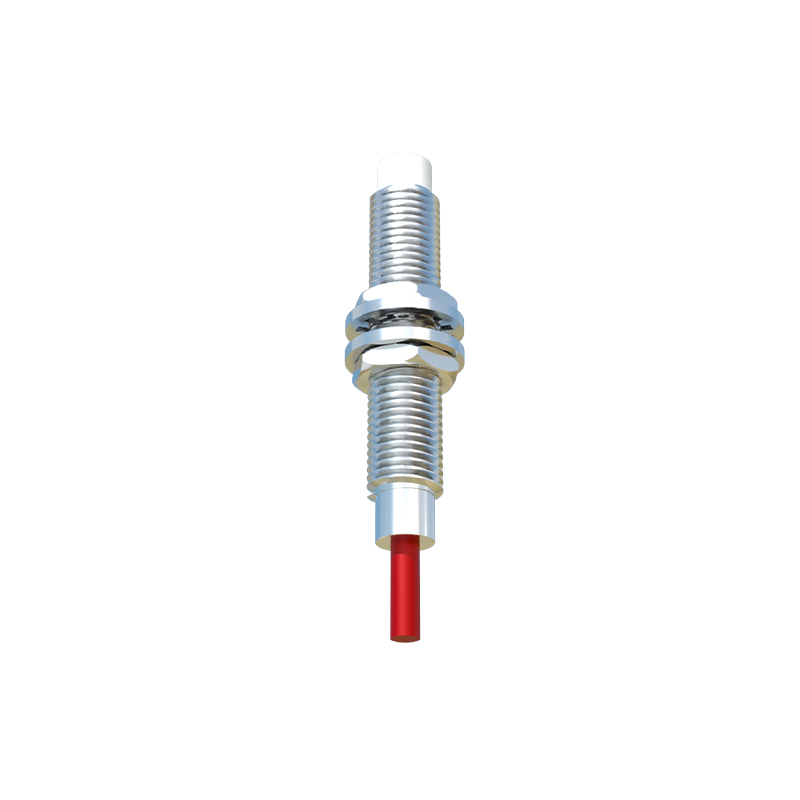
Thirdly, we encounter the issue of installation and mounting. The sensing field is not a perfect laser beam; it has a three-dimensional shape (often conical). In a narrow neck, the metal walls of the hourglass structure themselves can become parasitic targets. If the sensor is mounted too close to the wall, or if the wall is thin, the sensor might detect the wall instead of the material inside—a phenomenon known as "side detection" or "shielding effect." This can saturate the sensor's detection circuit, making it incapable of perceiving changes caused by the flowing material. Furthermore, vibrations inherent in material flow systems can cause slight shifts in sensor position, pushing it in or out of this critical interference zone, resulting in erratic behavior.
Finally, environmental and process variables exacerbate the problem. Dust and particulate matter generated by the flowing material can infiltrate sensor housings, damaging internal electronics. Temperature fluctuations in the process can affect both the sensor's electronics and the material's properties (e.g., moisture content affecting dielectric constant). The speed of material flow is also critical. A very high velocity might mean the material passes through the detection zone too quickly for the sensor's response time to register a stable signal, while a very slow or stagnant flow might not present enough change to trigger detection.
Addressing this non-recognition issue requires a systematic approach:
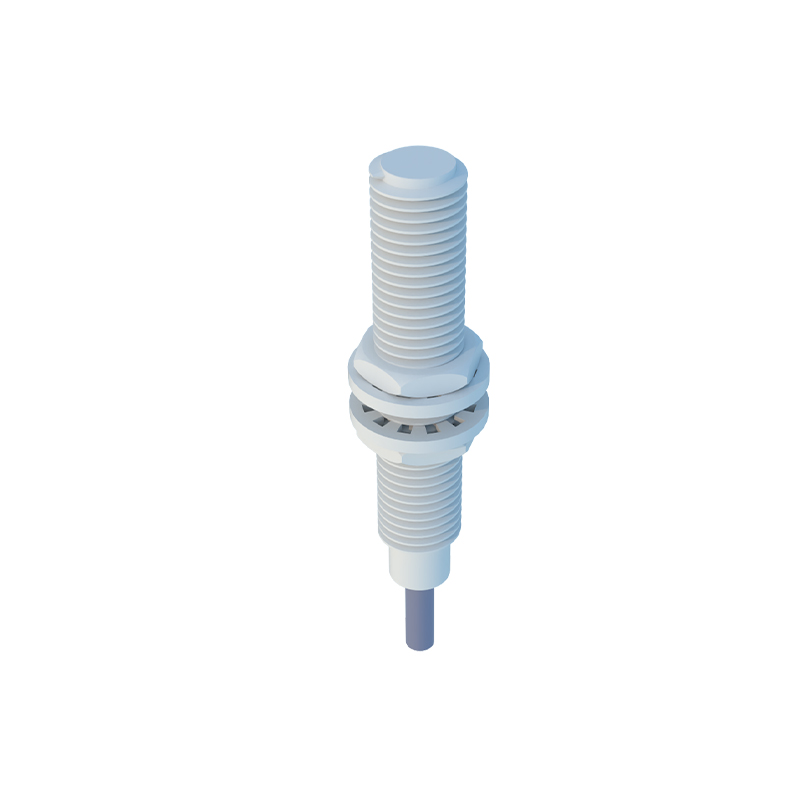
1. Sensor Selection: Opt for specialized "flow detection" sensors or "anti-coating" capacitive sensors designed for bulk solids. Sensors with adjustable sensitivity and hysteresis are preferable.
2. Mounting Optimization: Use non-metallic (e.g., PTFE) or insulated mounting brackets to reduce interference from the housing. Ensure the sensor face is flush with the inner wall to avoid creating a ledge for material buildup, but verify through testing that the wall itself is not being detected.
3. Alternative Technologies: Consider completely different sensing principles. Microwave barrier sensors or piezoelectric vibration sensors, which detect the dynamic impact or interruption of a microwave beam by flowing material, are often more robust for such constrained flow applications.
4. Preventive Maintenance: Implement regular cleaning schedules